


Preguntas frecuentes
Naturaleza refinada, calidad definida
Ciencia verde para una vida mejor

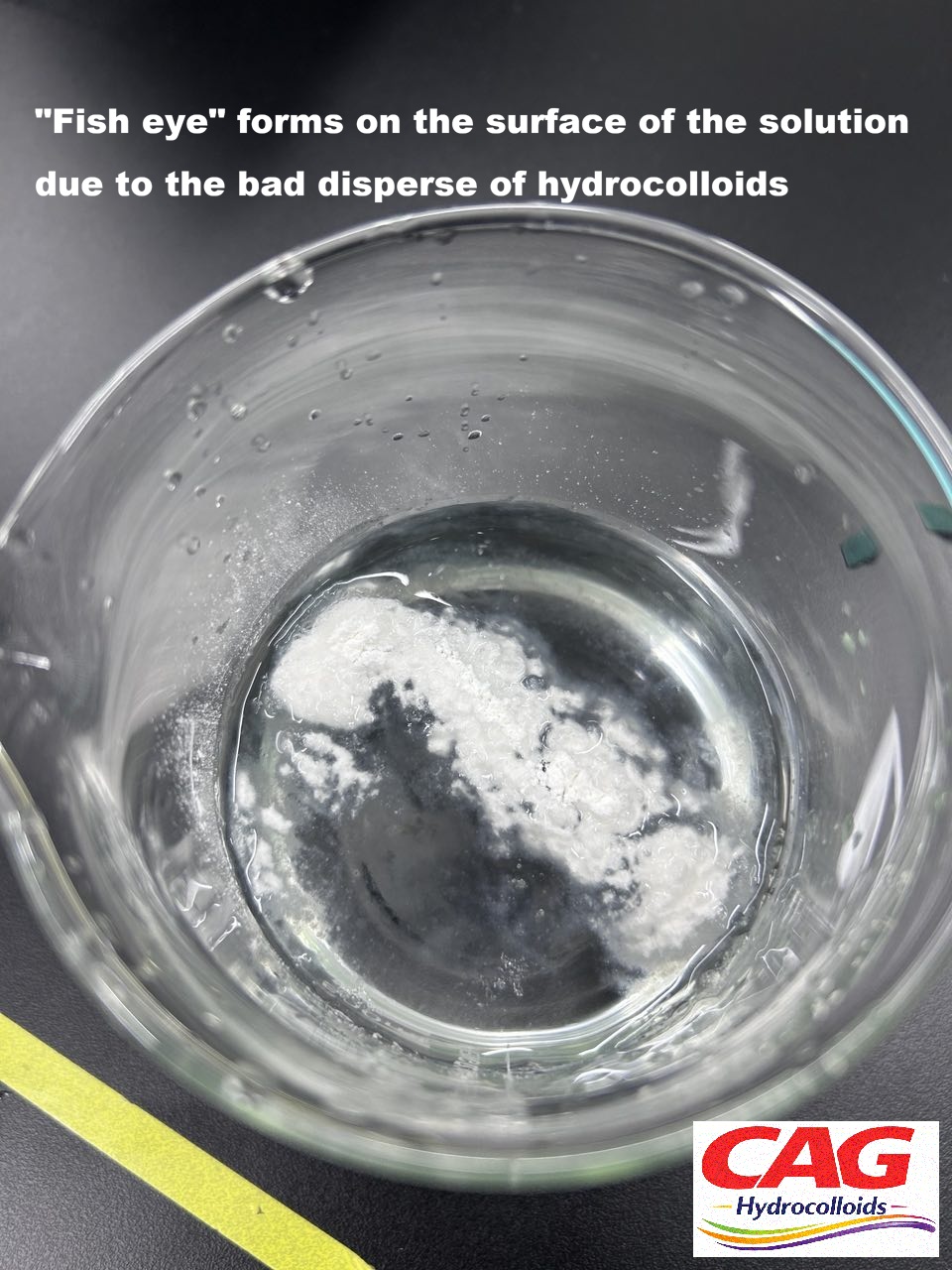
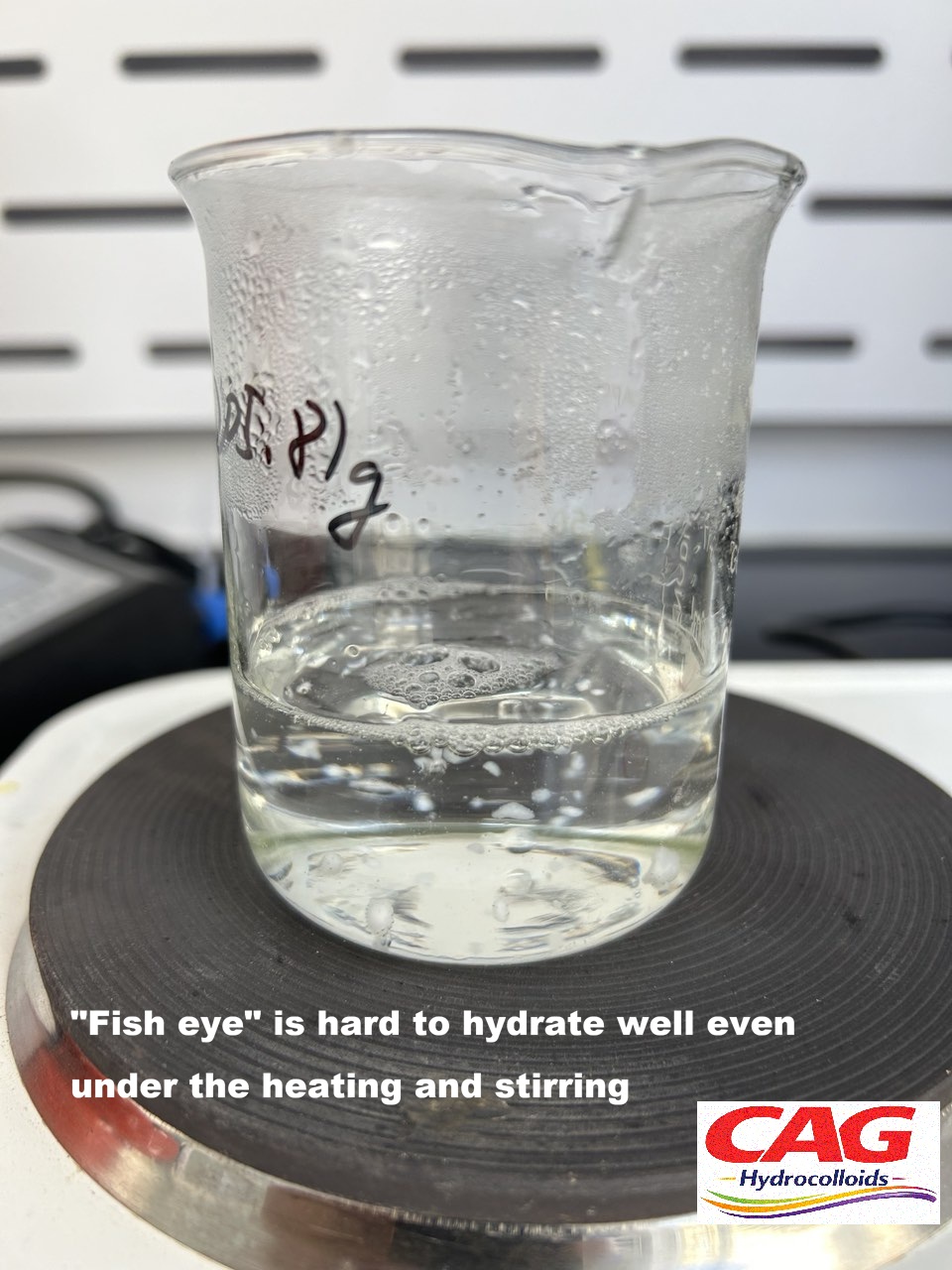
Why do xanthan gum and konjac gum easily form lumps ("fish eyes") during dissolution, and what is the optimal industrial dispersion process?
Reasons Why Xanthan Gum and Konjac Gum Easily Form Lumps ("Fish Eyes")
Both of these hydrocolloids are high-molecular-weight polysaccharides, and the mechanism behind the formation of "fish eyes" (lumps with a wet exterior and a dry interior) is as follows:
|
Gum Type |
Molecular Characteristics |
Direct Cause of Lump Formation |
|---|---|---|
|
Xanthan Gum |
Highly branched helical structure, strongly hydrophilic surface |
Instant formation of a high-viscosity gel layer upon contact with water, blocking water penetration into the particle interior |
|
Konjac Gum |
Extremely high molecular weight (>1 million), β-mannan backbone |
Rapid bonding of water molecules with hydroxyl groups, forming a dense mucosal layer on the surface while the interior remains dry powder |
Common Mechanism:
Imbalanced Hydration Rate: Surface hydration rate >> water penetration rate
Viscosity Barrier: Outer layer swells rapidly, causing a sharp increase in viscosity and forming a "gum shell"
Capillary Blockage: Interparticle gaps are clogged by high-viscosity gum, preventing further water ingress
High-Shear Dispersion: Use a rotor-stator high-shear emulsifier (speed ≥ 3000 rpm) to create turbulence as the gum is added, physically breaking the gum shell.
Jet Dispersion: Inject dry gum into a high-speed water flow (water pressure ≥ 3 bar) through a Venturi ejector for instantaneous separation.
Oil-Phase Pre-Dispersion: Pre-mix the gum with a non-polar solvent (e.g., vegetable oil, glycerol) at a 1:3 ratio to form a paste, then slowly add to the aqueous phase.
Sugar/Salt Dry Blending: Dry-blend with at least 5 times the amount of sugar/salt, using the crystals to separate the gum particles (sugar dissolves faster than the gum hydrates).
|
Key Parameter |
Recommended Conditions for Xanthan Gum |
Recommended Conditions for Konjac Gum |
|---|---|---|
|
Water Temperature |
Room temperature (high temperatures accelerate surface gelation) |
40–50°C (moderate heating reduces viscosity) |
|
Initial Concentration |
≤1% |
≤0.5% |
|
Stirring Timing |
Start high-speed stirring simultaneously with gum addition |
Start medium- to high-speed stirring before gum addition |
|
Dissolution Time |
20–30 minutes (at room temperature) |
40–60 minutes (requires subsequent heating to 85°C for full activation) |
Vacuum Dispersion System: Add gum under vacuum to eliminate floating lumps caused by air bubble adhesion.
In-Line Homogenization System: A pipeline homogenizer (pressure ≥ 150 bar) can forcibly break down micro-aggregates.
|
Production Scenario |
Recommended Process Combination (in order of priority) |
|---|---|
|
Sauces/Beverages |
Sugar dry blending + high-shear dispersion (prepare a mother liquor in advance) |
|
Meat Products/Simulated Foods |
Oil-phase pre-dispersion + vacuum stirring |
|
Large-Scale Continuous Production |
Venturi jet dispersion + in-line homogenization |
|
Laboratory Trials |
Pre-mix with ethanol before adding water (ethanol evaporates later) |
Polarized Light Detection: Examine a small sample under a microscope; completely dissolved solutions should show no birefringent particles.
Viscosity Curve Monitoring: Use a rheometer. The viscosity-time curve of a well-dispersed sample should rise smoothly without abrupt steps (indicating no sudden lump disintegration).
Key Principle: Ensure thorough separation of gum particles through mechanical or physical means before water molecules come into contact with them. Any delay in stirring or static hydration will lead to irreversible "fish eye" formation.

Email: info@cagcolloids.com
Tel: 0086-19884908291 / 0086-573- 88067623
Website: www.cagcolloids.com
Address: No. 399, East Tongfu Road, Tongxiang City, Zhejiang Province. China.