


Preguntas frecuentes
Naturaleza refinada, calidad definida
Ciencia verde para una vida mejor

Which hydrocolloids are primarily used in the current mainstream production of HPMC plant-based hard capsules?
The most mature and high-performance industrial system for HPMC plant-based hard capsules universally employs a synergistic blend of three key hydrocolloids: Hydroxypropyl Methylcellulose (HPMC) + κ-Carrageenan + Low-Acyl Gellan Gum, with Potassium Chloride serving as the essential ionic gelation trigger. This combination is recognized as an industry-standard formulation due to its precise complementary functionality.
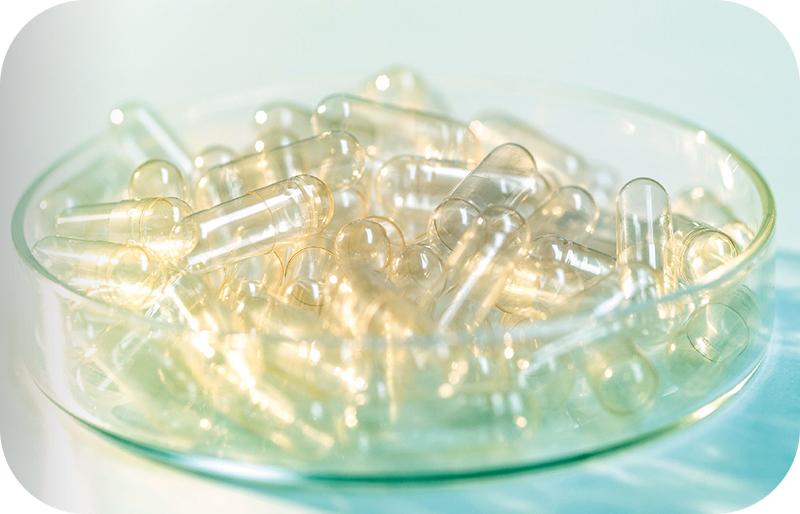
1. Functional Roles of the Core Hydrocolloids:
Hydroxypropyl Methylcellulose (HPMC): Structural Skeleton & Film Former.
Primary Function: As a water-soluble cellulose ether, it provides the continuous polymeric matrix necessary for forming a cohesive, flexible film. Its reversible thermal gelation (soluble when hot, gelling upon cooling) is the fundamental physicochemical principle enabling the rotary die dipping process, granting the capsule shell its essential toughness and plasticity.
Analogy: The foundational "concrete slab" of the structure.
κ-Carrageenan: Gel Strength & Disintegration Modulator.
Primary Function: In the presence of potassium ions (K⁺), it forms a rigid, brittle, three-dimensional helical gel network. This network critically enhances the capsule shell's mechanical hardness and structural rigidity, and is primarily responsible for ensuring its rapid disintegration in gastric fluid. Capsules made from HPMC alone are often too pliable; κ-carrageenan delivers the textbook "snap" and texture comparable to gelatin capsules.
Analogy: The "load-bearing steel framework" providing structural integrity.
Low-Acyl Gellan Gum: Network Reinforcer & Performance Enhancer.
Primary Function: Forms a thermally stable, high-melting-point gel network via cation-mediated aggregation of double helices. Acting as a reinforcing fibril within the composite gel, it significantly boosts the capsule's tensile strength, heat resistance (prevents softening or blocking during storage/shipping), and barrier properties. It also allows fine-tuning of the gel's microstructure, which influences disintegration kinetics and drug release profiles.
Analogy: The "high-tensile microfibers" that provide composite reinforcement and durability.
Potassium Chloride (KCl): Ionic Crosslinker & Gelation Catalyst.
Primary Function: The supplied K⁺ ions are indispensable for initiating and stabilizing the gel networks of both κ-Carrageenan and Low-Acyl Gellan Gum. Its concentration is the most critical processing variable, dictating the final gel's firmness, brittleness, syneresis tendency, and the viscosity/temperature working window of the dipping solution.
Analogy: The "chemical hardener" that triggers and controls the setting reaction of the entire matrix.
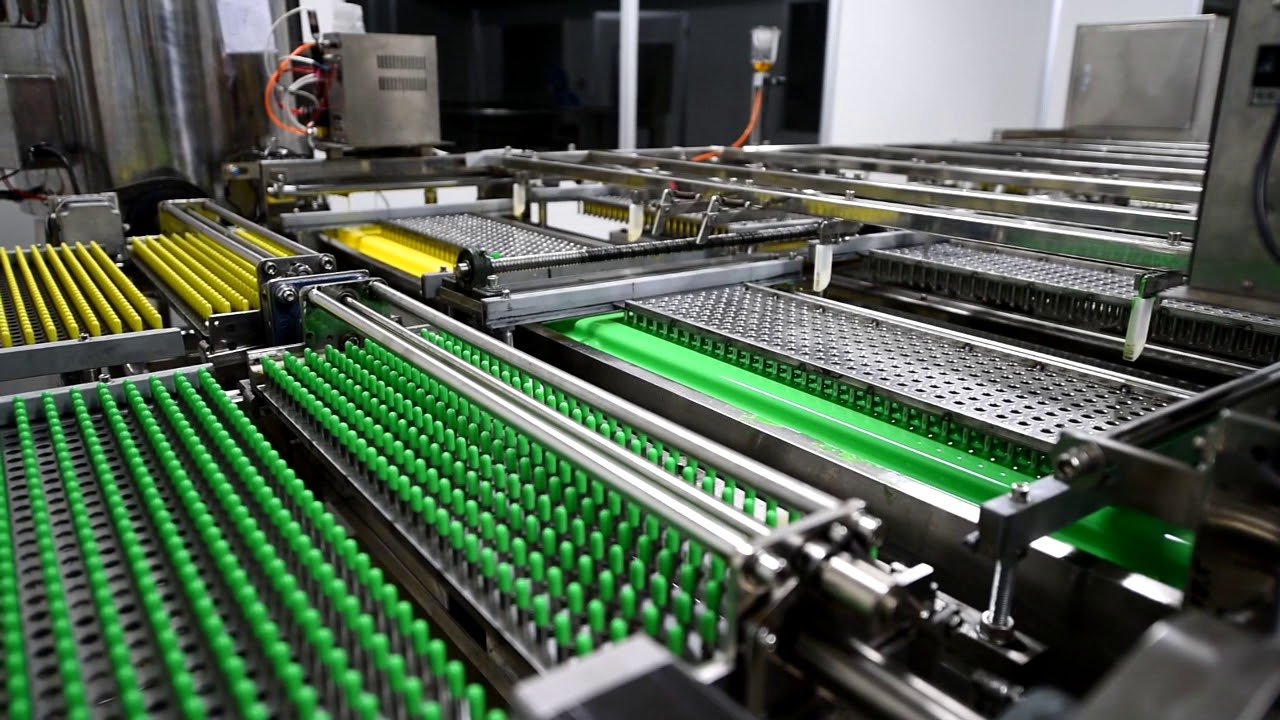
2. Critical Processing Parameters (The Determinants of Quality & Yield):
This composite gel system is highly sensitive to processing conditions. Meticulous control at each stage is non-negotiable for consistent, high-quality output.
Gel Solution (Dipping Solution) Preparation:
Non-negotiable Dissolution Sequence: The process must begin with fully dispersing and hydrating HPMC in cold water, followed by heating to above its thermal gel point (typically >70°C) for complete dissolution. Subsequently, a pre-mixed, dry blend of κ-Carrageenan and Low-Acyl Gellan Gum (often combined with a dispersant like sugar) is added under vigorous agitation. The solution is then maintained at 80-85°C with high-shear mixing to ensure complete polymer hydration. Only after this should the Potassium Chloride solution be introduced. Reversing this order guarantees incomplete dissolution, lump formation, and gel heterogeneity.
Deaeration & Solution Maturation: The prepared solution must undergo thorough vacuum deaeration to remove entrained air, which would otherwise cause pinholes or weak spots in the capsule wall. Following this, a controlled maturation period (e.g., several hours at 60-65°C under gentle agitation) is essential. This step allows the solution's rheology (viscosity and viscoelasticity) to equilibrate, ensuring consistent film pickup and uniformity during dipping.
Dipping & Shell Formation:
Precision Temperature Management: The temperatures of the dipping solution bath, the dipping rods/pins, and the molds themselves must be held within a tight, specified range (commonly 45-55°C). Excessive temperature yields a film that is too thin and fragile; insufficient temperature results in a thick, uneven coating with poor flow characteristics, leading to defects like drips ("tears") or tails.
Strict Environmental Control: The dipping room environment must be rigorously controlled for constant temperature and low humidity (e.g., 22-25°C, 40-50% RH). Fluctuations in ambient humidity directly alter the evaporation rate from the freshly dipped film, causing inconsistencies in wall thickness, surface roughness, or premature drying.
Drying & Conditioning:
Multi-Stage Gradient Drying Protocol: This is critical to prevent shell warping, cracking ("split seams"), or excessive shrinkage. A rapid, high-temperature drying process is disastrous. A standard protocol involves:
Primary Setting Stage: Mild conditions (e.g., 25°C, 60% RH) to allow slow, uniform moisture removal and initial gel network stabilization.
Active Drying Stage: Gradually increased temperature and decreased humidity (e.g., 30°C, 45% RH) to drive off the bulk of the moisture and develop full mechanical strength.
Equilibration Stage: Cooler, drier conditions (e.g., 25°C, 30% RH) to standardize the final moisture content throughout the capsule shell and to the target specification (typically 5-8% w/w).
Moisture Content as a CQA (Critical Quality Attribute): The final equilibrium moisture content is a paramount indicator. It directly dictates the capsule's brittleness, mechanical strength, disintegration performance, and long-term physical and chemical stability. In-process and final product moisture monitoring is mandatory.
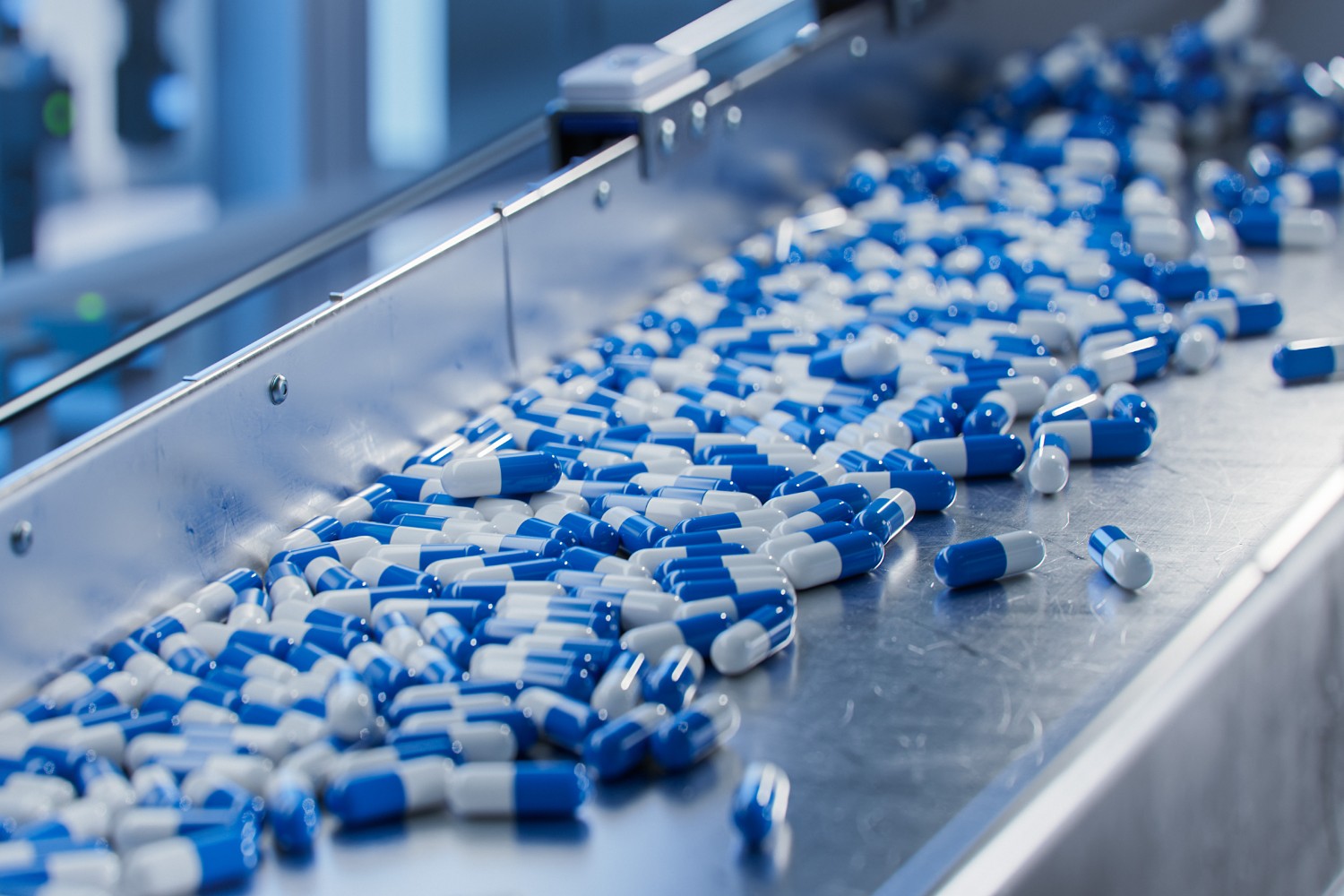
Conclusion: Producing high-quality HPMC plant-based capsules is an exercise in applied polymer and colloid science, translated into meticulous process engineering. Success hinges on a fundamental understanding of how HPMC, κ-Carrageenan, and Gellan Gum interact ionically and physically, and on the unwavering, precise execution of every processing step—from raw material dissolution to controlled drying. Deviations from this validated "golden formula" or its associated "golden process parameters" invariably manifest as reduced production yield, subpar product performance, or both.

Email: info@cagcolloids.com
Tel: 0086-19884908291 / 0086-573- 88067623
Website: www.cagcolloids.com
Address: No. 399, East Tongfu Road, Tongxiang City, Zhejiang Province. China.