


Preguntas frecuentes
Naturaleza refinada, calidad definida
Ciencia verde para una vida mejor

What is the standard test method (National Standard/Pharmacopoeia) for gelatin's Bloom strength (gel strength)? How are the gelation temperature, time, and sample concentration specified during the test?
Gelatin's Bloom strength (gel strength) is a core indicator for measuring its gelling performance. Its standard test methods are essentially consistent internationally (e.g., GMIA, ISO) and across various pharmacopoeias. Chinese National Standards and Pharmacopoeia also adopt internationally accepted principles. The following is a detailed explanation.
I. Standard Test Method References
National Standard: GB 6783-2013 "National Food Safety Standard - Food Additive - Gelatin". This standard specifies the method for determining the Bloom strength of food additive gelatin and is the authoritative domestic method.
Chinese Pharmacopoeia: "Pharmacopoeia of the People's Republic of China" (ChP). Under the quality standards for gelatin (pharmaceutical excipient), its method for determining gel strength is fundamentally consistent with the national standard GB 6783-2013 in principle and core parameters. The Pharmacopoeia is the statutory standard for pharmaceutical gelatin.
II. Core Test Principle
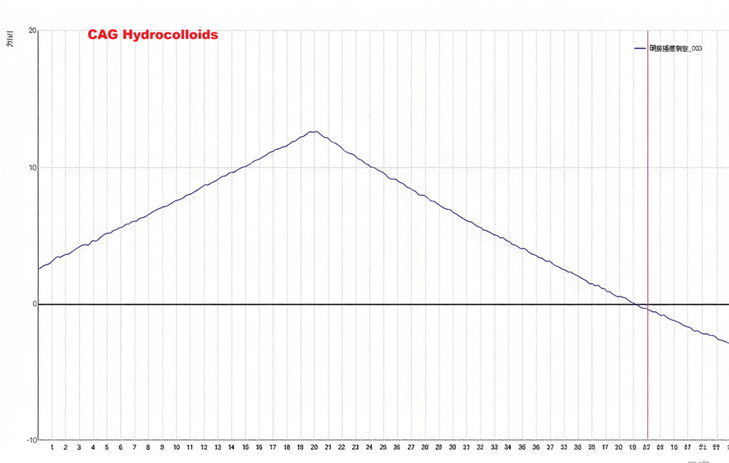
Bloom strength is defined as: the force, expressed in grams, required to depress a standard probe (typically a cylinder with a diameter of 12.7 mm) 4 mm into the surface of a gelatin gel under specified conditions. A higher value indicates greater gel strength and a firmer gel formed by the gelatin.
III. Key Test Condition Specifications
The accuracy and comparability of test results strictly depend on the following standardized conditions. The specifications in GB 6783-2013 and the Pharmacopoeia are uniform.
|
Condition Parameter |
Specific Specification |
Role and Importance |
|---|---|---|
|
Sample Concentration |
6.67% (w/w) |
This is the internationally accepted "Bloom standard concentration." That is, use 6.67g of gelatin (on a dry basis) and add purified water to a total weight of 100.00g. This concentration is the basis for result comparability. |
|
Gelation Temperature |
10.0 ± 0.1°C |
The gel must be formed and maintained at this temperature in a constant temperature water bath. Temperature is a key factor affecting the gel network structure and must be precisely controlled. |
|
Gelation Time |
17 ± 1 hour |
The time the gelatin solution is held isothermally and undisturbed at 10°C to ensure the gel reaches a complete, stable equilibrium state. |
|
Gel Measurement Temperature |
10.0 ± 0.1°C |
The entire measurement process (including probe descent) must be conducted under constant temperature conditions of 10°C, typically performed in a texture analyzer with a temperature-controlled chamber or a dedicated Bloom gelometer. |
|
Aging Time |
(Typically) Measured immediately after gel formation |
After the specified 17-hour maturation, the sample should be tested immediately, with no additional "aging" step required. |
Brief Test Procedure Flow:
Sample Preparation: Precisely weigh the pre-treated gelatin sample (converted to dry basis) and prepare a 6.67% solution, dissolving it in a 65°C water bath.
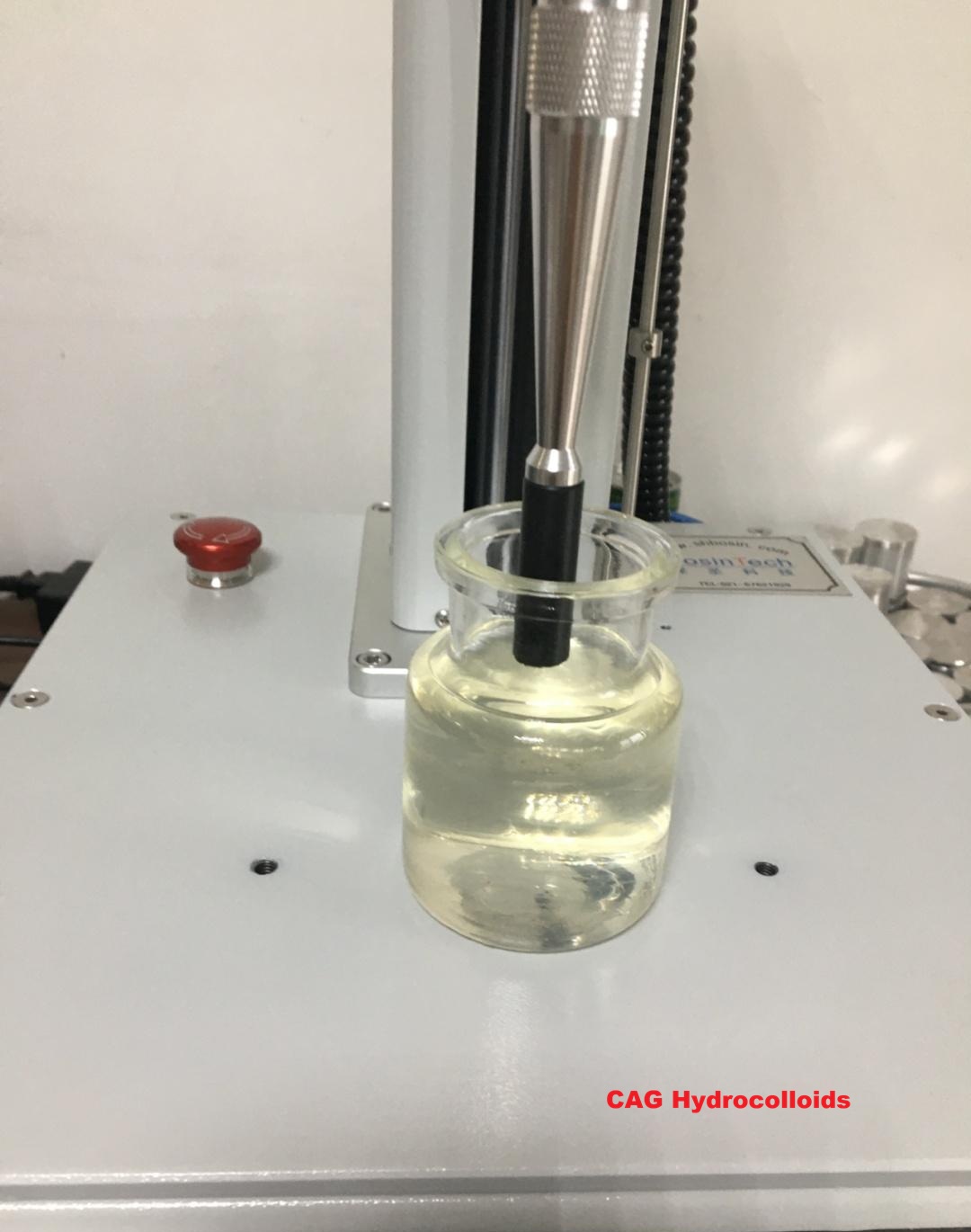
Isothermal Gelation: Pour approximately 105 mL of the hot gelatin solution into a dedicated Bloom bottle (internal diameter approx. 59 mm, height approx. 85 mm) and cap it. Place it in a 10.0°C constant temperature water bath and hold undisturbed for maturation for 17 hours.
Measurement: Place the matured gel sample bottle on the test platform of the gelometer, maintaining 10.0°C. Allow the standard cylindrical probe (typically 12.7 mm diameter) to descend at a specified speed (e.g., 0.5 mm/s). Record the maximum force, in grams, required for the probe to depress 4.0 mm into the gel surface. Typically, repeat 3-4 times and average the results.
IV. Bloom Strength Ranges for Different Types of Gelatin
According to national standards and industry practice, gelatin is often graded by Bloom strength, which directly determines its application areas:
|
Bloom Strength Range (g) |
Grade |
Main Application Areas |
|---|---|---|
|
50 - 120 |
Low Bloom |
Emulsifier, stabilizer, clarifying agent (e.g., beer, juice clarification), foods not requiring high gel strength. |
|
120 - 200 |
Medium Bloom |
Common food additive, used in gummies, toffee, marshmallows, pastry icing, etc. |
|
200 - 250 |
High Bloom |
High-quality gummies, jellies, meat products, pharmaceutical capsules (hard/soft capsules). |
|
Above 250 |
Very High Bloom |
Advanced pharmaceutical capsules (especially those with high requirements for dissolution rate, mechanical strength), premium confectionery, photographic film. |
Important Notes:
"Bloom 250" is a common identifier for high-quality gelatin, meaning its Bloom strength is approximately 250 grams.
Pharmaceutical gelatin has explicit requirements for gel strength. For example, gelatin for hollow capsules typically requires a Bloom strength between 180-250g, depending on the capsule type and manufacturing process.
V. Key Points and Common Issues in Testing
Moisture Correction: Gelatin samples typically contain about 10-14% moisture. The sample must be weighed based on the measured moisture content and precisely converted to a dry basis weight to ensure the final solution concentration is exactly 6.67%.
Instrument Calibration: The gelometer/texture analyzer must be calibrated regularly using standard weights to ensure accurate force measurement.
Environmental Control: The temperature and humidity of the entire testing environment, as well as the cleanliness and smoothness of the inner wall of the gel bottle, can affect results and must be strictly controlled.
Result Reporting: Results are typically reported as an average, with the test conditions noted (e.g., Bloom strength, 6.67%, 10°C, 17h).
Summary:
The gelatin Bloom strength test method specified in GB 6783-2013 and the Chinese Pharmacopoeiais centered on measuring the force required to produce a 4 mm depression on the gel surface after maturation for 17 hours at 10.0°C and a concentration of 6.67%. This is a set of highly standardized, strictly conditioned physical test methods that ensure comparability within the global gelatin industry when evaluating gel strength. Producers, users, and quality inspection agencies must strictly adhere to this standard to obtain valid and reliable data, thereby correctly guiding the selection of gelatin and quality control in production.

Email: info@cagcolloids.com
Tel: 0086-19884908291 / 0086-573- 88067623
Website: www.cagcolloids.com
Address: No. 399, East Tongfu Road, Tongxiang City, Zhejiang Province. China.