


Preguntas frecuentes
Naturaleza refinada, calidad definida
Ciencia verde para una vida mejor

What is the relationship between elastic modulus and the suspension/stabilization applications of gellan gum?
Elastic modulus (storage modulus, G') is a critical rheological parameter for evaluating the performance of gellan gum, both in suspension (e.g., beverages) and stabilization (e.g., dairy) applications. This guide explains how G' correlates with functionality for both high-acyl (HA) and low-acyl (LA) gellan gum.
Whether using LA gellan gum for particle suspension or HA gellan gum for dairy stabilization, the gel network strength (G') directly determines the success of the application. An extensively validated "ideal performance range" exists:
|
G' Range (e.g., kPa) |
System Behavior & Performance |
Application Assessment |
|---|---|---|
|
< 0.3 |
Structure too weak, function fails. |
Unacceptable |
|
0.3 – 0.7 |
Ideal structure, optimal performance. |
Goldilocks Zone |
|
> 0.7 |
Structure too strong, texture degrades. |
Too strong, requires adjustment |
Key Insight: The 0.3–0.7 kPa range is not theoretical but empirically proven. In dairy stabilization, for instance, high-acyl (HA) gellan gum is typically formulated to achieve a G' within this range. This ensures the formation of a fine, weak gel network that effectively prevents protein/calcium sedimentation and fat creaming while maintaining a smooth, creamy texture. Leading stabilizer suppliers (e.g., CAG) routinely use rheometers to test each batch of HA gellan gum destined for dairy applications, ensuring G' falls within this critical window for consistent end-product quality.
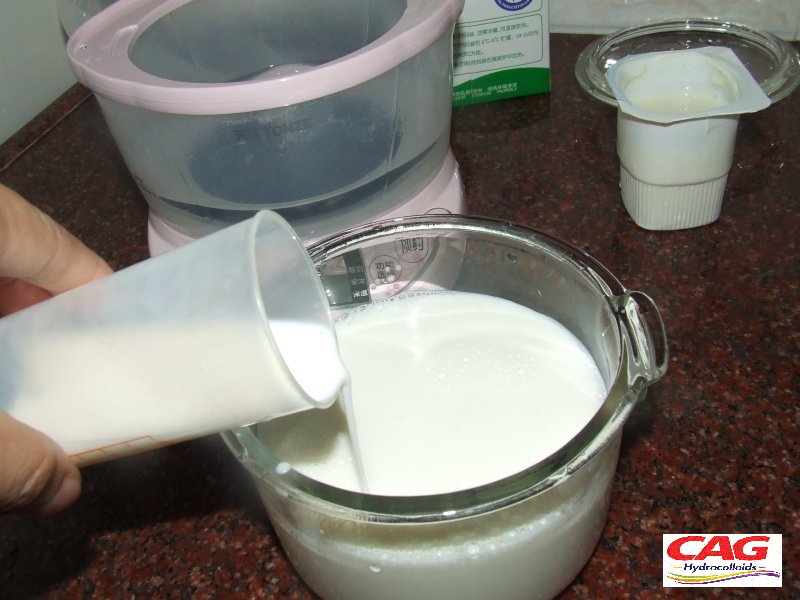
G' < 0.3 (Too Low): The 3D network formed by gellan gum is too sparse. Its yield stress is insufficient to overcome the gravitational pull on particles (e.g., basil seeds, proteins, calcium) or the buoyancy of fat globules, leading to instability.
G' 0.3 – 0.7 (Ideal): The system reaches a critical gel state. The network is dense enough to provide adequate yield stress to "lock" particles in place long-term, yet it retains ideal shear-thinning behavior—providing suspension at rest while thinning under shear (pouring, shaking) for smooth mouthfeel.
G' > 0.7 (Too High): The network is overdeveloped, exhibiting macroscopic, self-supporting solid-gel characteristics. While it may suspend particles, it completely disrupts the fluidity and smoothness expected in beverages or dairy products.
Instrument Required: Rheometer – Only a rheometer can accurately measure G'. Texture analyzers assess macro-scale texture and cannot replace rheological analysis.
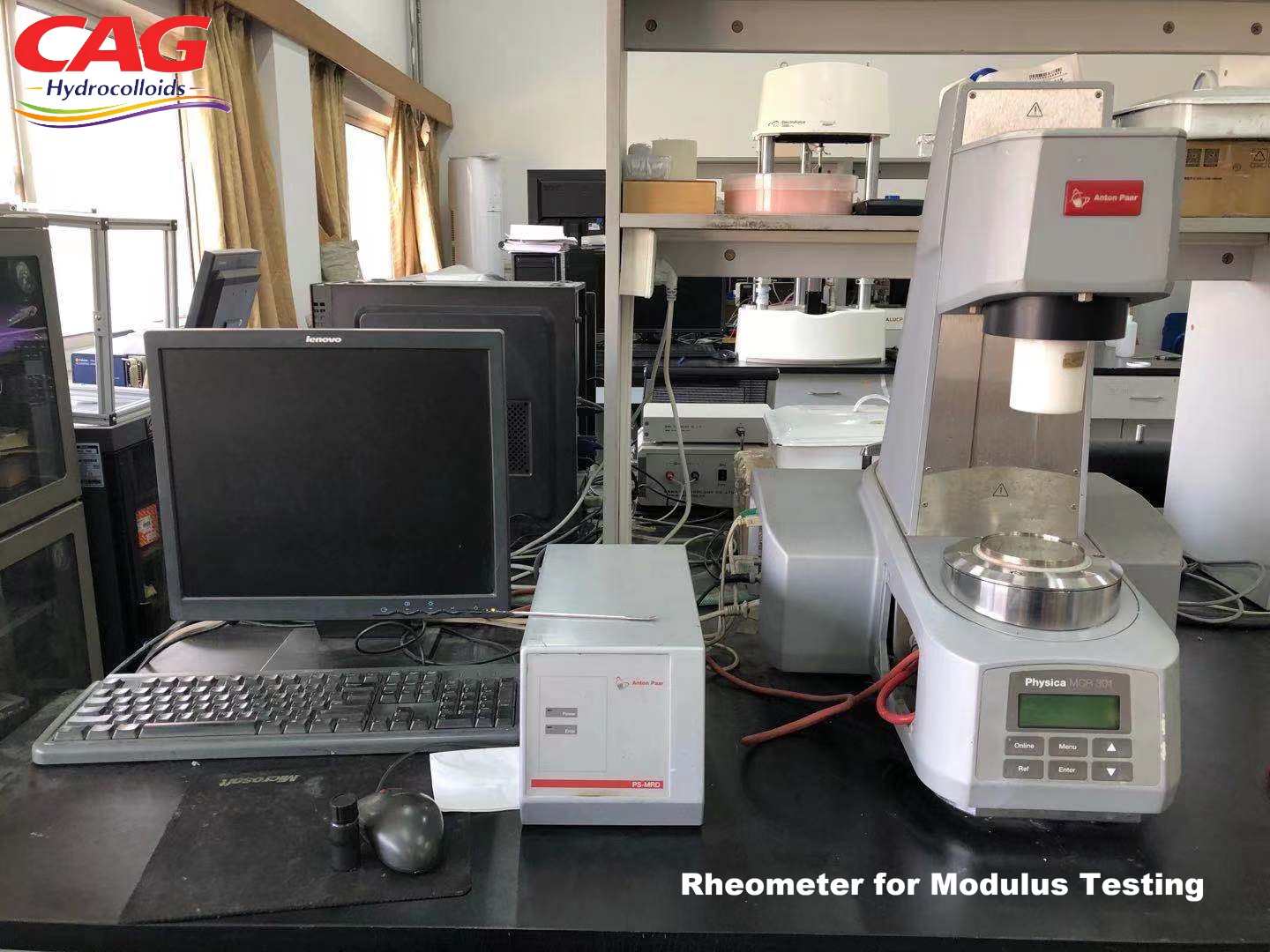
Key Test: Oscillatory Temperature Sweep – Simulate the cooling process from processing to storage temperature. Confirm that the G' value at the final consumption temperature (e.g. 25-30°C) falls within the 0.3–0.7 kPa goldilocks zone.
Optimization Strategy:
If G' < 0.3: Slightly increase gellan gum concentration or optimize the concentration/addition method of activating ions (e.g., calcium).
If G' > 0.7: Reduce gellan gum usage or consider blending with a small amount of other hydrocolloids (e.g., xanthan gum, locust bean gum) to "soften" the gel network.
In the development of gellan gum-based suspension or stabilization systems, precisely controlling the elastic modulus (G') within the 0.3–0.7 kPa range is the scientific key to achieving "stable functionality with excellent texture." This applies not only to LA gellan gum in beverage suspensions but also to HA gellan gum in dairy and similar applications. Using a rheometer to quantify and monitor G' is essential for transitioning from empirical, trial-and-error development to precise, science-based formulation.


Email: info@cagcolloids.com
Tel: 0086-19884908291 / 0086-573- 88067623
Website: www.cagcolloids.com
Address: No. 399, East Tongfu Road, Tongxiang City, Zhejiang Province. China.