


Preguntas frecuentes
Naturaleza refinada, calidad definida
Ciencia verde para una vida mejor

What is the Chinese national standard for gellan gum products?
National Food Safety Standard of the People's Republic of China
GB 25535-2010
Food Additive — Gellan Gum
Issued on: December 21, 2010
Implemented on: February 21, 2011
Issued by: Ministry of Health of the People's Republic of China
1. Scope
This standard applies to the food additive gellan gum, which is manufactured through pure culture fermentation of carbohydrates by Pseudomonas elodea, followed by processing.
2. Normative References
(Content omitted for brevity, as it lists referenced Chinese national standards for test methods.)
3. Molecular Structure and Relative Molecular Mass
3.1 Molecular Structure
Composed of repeating basic units, each consisting of one molecule of glucuronic acid, one molecule of rhamnose, and two molecules of glucose.
3.2 Relative Molecular Mass
4 x 10⁵ ~ 6 x 10⁵ (based on the 2007 International Relative Atomic Mass).
4. Technical Requirements
4.1 Sensory Requirements: Shall comply with the stipulations in Table 1.
Table 1: Sensory Requirements
|
Item |
Requirement |
Test Method |
|---|---|---|
|
Color |
Off-white |
Place an appropriate amount of sample on a clean, dry white porcelain plate. Observe its color and state under natural light. |
|
State |
Powder |
4.2 Physicochemical Indicators: Shall comply with the stipulations in Table 2.
Table 2: Physicochemical Indicators
|
Item |
Indicator |
Test Method |
|---|---|---|
|
Gellan Gum, w/% |
85.0 ~ 108.0 |
Appendix A.3 |
|
Loss on Drying, w/% ≤ |
15.0 |
GB 5009.3-2010, Direct Drying Method a |
|
Lead (Pb) / (mg/kg) ≤ |
2 |
GB 5009.12 |
|
Isopropanol b / (mg/kg) ≤ |
750 |
Appendix B |
|
Note a: Drying temperature and time are 105°C and 2.5 hours, respectively. |
||
|
Note b: Applicable only to gellan gum products not processed with ethanol. |
4.3 Microbiological Indicators: Shall comply with the stipulations in Table 3.
Table 3: Microbiological Indicators
|
Item |
Indicator |
Test Method |
|---|---|---|
|
Aerobic Plate Count / (CFU/g) ≤ |
10,000 |
GB 4789.2 |
|
Coliforms / (MPN/100g) ≤ |
30 |
GB 4789.3 |
|
Salmonella |
0 / 25g |
GB 4789.4 |
|
Molds and Yeasts / (CFU/g) ≤ |
400 |
GB 4789.15 |
(Summary of Appendices)
Appendix A (Normative): Test Methods
A.2 Identification Tests:
A.2.1 Solubility Test: Soluble in water, forming a viscous solution; insoluble in ethanol.
A.2.2 Calcium Ion Gel Test: A 1% solution forms an immediate gel when added to a 10% calcium chloride (CaCl₂) solution.
A.2.3 Sodium Ion Gel Test: Adding 0.5g NaCl to the 1% solution, heating to 80°C for 1 minute, and cooling to room temperature results in a firm gel.
A.3 Assay of Gellan Gum: Details the gravimetric method for determining the content of gellan gum, involving dissolution, precipitation with ethanol, filtration through diatomaceous earth, drying, and weighing.
Appendix B (Informative): Determination of Isopropanol
Describes the gas chromatographic (GC) method for determining residual isopropanol content, using helium as carrier gas and tert-butanol as an internal standard.
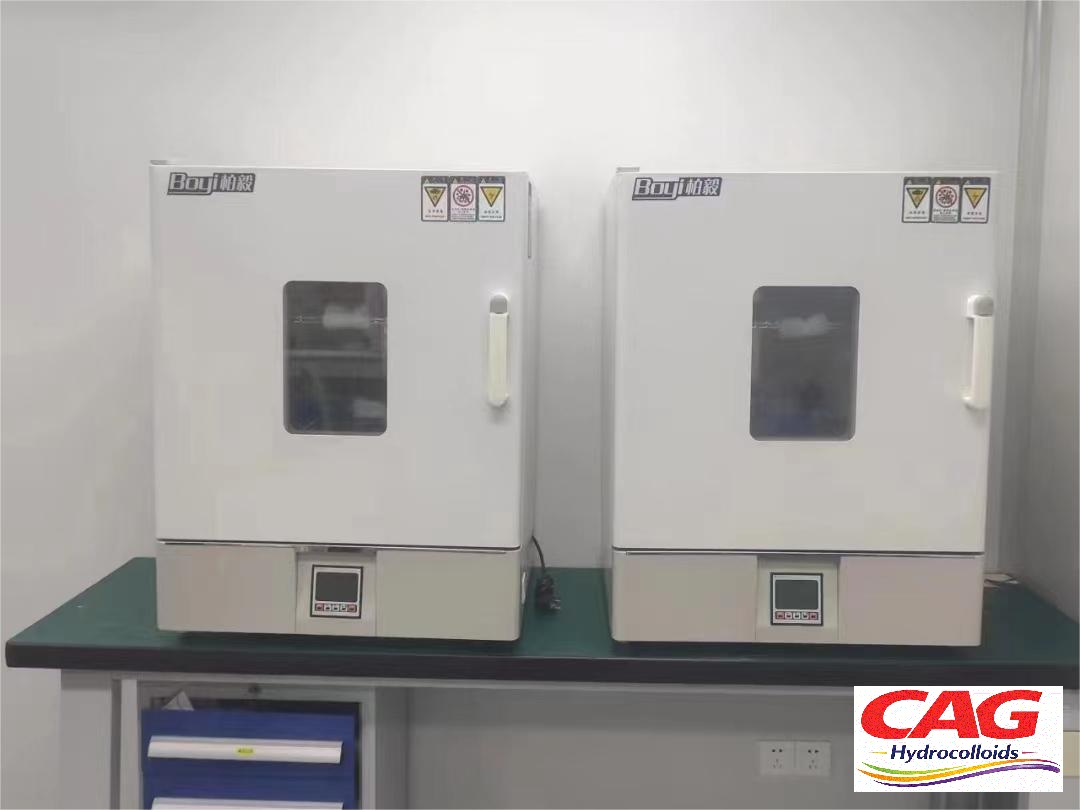
Moisture content testing
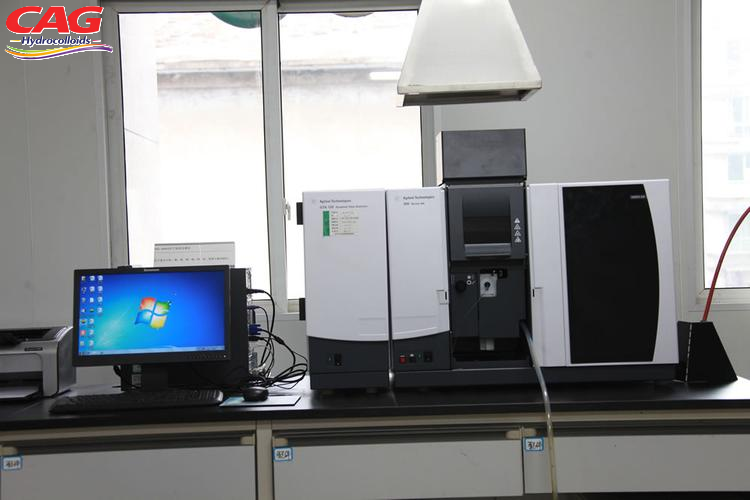
Heavy Metals testing

Email: info@cagcolloids.com
Tel: 0086-19884908291 / 0086-573- 88067623
Website: www.cagcolloids.com
Address: No. 399, East Tongfu Road, Tongxiang City, Zhejiang Province. China.