


Preguntas frecuentes
Naturaleza refinada, calidad definida
Ciencia verde para una vida mejor

What is medium-acyl content gellan gum?
In addition to conventional low-acyl and high-acyl gellan gums, medium-acyl gellan gum, as an intermediate product with special properties, has made significant progress in production technology and application expansion in recent years. The gel characteristics of this product lie between the hard and brittle texture of low-acyl gellan gum and the soft elasticity of high-acyl gellan gum, with its specific textural properties positively correlated with the degree of acyl retention. Unlike the approach of simply physically blending high- and low-acyl products, industrial production employs a mild chemical deacylation process to partially deacylate high-acyl raw materials. This process choice is primarily based on considerations of gelation temperature: high-acyl products typically gel at 70–80°C (reaching nearly 100°C in high-solids systems) with very rapid gelation, while low-acyl products gel in the range of 30–50°C. Direct blending would result in a dual-gelation phenomenon in the system, severely affecting process control. In contrast, chemically produced medium-acyl products can form a uniform gelation temperature range, significantly improving process suitability.
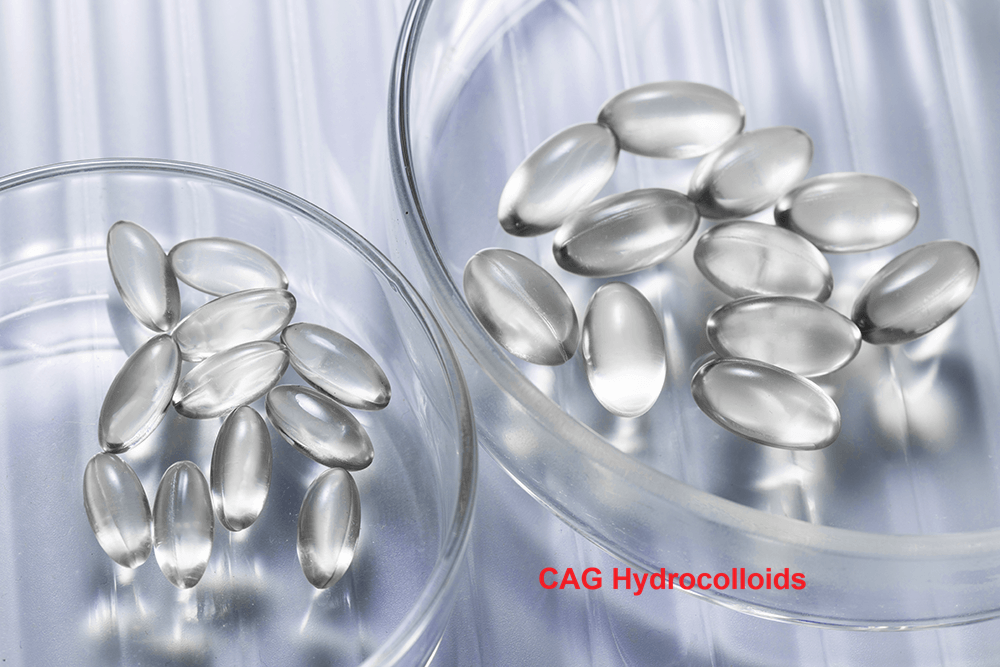
Currently, industrial production mainly employs weak alkali systems such as sodium bicarbonate for controlled deacylation treatment. As the deacylation process is difficult to control precisely, actual production ensures stability through small-batch operations and employs graded management according to three typical gelation temperature ranges: 40–50°C, 50–60°C, and 60–70°C. By testing the gelation temperature of each batch and standardizing the blending of products within the same temperature range, finished products with consistent performance are ultimately obtained. From a product characteristics perspective, gelation temperature exhibits a clear correspondence with acyl content: products in the 40–50°C low-temperature gelation range have lower acyl content and exhibit higher gel hardness; those in the 50–60°C medium-temperature gelation range possess balanced textural properties; and those in the 60–70°C high-temperature gelation range are closer to the elastic texture of high-acyl products. This gradient of characteristics gives it unique advantages in specialized food areas, including elderly foods requiring specific palatability, candy and chocolate products sensitive to processing temperatures, baking fillings requiring thermal stability, and soft capsule formulations requiring precise molding control, among other application scenarios.
For the best hydrocolloid solution tailored to your specific product, please feel free to contact our technical support team at info@cagcolloids.com.

Email: info@cagcolloids.com
Tel: 0086-19884908291 / 0086-573- 88067623
Website: www.cagcolloids.com
Address: No. 399, East Tongfu Road, Tongxiang City, Zhejiang Province. China.