


Preguntas frecuentes
Naturaleza refinada, calidad definida
Ciencia verde para una vida mejor

What is CAG Hydrocolloid Retention Sample Observation System?
1. Sample Retention Scope and Sampling
Retention Objects:
All Finished Product Batches: Includes every batch of final product in different specifications and grades (e.g., food grade, pharmaceutical grade).
Key Raw Material Batches: Especially raw materials from different suppliers, new suppliers, or where the process has changed (e.g., seaweed powder, konjac flour, fermentation carbon/nitrogen sources).
Intermediate Products (Optional but recommended): Outputs from key process nodes where stability is questionable.
Sampling Requirements:
Representativeness: Samples must represent the quality of the entire batch. Follow sampling procedures: collect samples from multiple points after the product is uniformly mixed, then combine and subdivide.
Retention Quantity: Sufficient for at least two rounds of comprehensive testing. For finished hydrocolloid products, a retention quantity of 500g - 1000g per batch is typically recommended. The quantity for raw materials can be adjusted based on usage volume and importance.
Packaging: Seal using packaging materials identical to or more stringent than commercial packaging (e.g., aluminum foil bags, food-grade PE bags, placed in sealed sample containers). Simulating commercial conditions provides more realistic data.
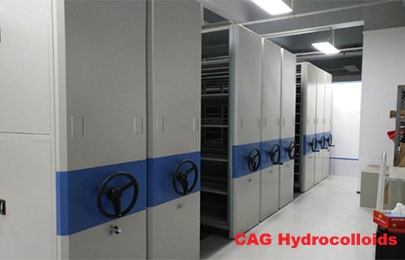
2. Sample Retention Environment Setup (Core)
The stability of hydrocolloids is extremely sensitive to environmental factors (temperature, humidity, light). A scientific, tiered sample retention environment must be established.
Principle: Simulate routine storage conditions and accelerated/harsh conditions.
Recommended setup of three types of retention storage areas/libraries:
|
Retention Environment Type |
Temperature Control |
Humidity Control |
Light Control |
Primary Purpose |
|---|---|---|---|---|
|
Long-term Retention Library |
25°C ± 2°C |
60% RH ± 5% RH |
Light-proof |
Simulates "real" storage conditions of routine warehousing and customer warehouses. Used for determining actual shelf life and routine stability monitoring. |
|
Accelerated Testing Library |
40°C ± 2°C |
75% RH ± 5% RH |
Light-proof |
Accelerates chemical/physical changes of the product. Used for quickly assessing stability trends, screening packaging, and process validation. Typically, 1 month of accelerated testing approximates several months under ambient conditions. |
|
Harsh Conditions Library |
-20°C ± 5°C (Frozen) |
Uncontrolled (Frozen) |
Light-proof |
Evaluates product tolerance to extreme transportation/storage conditions, such as freeze-thaw stability, sensitivity to high temperature and humidity, etc. |
Special Considerations for Specific Hydrocolloids:
Konjac Gum: Extremely sensitive to humidity; humidity control is paramount. Ensure packaging seal integrity, and particularly observe for caking and mold under high humidity.
Xanthan Gum / Gellan Gum: Microbial stability is key; regular testing of total plate count is necessary.
Carrageenan / Agar: Sensitive to thermal history; focus on long-term changes in gel strength and melting point.
3. Observation Cycle and Testing Items
Observation Cycle Setup:
Routine Observation Cycle for Finished Products: Linked to shelf life. For example, for a product with a 24-month shelf life, observation at the following time points is recommended: 0 months (initial), 3, 6, 12, 18, 24 months, post-shelf life (e.g., 36 months).
Accelerated Observation Cycle: Under accelerated conditions, it can be set as: 0, 1, 2, 3, 6 months.
Raw Material Observation Cycle: Can be set based on the raw material's shelf life and importance, typically once every 6 or 12 months, or re-tested before use.
Key Testing Items (Tailored for Hydrocolloid Properties):
Sensory Indicators: Color, odor, appearance (caking, deliquescence, mold).
Physicochemical Indicators:
Moisture Content / Loss on Drying: A core indicator directly affecting flowability and microbial risk.
Viscosity / Solution Rheological Properties: Core functional indicator. Requires standard solution concentration and measurement conditions.
Gel Strength (if applicable): Crucial for carrageenan, agar, gellan gum.
pH Value: Reflects the stability of product acidity/alkalinity.
Ash Content: Reflects the stability of inorganic salt content.
Safety Indicators (Tested on a rotational schedule):
Microbiological Indicators: Total plate count, molds and yeasts, coliforms, etc.
Key Chemical Residues: Tested according to schedule based on product type (e.g., SO₂, isopropanol, heavy metals)

Email: info@cagcolloids.com
Tel: 0086-19884908291 / 0086-573- 88067623
Website: www.cagcolloids.com
Address: No. 399, East Tongfu Road, Tongxiang City, Zhejiang Province. China.