


Preguntas frecuentes
Naturaleza refinada, calidad definida
Ciencia verde para una vida mejor

What are the primary seaweeds used for carrageenan production, and how has the industry evolved in sourcing?
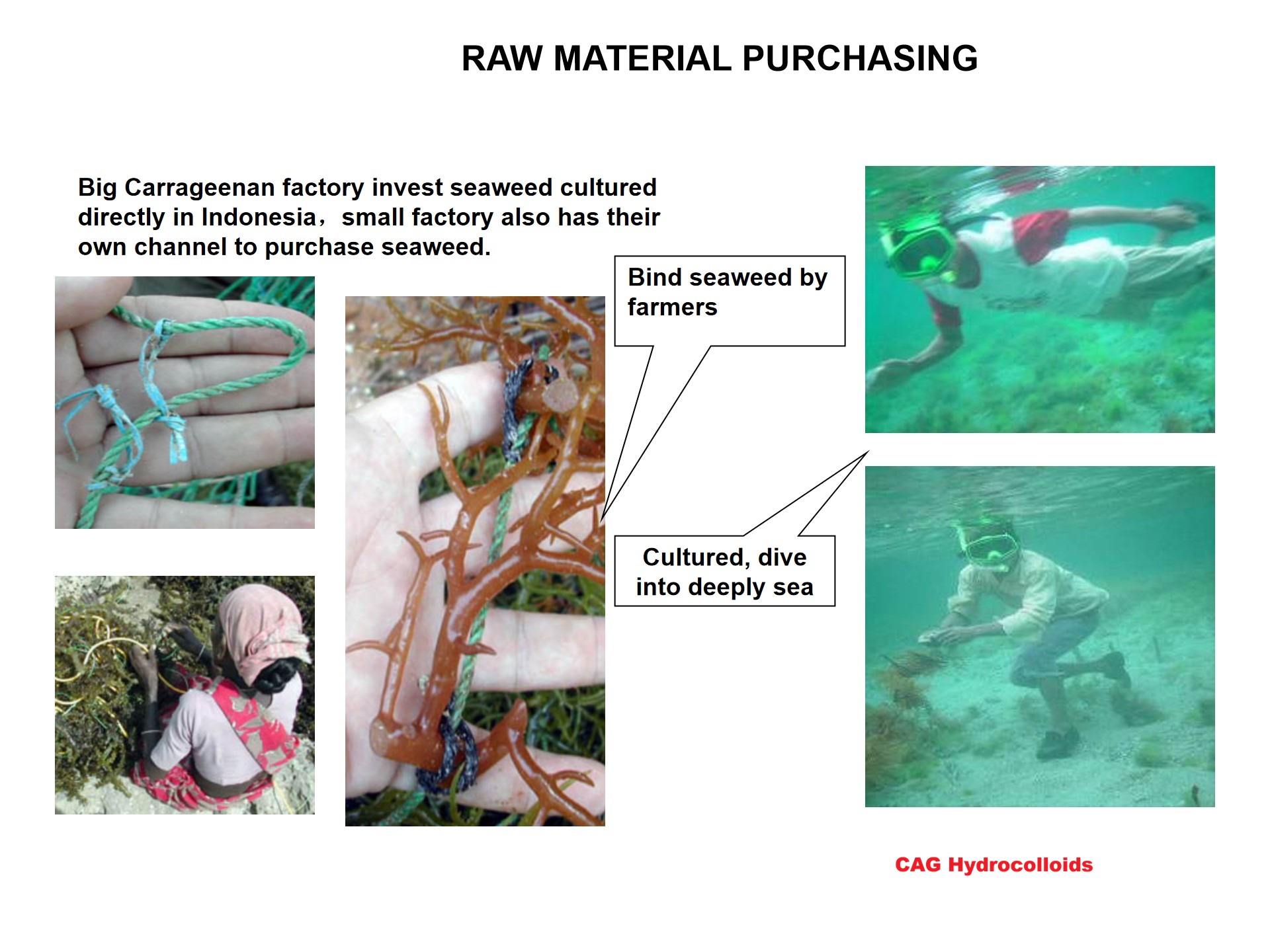
The industry's raw material base has evolved significantly. Historically, the primary source was wild-harvested Chondrus crispus(Irish moss) from North Atlantic coasts. However, modern production is dominated by farmed seaweeds, which provide greater supply stability and quality control. The two most commercially important farmed species are:
Eucheuma cottonii:Cultivated mainly in the Philippines and Indonesia, this seaweed is the key source for kappa-carrageenan, which forms strong, brittle gels.
Eucheuma spinosum:Also farmed in Southeast Asia, this species is the primary source for iota-carrageenan, known for forming elastic, syneresis-free gels.
Seaweed farming offers significant advantages: independence from climatic fluctuations and labor-intensive wild harvesting, a purer raw material, and the potential for selective breeding to enhance carrageenan yield and specific properties.


Email: info@cagcolloids.com
Tel: 0086-19884908291 / 0086-573- 88067623
Website: www.cagcolloids.com
Address: No. 399, East Tongfu Road, Tongxiang City, Zhejiang Province. China.