


Preguntas frecuentes
Naturaleza refinada, calidad definida
Ciencia verde para una vida mejor

Is there a necessary correlation between gelatin's Bloom strength and its viscosity? What characteristics do they respectively reflect?
There is no necessary linear correlation between gelatin's Bloom strength and its viscosity. They are two independent physical indicators, each reflecting different structural characteristics of the gelatin molecular chains. In practical applications, they must be measured separately and cannot be used interchangeably.
|
Indicator |
Bloom Strength |
Viscosity |
|---|---|---|
|
Physical Meaning |
Strength of the gel network |
Resistance to fluid flow |
|
Test State |
Static (after cooling, at 10°C) |
Dynamic (in liquid state, at 60°C) |
|
Reflected Property |
Ability of triple-helix structure to reform |
Hydrated size of molecular chains in fluid |
|
Dominant Factor |
Molecular chain rigidity, α-chain content |
Molecular chain length, hydrated radius |
|
Application Relevance |
Mouthfeel (hardness, Q弹/bounciness) |
Processability (pumpability, deaeration) |
Different Molecular Mechanisms
Bloom Strength depends on the gelatin molecules' ability to form an ordered triple-helix structure (gel network) upon cooling. This relies primarily on molecular chain rigidity and specific amino acid sequences.
Viscosity depends on the hydrodynamic volume formed by the gelatin molecular chains after they dissolve in hot water and hydrate/expand. This relies primarily on the average length (molecular weight) of the chains.
Typical Counterexamples
High Bloom ≠ High Viscosity: Certain enzymatically treated gelatins (e.g., Limed Bone Extract, LBE) retain gelation ability in their long-chain portions (high Bloom), but the removal of short-chain fragments results in lower overall fluid viscosity.
High Viscosity ≠ High Bloom: Overly degraded gelatin (e.g., low-grade bone glue) has long chains but damaged structures, preventing effective triple-helix formation. It may show decent viscosity but very low Bloom strength.
The priority of these two properties differs completely based on the product application:
|
Product Type |
Primary Indicator |
Reason |
|---|---|---|
|
Jellies, Gummies |
Bloom Strength |
Determines gel strength, elasticity, and moldability. |
|
Yogurt, Beverages |
Viscosity |
Determines thickening effect and suspension stability. Typically, gelatin with low Bloom and medium-to-high viscosity is chosen. |
|
Capsule Shells |
Both High |
Requires high Bloom for shell strength and suitable viscosity for processability (flow during production). |
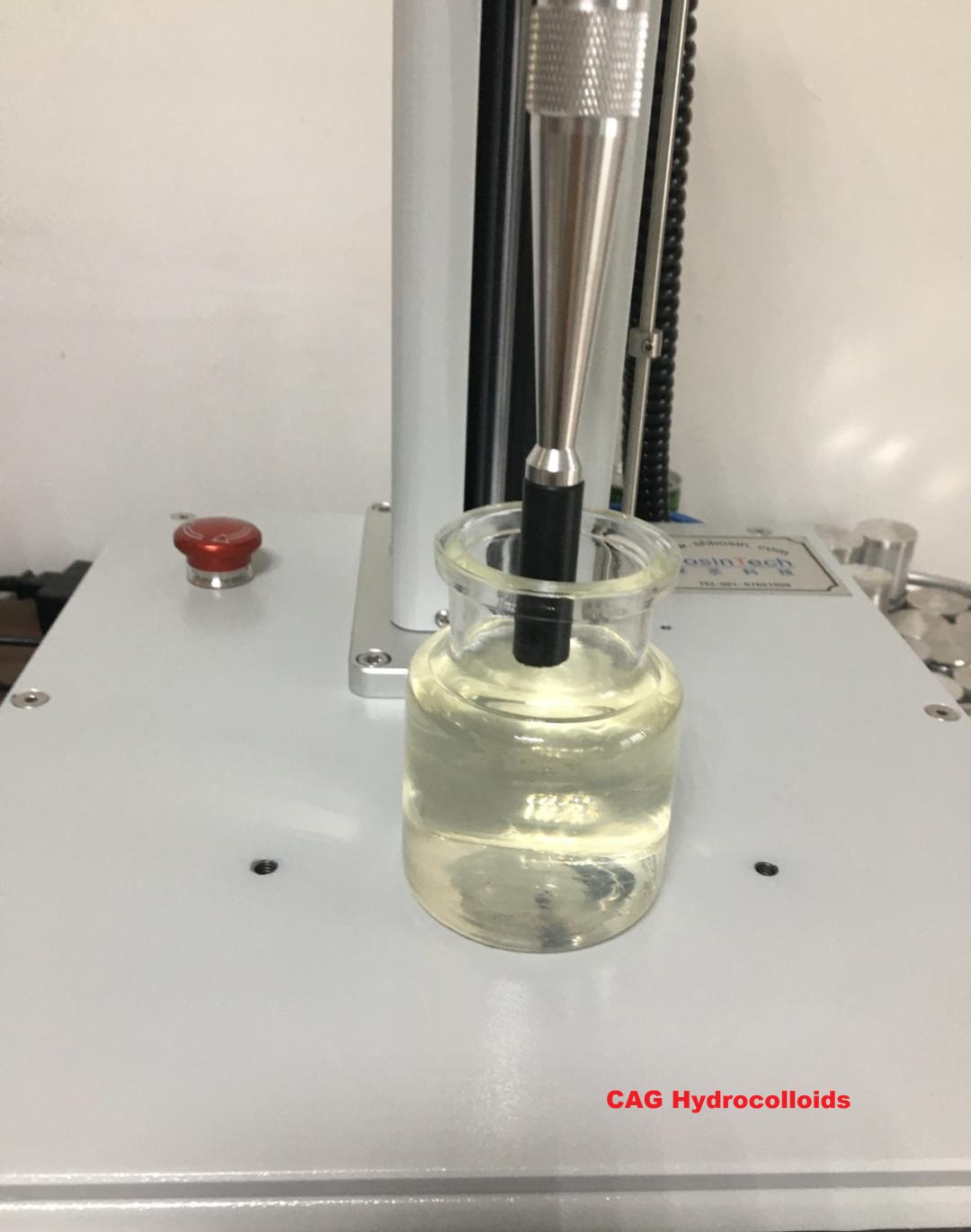
Bloom is the "Structural Force": It determines how much weight the gelatin can support after cooling (the essence of the Bloom test) and is the core indicator for gel-based products.
Viscosity is the "Flow Resistance": It determines the flow properties of the dissolved gelatin in production pipelines and is a key parameter for processing.
When purchasing or inspecting gelatin, it is essential to check both the Bloom value (e.g., 200 Bloom) and the viscosity value (e.g., 4.0 mPa·s). A single indicator cannot fully assess gelatin quality.

Email: info@cagcolloids.com
Tel: 0086-19884908291 / 0086-573- 88067623
Website: www.cagcolloids.com
Address: No. 399, East Tongfu Road, Tongxiang City, Zhejiang Province. China.