


Preguntas frecuentes
Naturaleza refinada, calidad definida
Ciencia verde para una vida mejor

In products like jellies and gummies, how can the gel texture (such as hardness, elasticity, brittleness, cohesiveness) be objectively evaluated?
In gel-type products like jellies and gummies, Texture Profile Analysis (TPA) is the "gold standard" for objectively evaluating texture. It translates subjective "mouthfeel" into quantifiable mechanical data, effectively avoiding the inconsistencies of manual sensory evaluation.
I. Definition of Core Indicators and Their Correlation to Mouthfeel
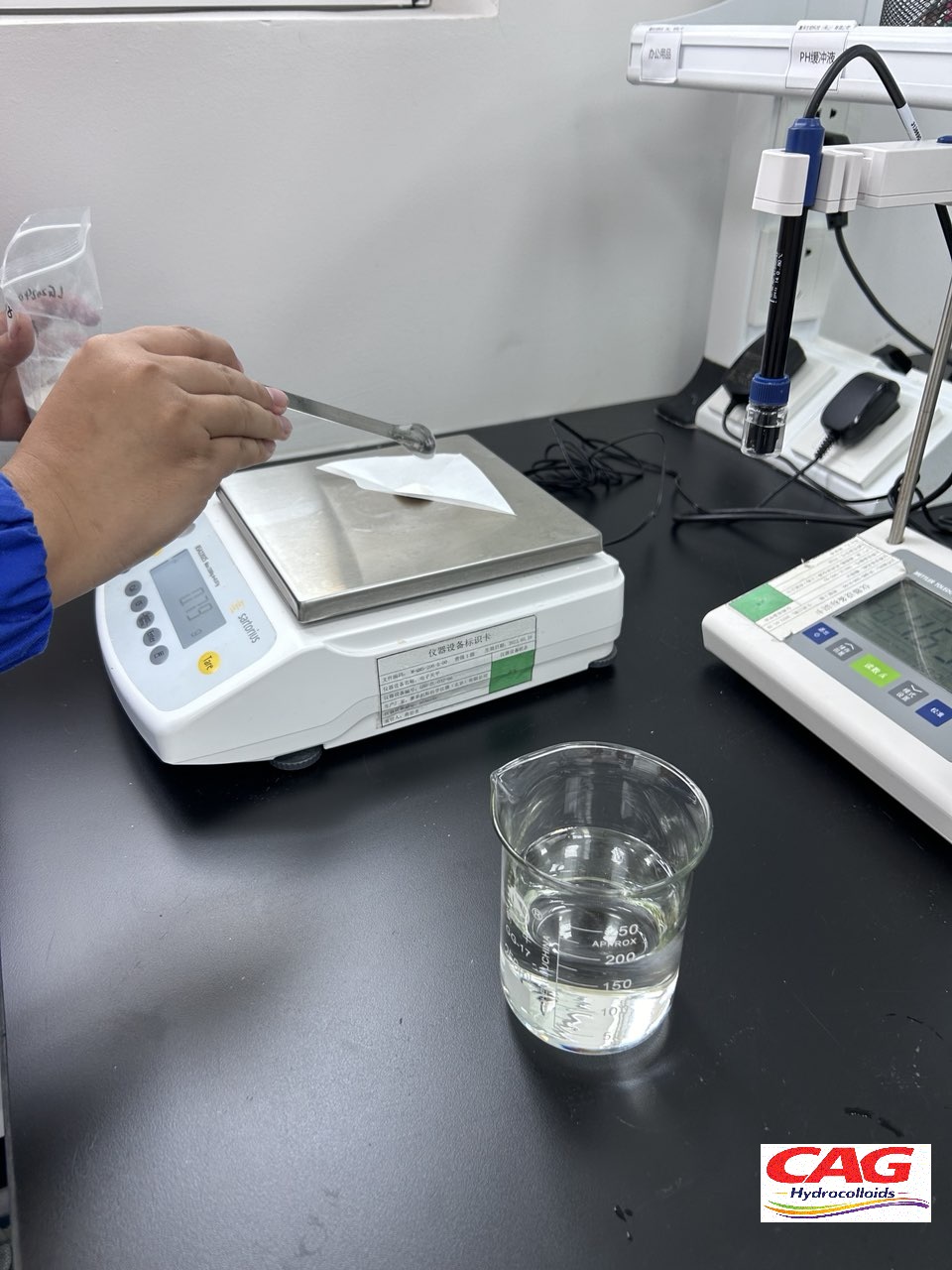
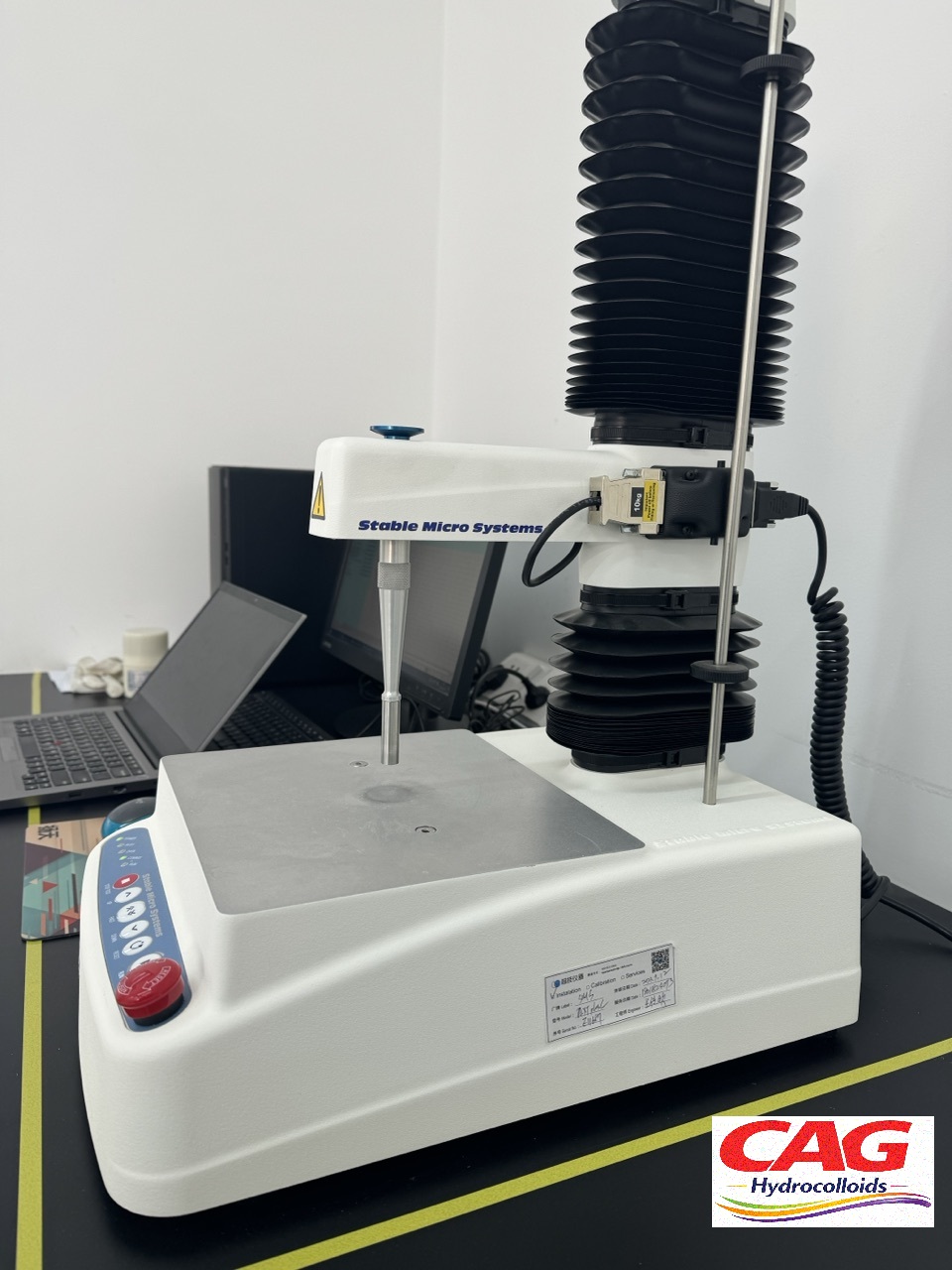
TPA testing simulates "chewing" through two compressions, primarily outputting the following key parameters:
|
Indicator |
Physical Meaning |
Corresponding Mouthfeel (Jelly/Gummy) |
|---|---|---|
|
Hardness |
Peak force during the first compression |
Bite resistance upon entry (soft/hard) |
|
Springiness |
Ratio of deformation between the first and second compressions |
Ability to return to original shape after releasing teeth (Q-弹感/bounciness) |
|
Cohesiveness |
Ratio of work done during the second compression to the first |
Internal structure compactness (whether it's loose, crumbly) |
|
Gumminess |
Hardness × Cohesiveness |
Viscous, chewy sensation of semi-solid gels |
|
Fracturability |
First significant break peak during the initial compression |
Force required for jelly surface rupture or gummy fracture |


Email: info@cagcolloids.com
Tel: 0086-19884908291 / 0086-573- 88067623
Website: www.cagcolloids.com
Address: No. 399, East Tongfu Road, Tongxiang City, Zhejiang Province. China.