


Preguntas frecuentes
Naturaleza refinada, calidad definida
Ciencia verde para una vida mejor

I want to purchase gellan gum products. How can I determine if the gellan gum I’m buying is of reliable quality?
We need to evaluate and judge whether the gellan gum meets the requirements from multiple aspects, including the manufacturer’s background, product packaging, physicochemical indicators, and application performance.
I. Core Evaluation Logic: A Tiered Verification Process
For high-end additives like gellan gum, procurement verification should be divided into three progressive levels, from surface to core:
Compliance of Documentation and Packaging: This is the "entry ticket" for quality reliability.
Conformity of Physicochemical Indicators: This is the standard for judging its "basic physical quality."
Compatibility of Application Performance: This is the key to verifying whether it "can perform the actual job."
II. Specific Steps in Procurement Evaluation
Step 1: Review Documentation and Packaging
This is the first gate for quality control. Failure here can result in immediate disqualification.
Supplier Qualifications: Purchase only from reputable factories that possess food additive production licenses and certifications such as ISO 22000/HACCP. Industry-leading brands, such as CAG Hydrocolloids, are preferred.
Packaging Integrity: Check that both inner and outer packaging are intact, sealed, undamaged, and uncontaminated. The packaging materials, especially the inner bag, should meet food-grade standards, effectively preventing moisture and light exposure. Standardized factories will use packaging that complies with EU standards.
Labeling and Accompanying Documents:
Labeling: Information must be complete and clear, including product name (high-acyl/low-acyl, specific model), batch number, production date, shelf life, applicable standards, manufacturer details, etc.
Certificate of Analysis (CoA): This is the mandatory core document. Each batch should be accompanied by an official CoA issued by the manufacturer’s quality department. Check that the data is complete, including key indicators such as moisture, ash content, gel strength, transparency, and pH value, and verify that they fall within the agreed specifications with the supplier or national standards.
Step 2: Verify Core Physicochemical Indicators
This is fundamental for assessing the intrinsic quality of the gellan gum. Since different factories may use different testing methods, it is crucial to clarify the testing methods with the supplier and compare them accordingly.
Qualitative Testing (Preliminary Screening):
A 1% sample solution should form a gel in both calcium ion (e.g., 0.05% CaCl₂) and sodium ion (e.g., 1% NaCl) environments. This is the quickest way to verify that the substance is indeed gellan gum.
Key Quantitative Indicators:
Gel Strength: Measures how "firm" the gel is.
Low-Acyl Gellan Gum: Typically tested with a 0.5% solution + 0.05% CaCl₂. Manufacturers like CAG Hydrocolloids, which use methods similar to those of CP Kelco, provide more comparable data. High-quality products usually have a gel strength greater than 1000 g/cm². The higher the strength, the better the quality, and the lower the required dosage.
High-Acyl Gellan Gum: Tested with a 0.5% aqueous solution gel. High-quality products typically have a strength above 450 g/cm².
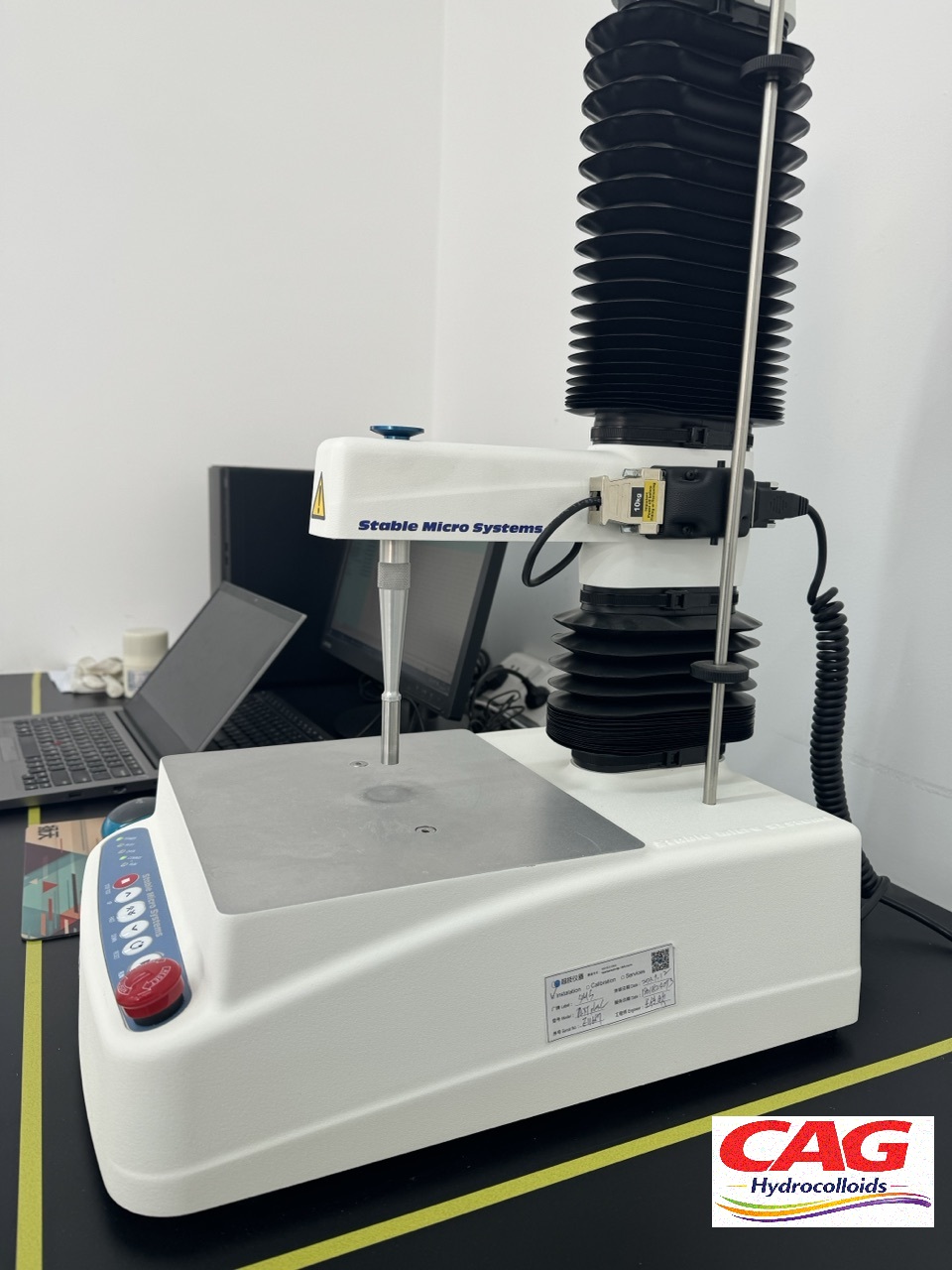
CAG gellan gum gel strength is determined by TPA
Transparency: Primarily for low-acyl gellan gum. The light transmittance of a 0.5% solution + 0.06% CaCl₂ gel should generally be no less than 80% for high-quality products.
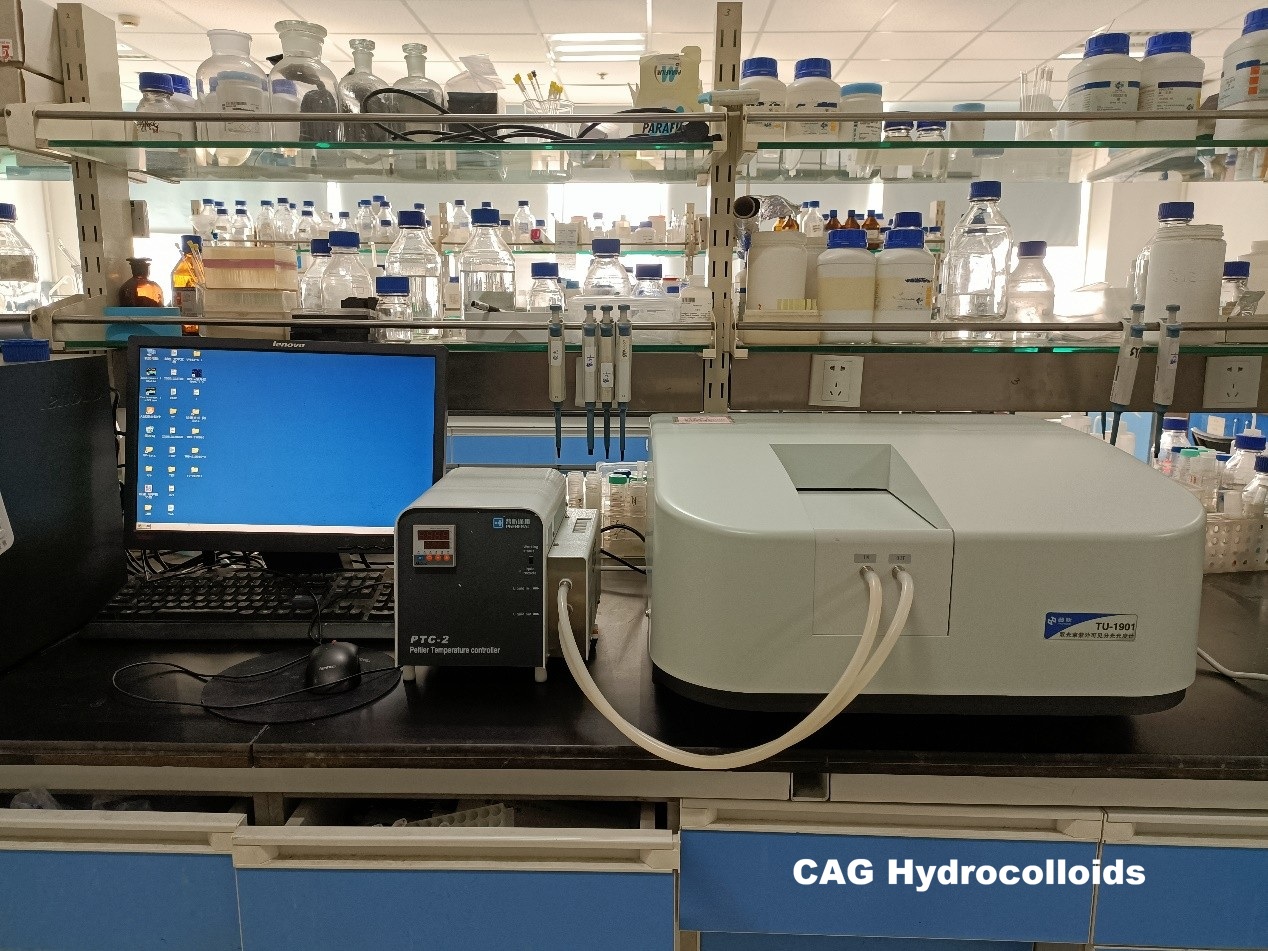 CAG using Spectrophotometer to determine the transmittance of gellan gum
Moisture Content: Should be controlled below 12%. Low-acyl gellan gum is typically around 10%, while high-acyl should be even lower (7–8%). Excessive moisture can lead to clumping and affect shelf life and efficacy.
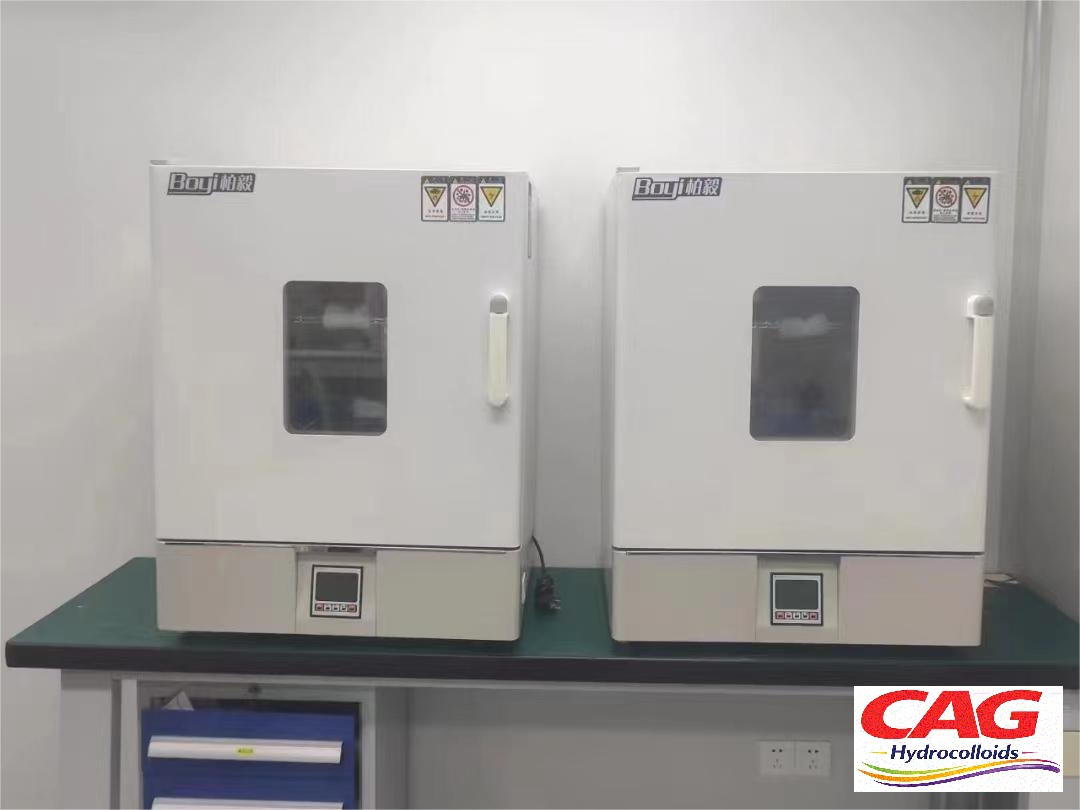
Moisture content testing
Ash Content: Reflects the inorganic salt content of the product.
Low-Acyl: Typically around 10–12% (due to sodium, potassium, calcium, and magnesium cations), which is normal.
High-Acyl: Should be lower (typically ≤6%). If the ash content of high-acyl gellan gum is abnormally high, caution is needed, as it may indicate cost-saving measures during production, such as replacing part of the ethanol/isopropanol extraction with calcium or magnesium ions, which can affect gel performance.
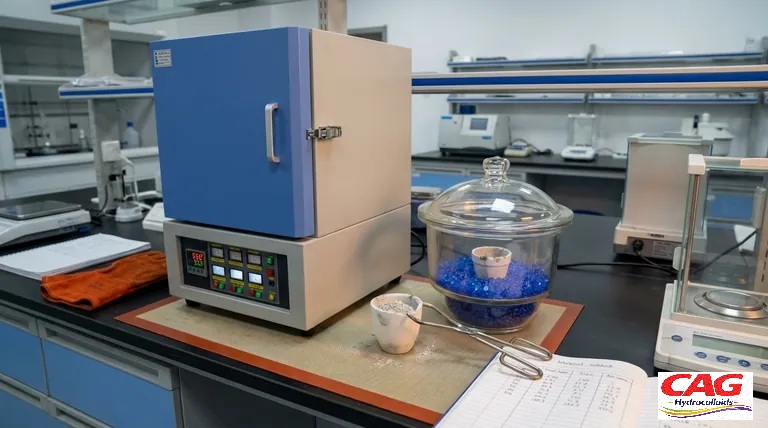
Ash content testing
Content/Purity:
Ethanol Insoluble Matter Method (GB 25535-2010): Should fall within 85–108%.
CO₂ Generation Rate Method (derived from alginate testing, for reference): The qualified range is typically 3.3–6.8%.
Step 3: Conduct Application Testing
This is the final and most practical verification step. Application testing is essential, regardless of whether full physicochemical testing capabilities are available.
Routine Application Verification:
Suspension Stability: Observe whether particles in the target product (e.g., fruit juice beverages) remain stably suspended and whether sedimentation or layering occurs.
Gel Performance: Evaluate the gel’s elasticity, brittleness, and texture to ensure it meets expectations.
Thermal Stability: This must be tested for low-acyl gellan gum in applications such as artificial fruit pulp and multi-layer jellies.
Protein Compatibility: For high-acyl gellan gum in acidic protein beverages, observe whether precipitation or flocculation occurs.
Absence of Off-Flavors: High-acyl gellan gum used in neutral dairy beverages must be of the enzyme-removed type.
Sensory Evaluation: Check the powder for uniform color, absence of black spots or foreign odors, and ensure the powder has no undesirable smell.
In-Depth Evaluation of Supplier Application Capabilities: A good supplier does more than merely produce products that meet national standards.
"Grading" and "Standardization" Capability: Reputable factories will conduct strict application tests to "grade" their products, allocating batches most suitable for specific applications to corresponding customers or applying "standardization" to ensure extremely high batch-to-batch consistency, which is key to ensuring stable production for your products.
Ability to Provide "Solutions": Outstanding factories can develop and provide specialized product types, reflecting their technical expertise. Examples include:
High-Acyl Type for Acidic Milk: Prevents reactions with casein that cause precipitation.
Enzyme-Removed Modified High-Acyl Type: For neutral dairy beverages, prevents off-flavors caused by residual enzyme activity.
High Thermal Stability Type: Suitable for baked goods, multi-layer jellies, artificial fruit pulp, etc.
Plant Culture Media Type: Features rapid dispersibility, good gel performance, and low ash content.
Low Viscosity Type: Low-acyl gellan gum used in "bursting pearls" requires low viscosity to reduce pumping pressure and prevent tailing.
Internal Standards Exceeding Industry Standards: Their internal control standards should be far higher than the minimum requirements of national standards, ensuring long-term quality stability.
Summary and Recommendations
As a purchaser, your judgment should form a closed-loop process:
Select a compliant supplier → Verify documentation and packaging → Confirm physicochemical indicators (conduct in-house testing if possible; otherwise, rely on the CoA from a reputable supplier) → Perform targeted application testing → Continuously monitor the supplier’s batch consistency and technical support capabilities.
For small and medium-sized users unable to conduct complex physicochemical tests, stricter application testing should be enforced, and greater reliance should be placed on reputable suppliers that provide complete, authentic CoAs and strong application technical support. Close communication with the supplier’s technical personnel and requesting application test reports tailored to your products are effective ways to mitigate risks.
If you have further technical questions, feel free to consult Dr. Colloids at CAG Hydrocolloids.
Email: info@cagcolloids.com
Tel: 0086-19884908291 / 0086-573- 88067623
Website: www.cagcolloids.com
Address: No. 399, East Tongfu Road, Tongxiang City, Zhejiang Province. China.