


Preguntas frecuentes
Naturaleza refinada, calidad definida
Ciencia verde para una vida mejor

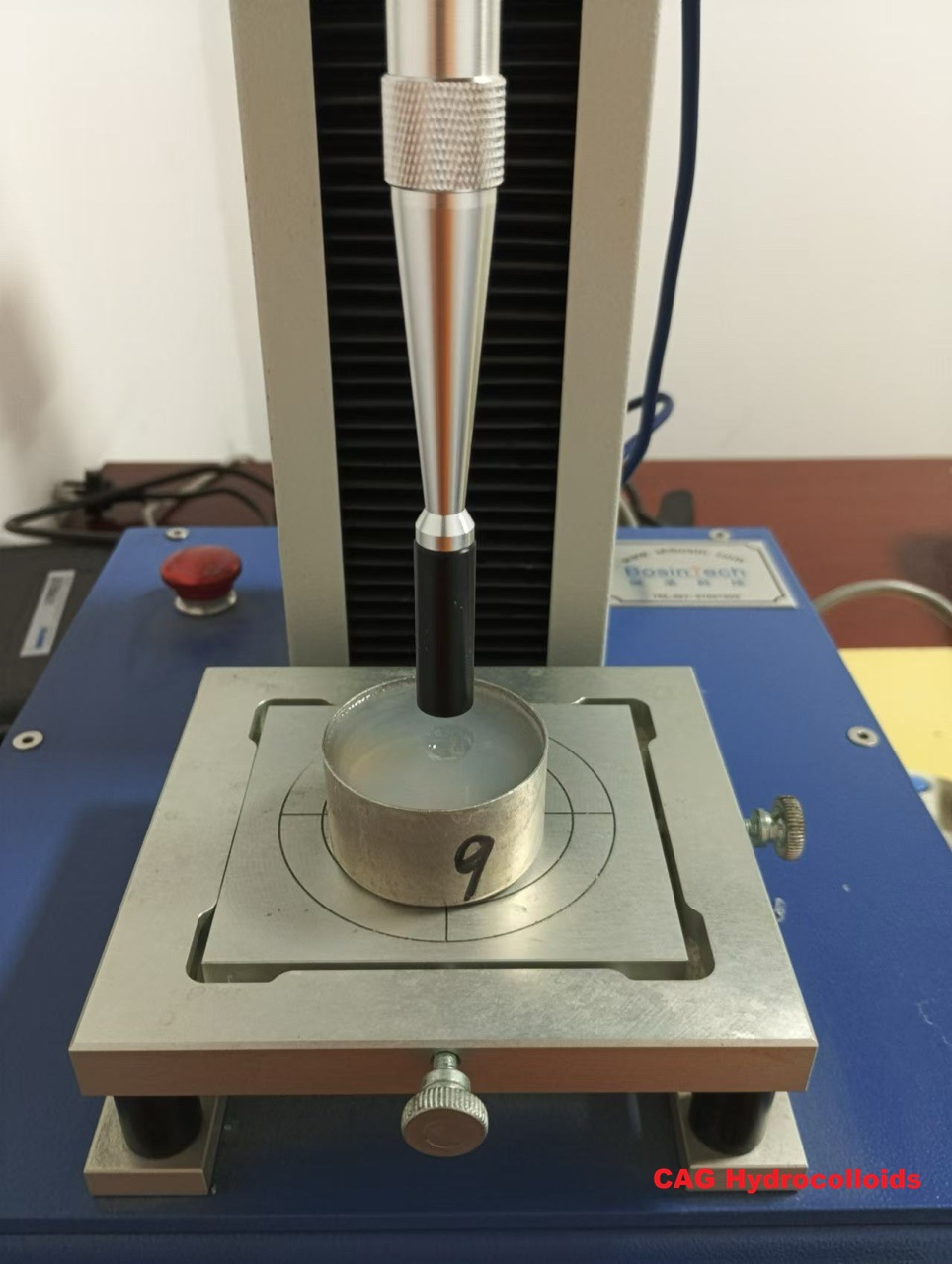
How should the Texture Profile Analysis (TPA) test parameters on a texture analyzer be set?
Key Parameter Settings (Using TA.XT Plus as an example)
|
Parameter |
Jelly (Reference) |
Gummy (Reference) |
Setting Instructions |
|---|---|---|---|
|
Test Mode |
TPA / Double Compression |
TPA / Double Compression |
Must select TPA mode |
|
Compression Strain |
30% - 50% |
25% - 40% |
Jelly can be slightly higher; gummy should not be too high to avoid crushing |
|
Trigger Force |
5 g |
10 g |
Ensures data collection starts after probe contacts the sample |
|
Test Speed |
1.0 - 2.0 mm/s |
1.0 - 2.0 mm/s |
Excessive speed can cause significant data fluctuation |
|
Time Between Compressions |
3 - 5 seconds |
3 - 5 seconds |
Allows sample recovery; crucial for the springiness indicator |
3. Sample Preparation Specifications
Dimensions: Recommended uniformity: Height 15-20mm, diameter greater than 1.5 times the probe diameter.
Temperature: Must be constant! Recommended testing at 20-25°C. Temperature fluctuations significantly affect gel strength.
Resting: Let samples rest for 30 minutes before testing to release internal stress.
III. Typical Product TPA Data Reference Ranges
|
Product Type |
Hardness (g) |
Springiness |
Cohesiveness |
Typical Characteristics |
|---|---|---|---|---|
|
Regular Jelly |
100 - 300 |
0.85 - 0.95 |
0.55 - 0.70 |
Low hardness, high elasticity |
|
Pudding |
200 - 500 |
0.75 - 0.85 |
0.65 - 0.80 |
Medium gumminess |
|
Gelatin Gummy |
800 - 1500 |
0.90 - 0.98 |
0.60 - 0.75 |
High elasticity, chewy |
|
Starch Gummy |
1000 - 2000 |
0.70 - 0.85 |
0.50 - 0.65 |
High hardness, lower elasticity |
IV. Common Issues and Troubleshooting
Poor Data Repeatability
Causes: Inconsistent sample height, excessive compression causing irreversible damage, uncontrolled temperature.
Solution: Use molds to cut samples, strictly control ambient temperature.
Abnormal Springiness Values (>1 or very low)
Causes: Improper setting for the time between compressions. Too short, sample doesn't recover; too long, data becomes scattered.
Solution: Adjust the interval to 3-5 seconds and ensure consistent pre-test and test speeds.
How to Evaluate "Fracturability"
For certain jellies (e.g., containing agar/carrageenan), Fracturability is an important indicator. In the TPA curve, it appears as the first peak force during the initial compression. A lower value indicates a more "tender" mouthfeel; a higher value indicates a more "brittle/crisp" mouthfeel.
V. Application Recommendations
R&D: Use TPA to compare texture differences between different hydrocolloids (e.g., gelatin vs. gellan gum) to optimize blend ratios.
QC: Set upper and lower limits for hardness and springiness as release criteria for each production batch to ensure consistent mouthfeel


Email: info@cagcolloids.com
Tel: 0086-19884908291 / 0086-573- 88067623
Website: www.cagcolloids.com
Address: No. 399, East Tongfu Road, Tongxiang City, Zhejiang Province. China.