


Preguntas frecuentes
Naturaleza refinada, calidad definida
Ciencia verde para una vida mejor

How does the elasticity of gels from k-carrageenan, agar, and gelatine change with concentration and pH, and how does this contrast with the behavior of gellan gum?
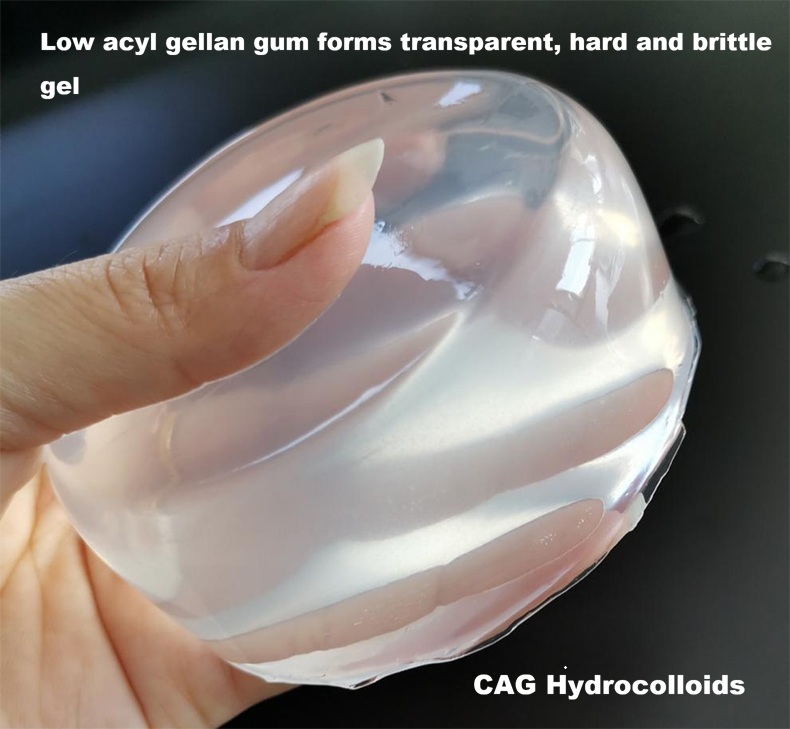
Comparative studies on the elasticity of these hydrocolloids reveal distinct behaviors. The elasticity of k-carrageenan gels is largely independent of both gum concentration and pH. For agar and gelatine gels, pH has only a minor influence on elasticity. However, both agar and gelatine show a characteristic concentration dependence: elasticity increases fairly rapidly at low gum concentrations but then tends to level off at higher concentrations. This contrasts with the behavior of low-acyl gellan gum (Gelrite), whose elasticity is inherently very low (around 10% in the presence of optimal ions) and shows only a slight increase as its own concentration is increased. The dominant factor for gellan gum elasticity is ion concentration, not pH.

Email: info@cagcolloids.com
Tel: 0086-19884908291 / 0086-573- 88067623
Website: www.cagcolloids.com
Address: No. 399, East Tongfu Road, Tongxiang City, Zhejiang Province. China.