


Preguntas frecuentes
Naturaleza refinada, calidad definida
Ciencia verde para una vida mejor

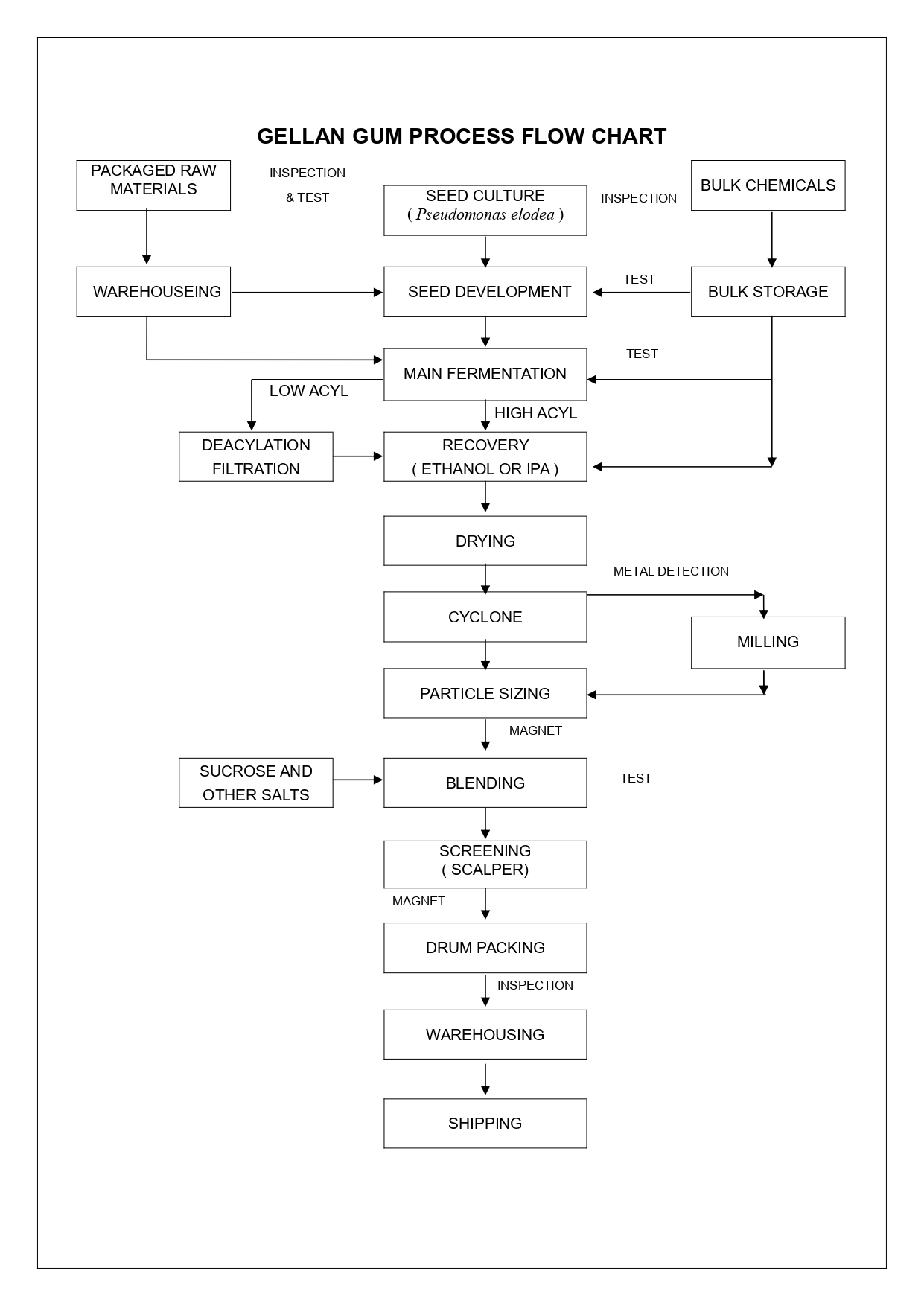
Gellan Gum Production Process: Distinguishing High-Acyl and Low-Acyl Pathways
The production of high-acyl and low-acyl gellan gum involves fundamentally different post-fermentation processing paths. The core principle is that high-acyl gum requires gentle extraction to preserve its natural acyl groups, while low-acyl gum requires deliberate de-esterification via alkali treatment.
Here is the revised and detailed production process, clearly differentiating the two pathways.
|
Production Stage |
High-Acyl Gellan Gum Process |
Low-Acyl Gellan Gum Process |
Core Difference & Objective |
|---|---|---|---|
|
1. Fermentation |
Uses the same bacterial strain (Sphingomonas elodea). Fermentation parameters may be finely tuned to slightly favor the natural biosynthesis of acylated polymer. |
The fermentation process is similar, aiming for high yield. The level of acylation is not a primary target at this stage. |
Fermentation provides the base polymer. The decisive step determining acyl content occurs after fermentation. |
|
2. Extraction & Conversion |
Core: Gentle treatment to preserve acyl groups. |
Core: Alkali treatment to remove acyl groups. |
This is the most fundamental distinction. |
|
3. Purification |
The alcohol-precipitated gum is washed with alcohol-water mixtures to remove impurities, pigments, and salts. As it hasn't undergone harsh treatment, the impurity profile differs, requiring optimized washing conditions. |
The precipitated gum is similarly washed. Due to the alkali treatment, it may contain more soluble salts, necessitating thorough washing. |
The goal is the same: obtain high-purity polysaccharide. Washing formulations are adjusted based on the upstream process. |
|
4. Drying & Standardization |
Drying uses gentle methods (e.g., spray drying) to avoid excessive heat that could cause residual acyl loss. Standardization primarily adjusts gel strength and particle size. |
Drying methods are similar. Standardization, besides gel strength, must precisely control the product's ionic (K⁺/Ca²⁺) responsiveness. |
Drying must protect product functionality. Standardization focuses differ: High-acyl focuses on texture, low-acyl on the stability of ionic gelation behavior. |
Stability Challenge for High-Acyl Products: Since acyl groups are attached via ester linkages, they can slowly hydrolyze even during storage. Production and storage conditions (temperature, humidity, pH) must be as mild as possible to preserve their unique elastic gelling properties.
Uniformity Challenge for Low-Acyl Products: The temperature, time, and pH uniformity during alkali treatment must be strictly controlled. Any fluctuation can cause batch-to-batch variations in the final product's gel strength, setting temperature, and clarity.
Economics and Environmental Impact of Alcohol Recovery: Both pathways use large volumes of alcohol. Efficient solvent recovery systems are critical for cost control and environmental compliance.
Aseptic Control: Steps from fermentation up to precipitation must prevent microbial contamination, especially the post-pasteurization steps in the high-acyl pathway.
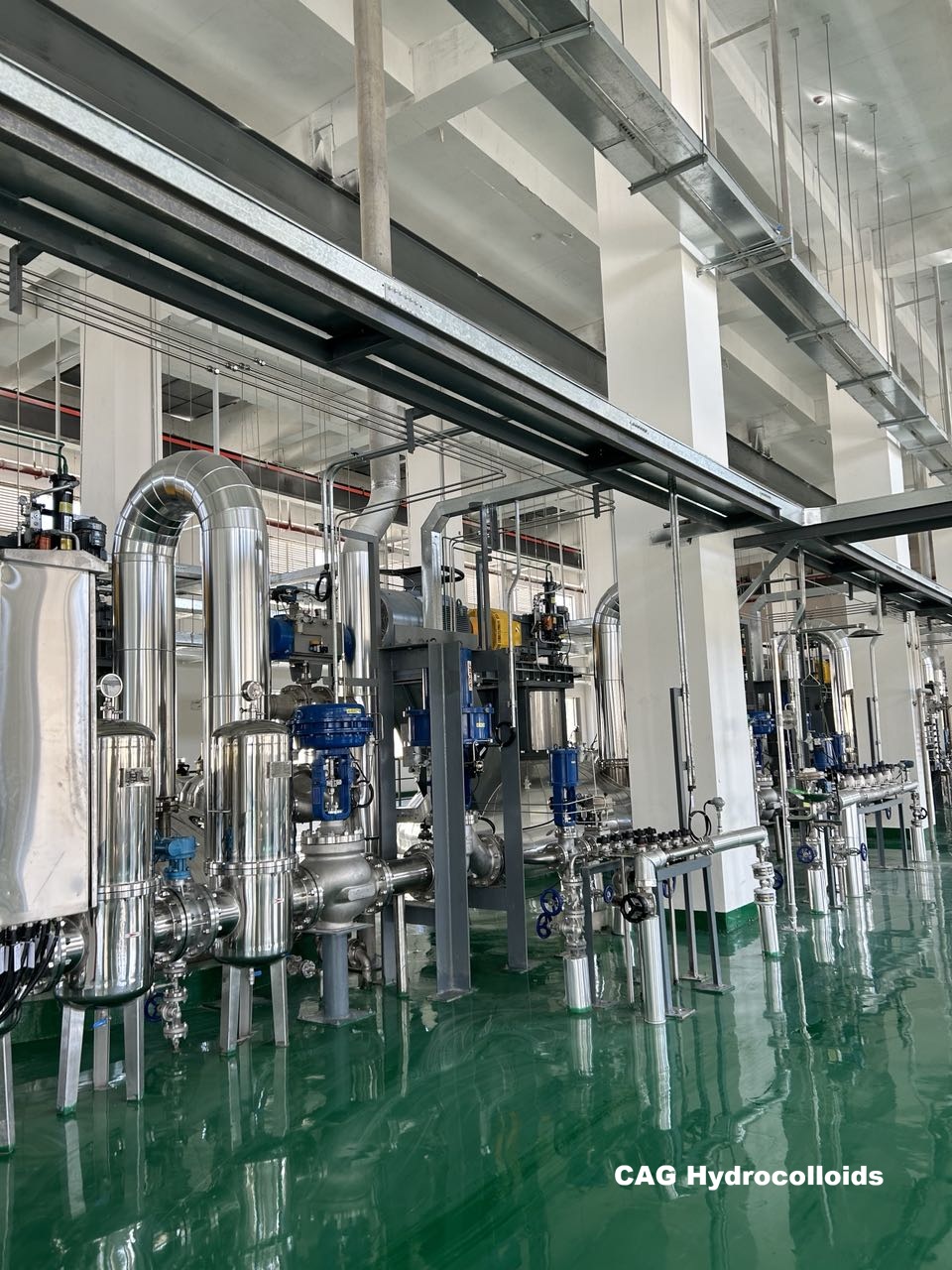
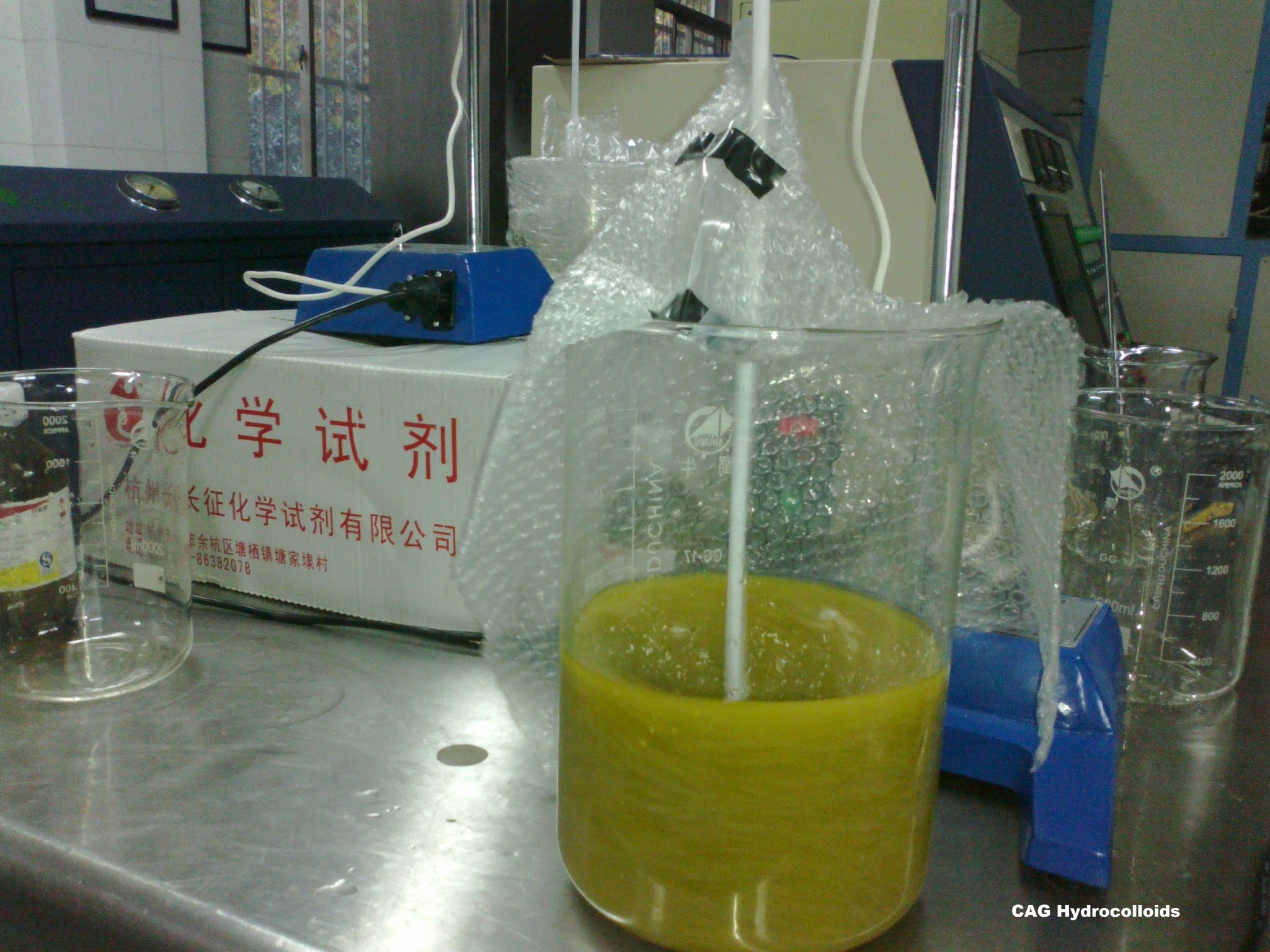
Fermentation Workshop High acyl gellan gum extraction by ethanol in lab
Summary:
The production of gellan gum perfectly illustrates the principle that "structure determines function." High-acyl and low-acyl gellan gum are not two different raw materials, but two functionally distinct products obtained by applying radically different post-fermentation treatments to the same fermented broth.
The High-Acyl process is a protective extraction, whose core is to "preserve" the native structure.
The Low-Acyl process is a modificative conversion, whose core is to "alter" the molecular structure.
This fundamental difference dictates why one forms a thermo-reversible, elastic gel similar to gelatin, while the other forms a thermo-irreversible, brittle gel similar to agar, leading to their applications in fields ranging from desserts to plant tissue culture media
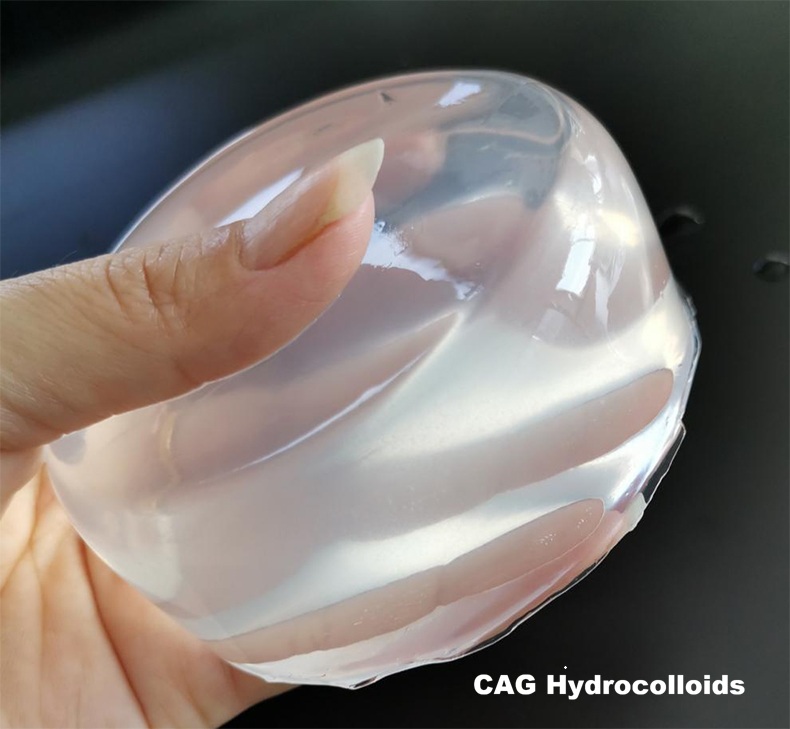
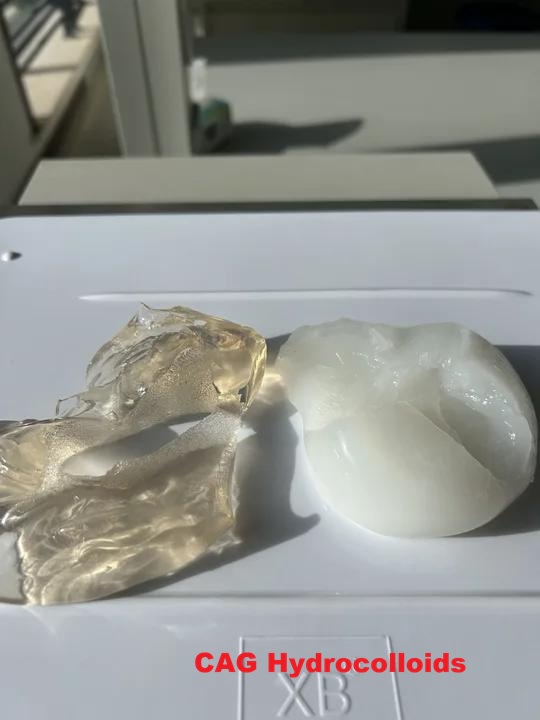
Low Acyl gellan gum High Acyl gellan gum ( Transparent and Regular types )

Email: info@cagcolloids.com
Tel: 0086-19884908291 / 0086-573- 88067623
Website: www.cagcolloids.com
Address: No. 399, East Tongfu Road, Tongxiang City, Zhejiang Province. China.