


Preguntas frecuentes
Naturaleza refinada, calidad definida
Ciencia verde para una vida mejor

Comparative Test Method for Thermal Stability of Low-Acyl Gellan Gum
1.1 Experimental Materials:
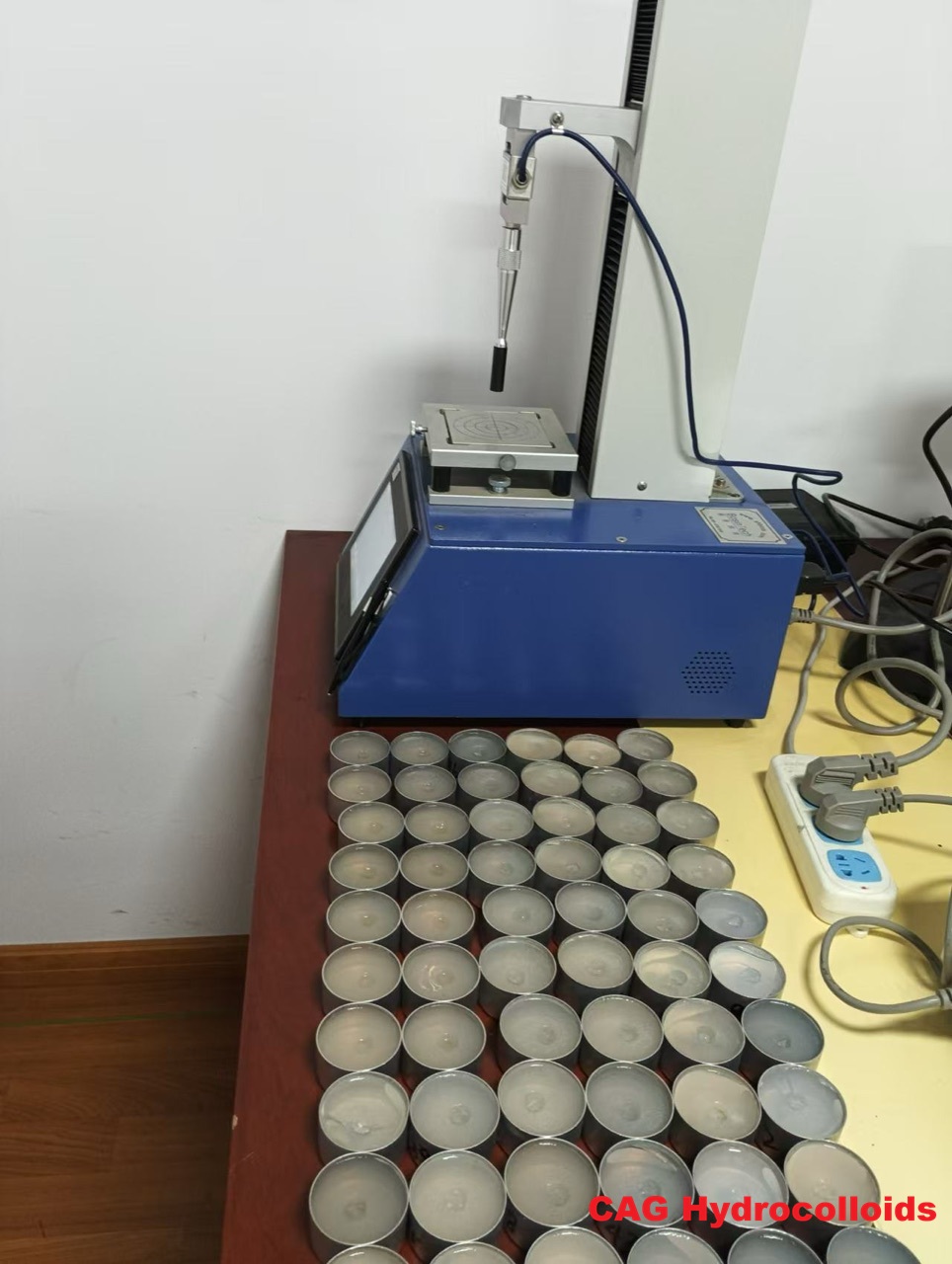
Low-acyl gellan gum, calcium chloride, water bath, TPA (Gel Strength Tester).
1.2 Experimental Method:
Following the method for determining gel strength, prepare 10 parallel samples of low-acyl gellan gum from different sources. (Using a ratio of 0.6g dissolved in 120ml of water, with 2ml of 2.7% calcium chloride solution added. As 10 samples are to be prepared, the ingredient amounts can be scaled up proportionally.)
Five of these samples are stored at 20°C for 10 hours, after which their strength is measured using the gel strength tester, and the gel strength data is recorded. The other five samples are also stored at 20°C for 10 hours. Then, the water bath temperature is adjusted to 95°C, and the weighing dishes (containing the gellan gum gel) are placed into the water bath, ensuring the gel surface is completely submerged in the hot water. The samples are maintained at 95°C for 3 hours. The weighing dishes are then quickly removed from the water bath one by one, and the gel strength is measured immediately (within one minute per sample), with the strength value for each sample recorded.
1.3 Experimental Analysis:
As ten samples are prepared for each source of low-acyl gellan gum, with five samples measured directly for gel strength (GS1) and the other five measured for gel strength after heating (GS2), the difference between the two gel strengths (GS1 - GS2) divided by the initial gel strength (GS1) gives the proportion of gel strength reduction: DR = (GS1 - GS2) / GS1. A larger DR value indicates a greater reduction in gel strength, meaning the product has poorer thermal stability. CAG Hydrocolloids requires the DR value not to exceed 55%.
1.4 Key Experimental Considerations:
1.4.1 During the experiment, special attention must be paid to the operation of heating the gel in the water bath. The weighing dishes must be tall enough to be fully immersed in the 95°C water, ensuring the gel inside the dishes is completely submerged below the water surface. At the same time, water from the bath must not enter the weighing dishes (it is required to cover the dishes during the water bath process).
1.4.2 The gel strength measurement after water bath heating must be performed quickly. The weighing dishes should be removed from the water bath rapidly one by one, and the gel strength should be measured immediately (completed within one minute) to avoid errors caused by gel cooling.
Email: info@cagcolloids.com
Tel: 0086-19884908291 / 0086-573- 88067623
Website: www.cagcolloids.com
Address: No. 399, East Tongfu Road, Tongxiang City, Zhejiang Province. China.