


Preguntas frecuentes
Naturaleza refinada, calidad definida
Ciencia verde para una vida mejor

Why is it necessary to choose high-acyl gellan gum with caution?
High-acyl gellan gum can form soft, highly elastic, and flavor-releasing gels, but its excellent performance also comes with high production and application barriers. Choosing a supplier means selecting their precision control system. The reasons are as follows:
1. Production: Difficulty in handling ultra-high viscosity
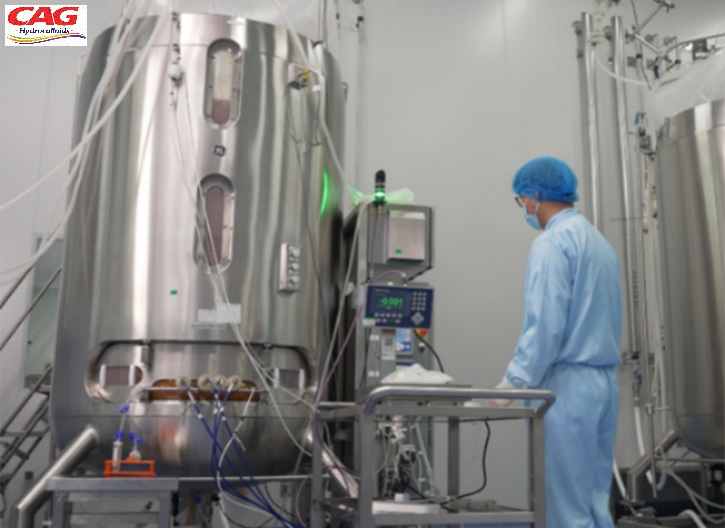
The fermentation broth is like a thick paste, with extremely high viscosity, making mixing, mass transfer, heat exchange, and downstream extraction extremely challenging. This demands specialized equipment and stringent processes.
2. Process: High sensitivity of molecular structure
Its functional core (acyl substitution degree and distribution) is highly sensitive to minor fluctuations in fermentation parameters such as temperature, pH, and dissolved oxygen. Any deviation directly affects gel performance, making batch-to-bust consistency a significant challenge.
3. Quality Control: Difficulty in ensuring consistent performance
Basic chemical indicators cannot reflect key functional properties, while rheological performance testing is lagging. Suppliers must have advanced internal control standards and capabilities to stabilize final product performance through deeper indicators (e.g., molecular characteristics).
4. Application: High demands due to extremely low dosage
Its parts-per-million-level dosage requires precise weighing and absolute uniform dispersion. Minor process variations in application can lead to significant fluctuations in results, leaving little room for error in testing and process scaling.
Key Recommendation
When selecting, go beyond price comparisons and focus on evaluating the supplier’s:
Hardware and process capabilities for large-scale production of high-viscosity products.
Precision process control records and data to ensure batch-to-batch consistency.
Deep quality control system to deliver stable application performance.
Technical support ability to help customers overcome challenges in dispersion and application at extremely low dosages.
It is recommended to make the final decision through rigorous sample evaluation, multi-batch testing, and on-site audits.

Email: info@cagcolloids.com
Tel: 0086-19884908291 / 0086-573- 88067623
Website: www.cagcolloids.com
Address: No. 399, East Tongfu Road, Tongxiang City, Zhejiang Province. China.