


Preguntas frecuentes
Naturaleza refinada, calidad definida
Ciencia verde para una vida mejor

Why does low-acyl gellan gum from some manufacturers fail to form a gel in plant tissue culture?
The core reason lies in the incompatibility between industrial (food-grade) low-acyl gellan gum and the ionic environment of plant culture media (e.g., MS medium), which leads to failure throughout the entire process from dispersion and dissolution to gel formation. The specific mechanisms are as follows:
The Critical Conflict of Ionic Environment: Standard plant culture media like MS are rich in calcium ions (Ca²⁺), magnesium ions (Mg²⁺), and potassium ions (K⁺) (e.g., from CaCl₂, MgSO₄, KNO₃). The gelling mechanism of low-acyl gellan gum precisely relies on these divalent cations (especially Ca²⁺) acting as "bridges" to form a sturdy "egg-box" structure. However, the contradiction is: if these ions are present in large quantities before the gellan gum is fully hydrated and dissolved, they immediately cause local cross-linking with the carboxyl groups on the surface of the gum particles. This leads to instantaneous pre-gelation on the particle surface, forming a dense "shell." This shell severely hinders further hydration of the internal gum powder, ultimately resulting in insoluble "fish eyes" or lumps. The gelling process fails at the very first step.
Inherent Deficiencies in Dispersibility and Solubility: The production process of ordinary industrial-grade gellan gum is not designed for complex ionic solutions, and its dispersibility is often poor. When directly sprinkled into the culture medium, it readily clumps. In the presence of ions, this problem is drastically amplified, creating a vicious cycle: clumping → reduced surface area → increased difficulty in dissolving → surface hardening due to ions → complete failure to dissolve.
The Solution: Plant Tissue Culture (PTC) Grade Gellan Gum: Professional PTC-grade gellan gum (such as products from CAG Company) overcomes the above obstacles through the following technologies:
Optimized Ionic Compatibility: The product is specially treated or formulated to tolerate or adapt to the basal ion concentration in the medium, avoiding rapid pre-gelation.
Superior Dispersibility: Through physical modification (e.g., particle size control, co-processing with dispersants), it ensures uniform and slow dispersion in the liquid, buying time for complete hydration.
High Purity and Stability: Extremely low levels of impurity ions avoid introducing uncontrolled cross-linking factors, ensuring reproducible gelling behavior across various medium formulations.
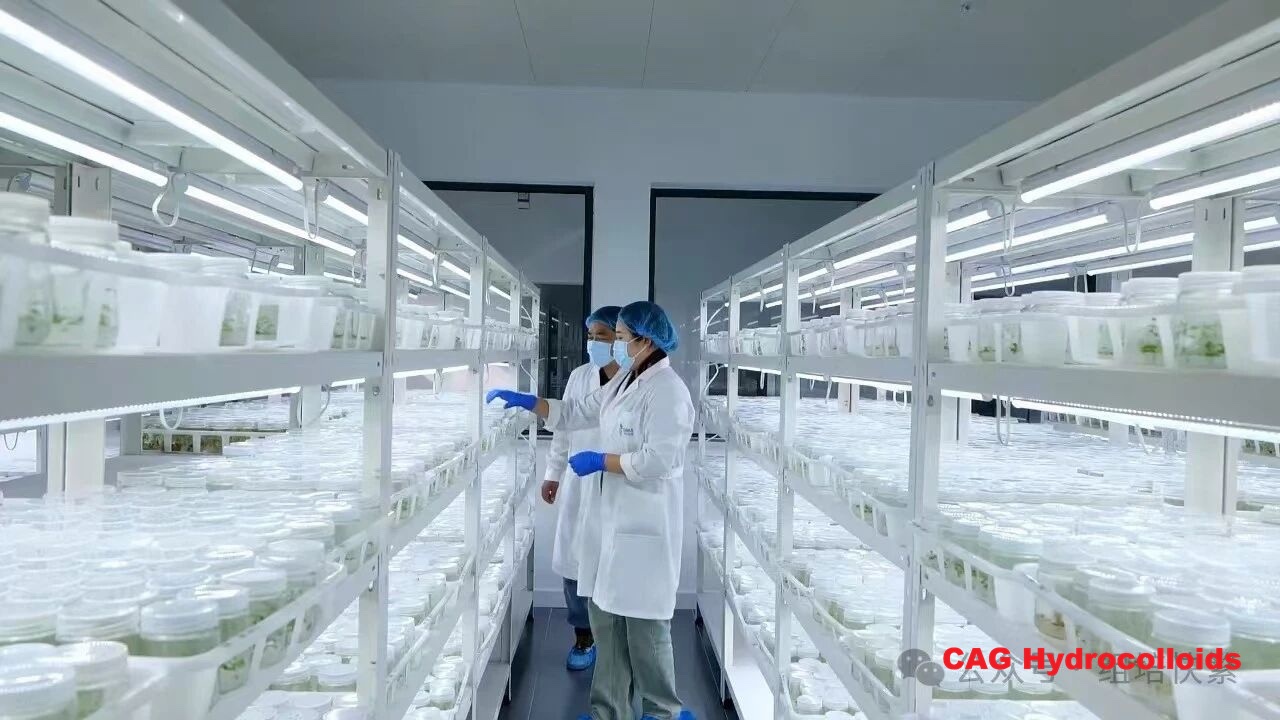
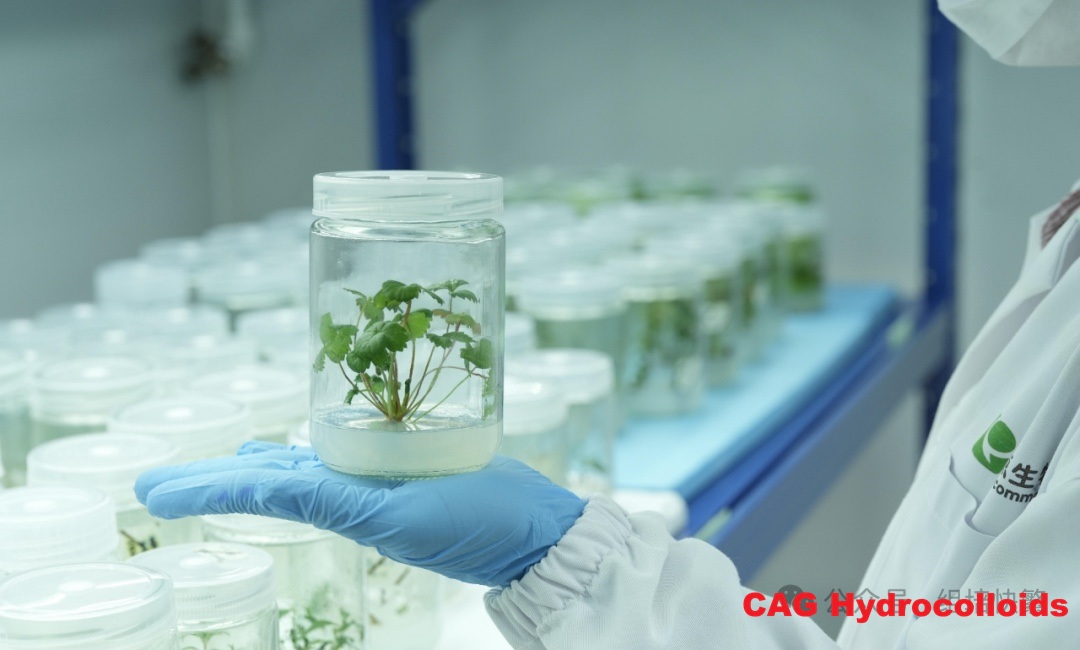
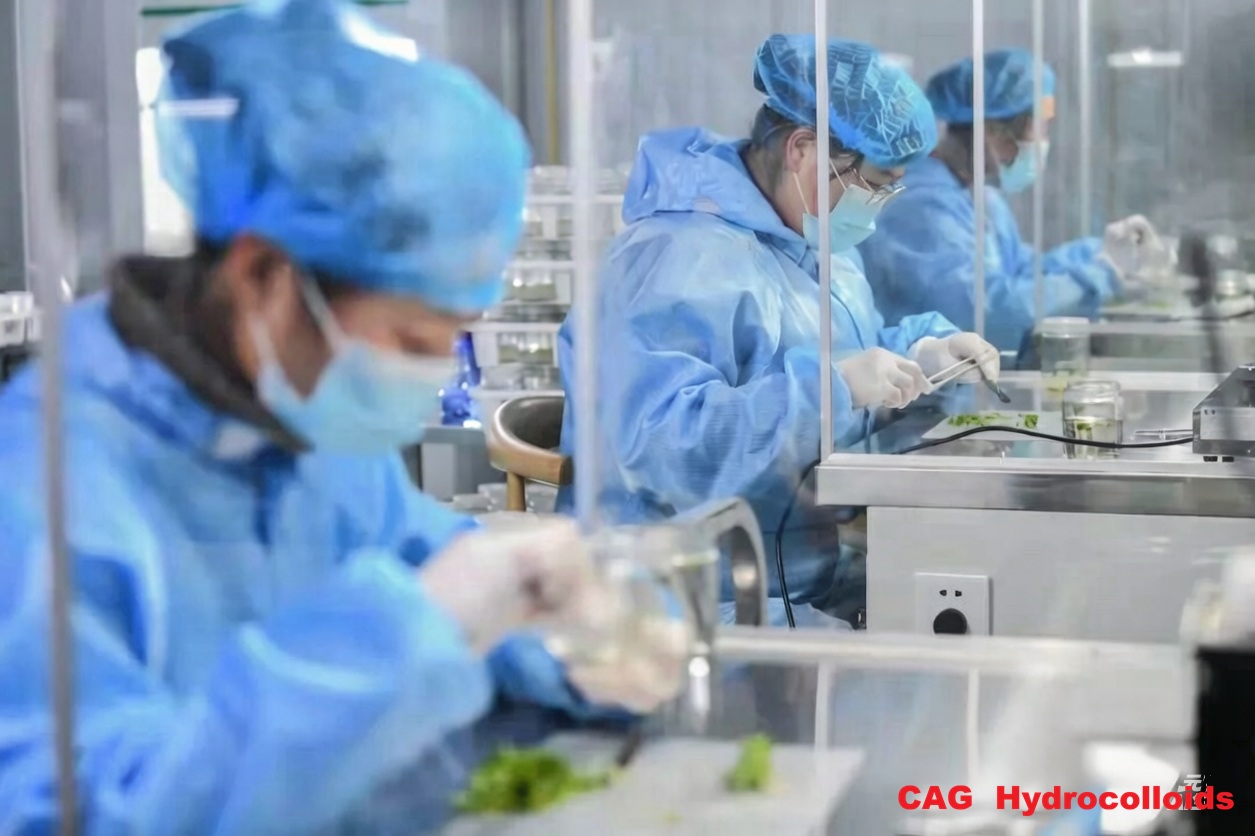
CAG Hydrocolloids offer huge quantity of Tissue Culture Grade gelling agents for Plant Tissue Culture Customers around the world
It is for these reasons that CAG's plant tissue culture-specific gellan gum, with its excellent ionic adaptability and dissolution reliability, has been exported to over thirty countries and regions worldwide, gaining broad recognition from research institutions and commercial tissue culture operations across the globe.
Supplement: Which plant culture systems are particularly suitable for using gellan gum (where agar/carrageenan are less suitable)?
The unique advantages of gellan gum (high clarity, high strength, low usage concentration, minimal impact on hormone diffusion) are especially prominent in the following culture scenarios, where it can often replace agar or carrageenan:
|
Culture System / Objective |
Why Gellan Gum is Superior |
Limitations of Agar / Carrageenan |
|---|---|---|
|
1. Protoplast Culture, Cell Suspension Culture |
The gel is hard and uniform, effectively immobilizing cells, while its high clarity facilitates microscopic observation. Low usage concentration reduces potential toxicity to cultures and adsorption of nutrients. |
Agar has lower clarity, and impurities within it may be toxic to fragile cells. Carrageenan gels can be too brittle, and some types carry complex ions. |
|
2. Cultures Requiring High Clarity for Observation (e.g., root development studies, embryogenesis observation) |
Forms a crystal-clear gel that minimally interferes with visual or optical instrument observation, making it the optimal matrix for morphological and developmental studies. |
Agar gels are typically semi-translucent or slightly opaque, offering poor clarity. Carrageenan clarity is good, but its strength and stability may be inferior to gellan gum. |
|
3. Plants Sensitive to Growth Inhibitors (e.g., some ferns, rare orchids) |
PTC-grade gellan gum has extremely few impurities, notably lacking growth inhibitors (e.g., sulfides, polyphenols) that may be present in agar, providing a "cleaner" environment for sensitive materials. |
Some agar preparations contain impurities that inhibit the growth of sensitive tissues, potentially causing browning or growth arrest of cultures. |
|
4. Experiments Requiring Precise Control of Hormone Diffusion |
The uniform gel structure provides more predictable and uniform hormone diffusion rates, benefiting experimental reproducibility and data accuracy. |
Agar can vary significantly between batches, potentially affecting the consistency of hormone diffusion. The ion sensitivity of carrageenan may also lead to unstable diffusion behavior. |
|
5. Automated High-Throughput Tissue Culture |
High gel strength makes it less prone to breakage under robotic manipulation; low usage concentration keeps medium costs manageable, and clarity facilitates monitoring by machine vision systems. |
Agar strength may be insufficient, making it prone to fragmentation during automated handling. The brittleness of carrageenan may also cause cracking under mechanical stress. |
Summary Recommendation:
When conducting protoplast/cell culture, fine microscopic observation, culture of sensitive species, or quantitative research requiring high reproducibility, priority should be given to using plant tissue culture-specific grade gellan gum. For routine micropropagation and general subculturing, agar remains the mainstream choice due to its cost advantage and operational familiarity, but care should be taken to select high-quality, low-toxicity brands. Carrageenan is used in some specific formulations as an alternative or blending component to agar. When making a choice, careful judgment based on the specific needs of the cultured material and the experimental objectives is essential.
Please contact CAG Hydrocolloids for more details about the plant tissue culture gelling agents

Email: info@cagcolloids.com
Tel: 0086-19884908291 / 0086-573- 88067623
Website: www.cagcolloids.com
Address: No. 399, East Tongfu Road, Tongxiang City, Zhejiang Province. China.