


常见问题
Dr. Colloids —— 您的水胶体专家
专业亲水胶体,值得信赖的合作伙伴

Why Does Low Acyl Gellan Gum Produce a More Heat-Stable Gel Than Agar, Kappa Carrageenan, and Gelatin?
Food manufacturers often assume that all hydrocolloid gels behave similarly when heated. In reality, the thermal stability of different gel systems varies dramatically.
For products exposed to baking, retort sterilization, hot filling, or high-temperature transportation, selecting the wrong gelling agent can lead to complete gel failure.
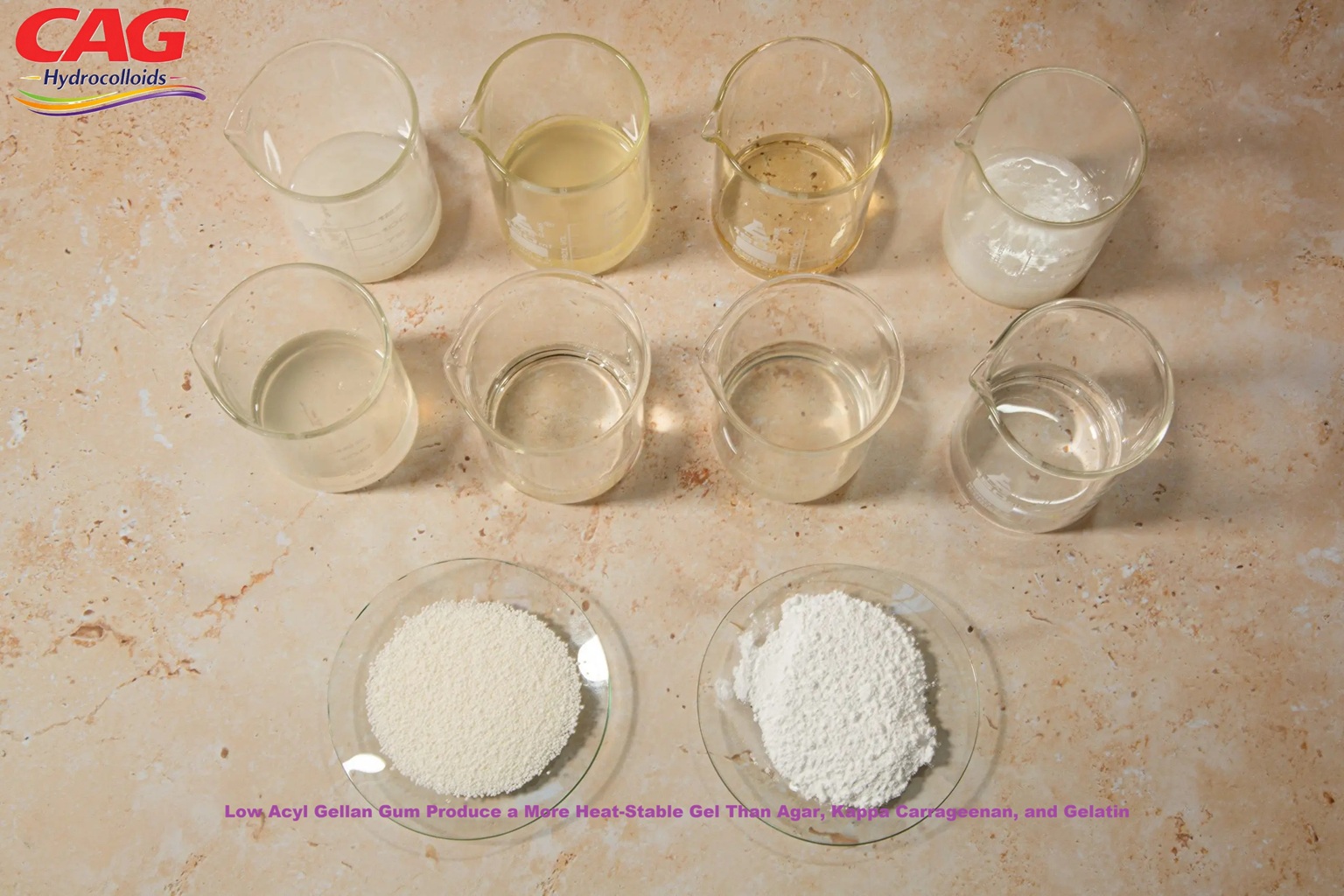
Fig. Low Acyl Gellan Gum Produce a More Heat-Stable Gel Than Agar, Kappa Carrageenan, and Gelatin
| Hydrocolloid | Approximate Melting Temperature |
|---|---|
| Gelatin | 25–35°C |
| κ-Carrageenan | 50–70°C |
| Agar | 80–95°C |
| Low Acyl Gellan Gum | 120–150°C |
Low Acyl Gellan Gum is one of the most heat-stable food hydrocolloids commercially available.
For bakery fillings, retort foods, and heat-resistant gummies, LA Gellan Gum is often the preferred choice because its gel remains stable after thermal processing where other hydrocolloids may soften or melt.
Key Takeaway: If thermal stability is critical, LA Gellan Gum generally outperforms agar, carrageenan, and gelatin.