Case Study: R&D Breakthrough of High-Calcium Plant-Based Gummies
Background:
A client requested the development of a plant-based, high-calcium gummy with a stringent requirement: each gummy must contain no less than 300 mg of elemental calcium (equivalent to approx. 750 mg of Calcium Carbonate) without exhibiting any noticeable gritty texture.
Challenges Identified:
Due to the poor solubility of Calcium Carbonate, high-dose addition led to three major issues:
1. Severe Sedimentation: Calcium powder settled at the bottom during molding.
2. Poor Mouthfeel: The texture was rough, described as "chewing on sand."
3. Structural Failure: The gel matrix was disrupted, resulting in very low production yield.
Solutions Implemented:
1. Gelling System Reconstruction: The team abandoned the pure gelatin system and adopted a composite system (Gelatin + Gellan Gum at a 3:1 ratio). Gellan Gum provided vertical structural support to prevent sedimentation, while Gelatin ensured horizontal elasticity for a Q-tastic mouthfeel.
2. Particle Micronization & Dispersion: Calcium Carbonate was micronized to a particle size of D90 < 10 μm. Combined with high-shear emulsification, this created a stable suspension in the syrup, eliminating the gritty sensation.
3. Rheological Optimization: Using a rheometer, the team mapped viscosity curves at various temperatures. The molding temperature was precisely controlled at 65°C to ensure optimal fluidity while preventing gel aging caused by high heat.
Results:
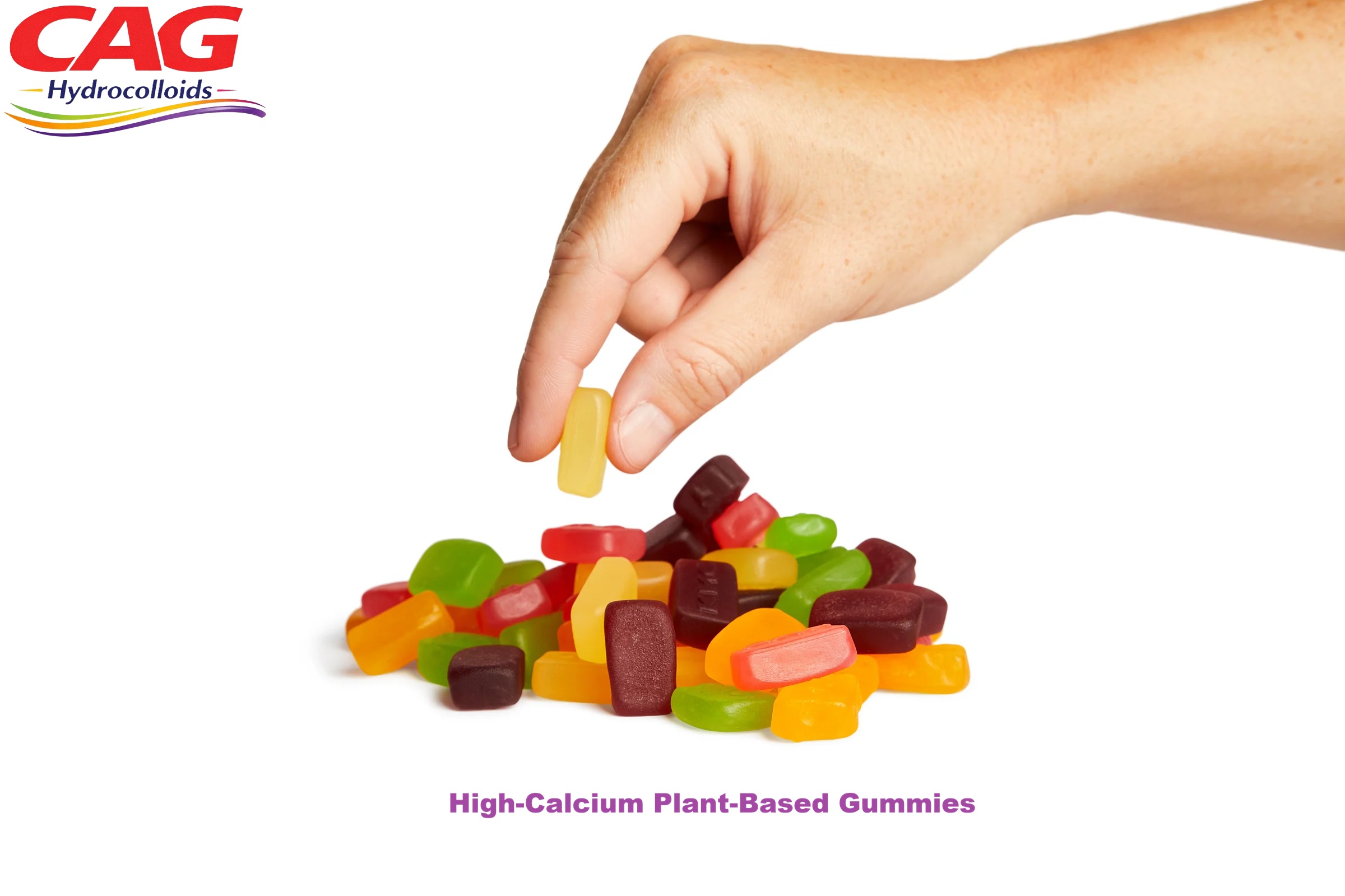
The final product successfully met the 300 mg high-calcium standard. It featured a delicate texture and moderate chewiness, with no sedimentation or syneresis observed throughout its shelf life.