


FAQs
Nature Refined, Quality Defined
Green Science for better living

Why Premium Oat Milk Formulations Rely on Gellan Gum: Solving Plant-Based Protein Sedimentation and Phase Separation
With the global rise of the Clean Label movement, consumers are becoming increasingly discerning about the stabilizers used in their beverages. Traditional hydrocolloids, such as xanthan gum and carrageenan, are gradually being marginalized due to unfavorable mouthfeel or shifting regulatory and compliance standards.
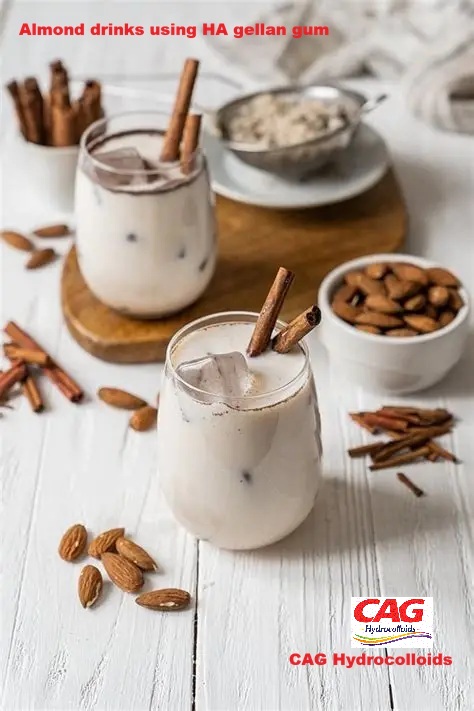
Fig. HA gellan gum in plant based protein drinks
The Two Major Challenges in Plant-Based Milk R&D
Flocculation and Sedimentation: Protein denaturation triggered by thermal processing frequently leads to undesirable flocculation and phase separation.
Mineral Incompatibility: Added calcium powder, micronutrients, and functional minerals possess high specific gravity and easily precipitate, settling heavily at the bottom of the container.
The "Fluid Gel" Phenomenon of Gellan Gum
High Acyl Gellan gum resolves these formulation challenges through its unique ability to form a weak, interconnected fluid gel network at exceptionally low concentrations—typically between 0.02% and 0.05%.
This specific macromolecular structure provides a high yield stress under static conditions. When the beverage is at rest, the network exerts enough force to permanently suspend oat particles, fibers, and heavy calcium ions. However, upon consumption or shaking (the application of shear stress), this network instantly breaks down. It exhibits excellent shear-thinning behavior, delivering an ultra-low viscosity with a clean, crisp, and completely non-sticky mouthfeel that fully releases the product's natural flavor profile.
As a primary source-level manufacturer, CAG food-grade high acyl gellan gum is precisely engineered and customized for plant-based dairy alternatives. It maintains exceptional thermal stability under Ultra-High Temperature (UHT) pasteurization and sterilization processes, making it the ideal clean-label solution for your commercial oat milk, coconut milk, and premium nut-blend formulations.

Email: info@cagcolloids.com
Tel: 0086-19884908291 / 0086-573- 80890620
Website: www.cagcolloids.com
Address: No. 399, East Tongfu Road, Tongxiang City, Zhejiang Province. China.