


FAQs
Nature Refined, Quality Defined
Green Science for better living

Why is gelatin tested for in bacteriological agar?
The reasons for testing gelatin in bacteriological agar primarily fall into two categories: preventing functional interference and preventing raw material adulteration.
Here is a detailed analysis:
1. From the perspective of the IS 6850:2023 standard (Compliance Testing)
Characteristic: Gelatin
Requirement: To pass the test
Method of Test: Annex B
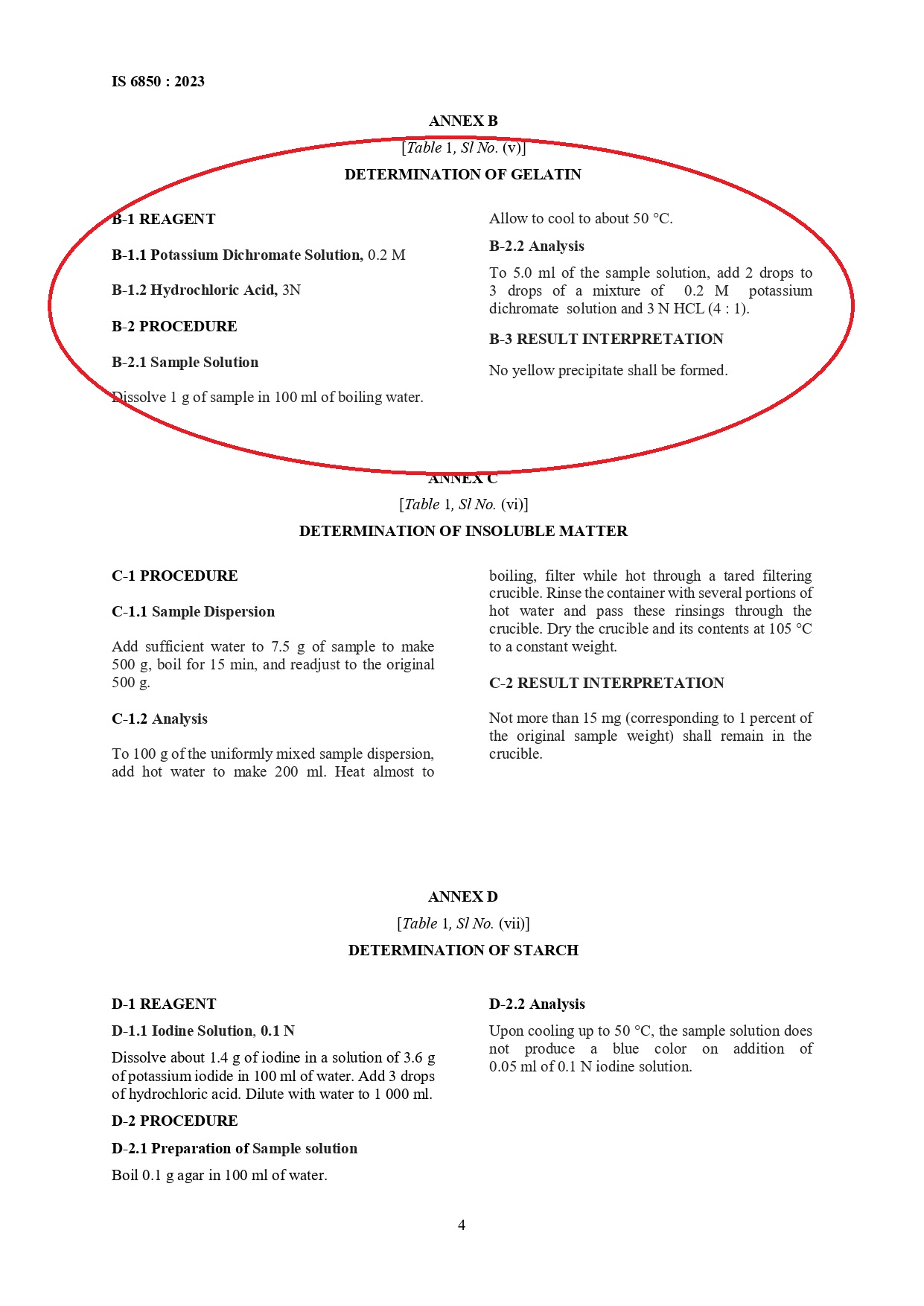
Annex B (Determination of Gelatin) describes a classic testing method: It utilizes the reaction of gelatin with potassium dichromate under acidic conditions to form a yellow precipitate for qualitative detection.
Conclusion: The mandatory requirement in the government standard to test for gelatin indicates that gelatin is considered a potential impurity or adulterant. Manufacturers must ensure its content is low enough to yield a negative result (i.e., "To pass the test").
2. From a microbiological and application perspective (Why test?)
A. Preventing "Liquefaction" and Structural Failure (Functional Interference)
Property of Gelatin: Gelatin is a colloidal substance extracted from animal collagen, but it has a fatal weakness—many bacteria (such as Clostridium perfringensand certain Bacillusspecies) produce gelatinase.
Consequence: If the agar contains gelatin, the gelatinase secreted by the bacteria during growth will break down the gelatin, causing the medium—which should remain solid—to undergo liquefaction.
Impact: This leads to collapsed plates and an inability to form distinct colonies, severely interfering with the isolation and counting of microorganisms. Therefore, high‑quality bacteriological agar must be "gelatin‑negative" to ensure the physical stability of the culture medium.
B. Preventing Inferior Substitutes and Ensuring Purity (Raw Material Fraud)
Economic Motivation: Agar is extracted from seaweed, whereas gelatin is derived from animal hides and bones. In the past, unscrupulous vendors have adulterated expensive agar with cheap gelatin to reduce costs.
Summary
Testing for gelatin in bacteriological agar serves as a double safeguard:
Performance Assurance: Preventing the culture medium from liquefying due to bacterial enzymatic action during use.
Authenticity Assurance: Preventing the raw material from being adulterated with cheap animal‑derived glue.
This is precisely why purity requirements for agar in high‑end microbiological experiments are far stricter than those for food‑grade or industrial‑grade applications.


Email: info@cagcolloids.com
Tel: 0086-19884908291 / 0086-573- 80890620
Website: www.cagcolloids.com
Address: No. 399, East Tongfu Road, Tongxiang City, Zhejiang Province. China.