


FAQs
Nature Refined, Quality Defined
Green Science for better living

Why Different Gelling Agents Create Different Textures
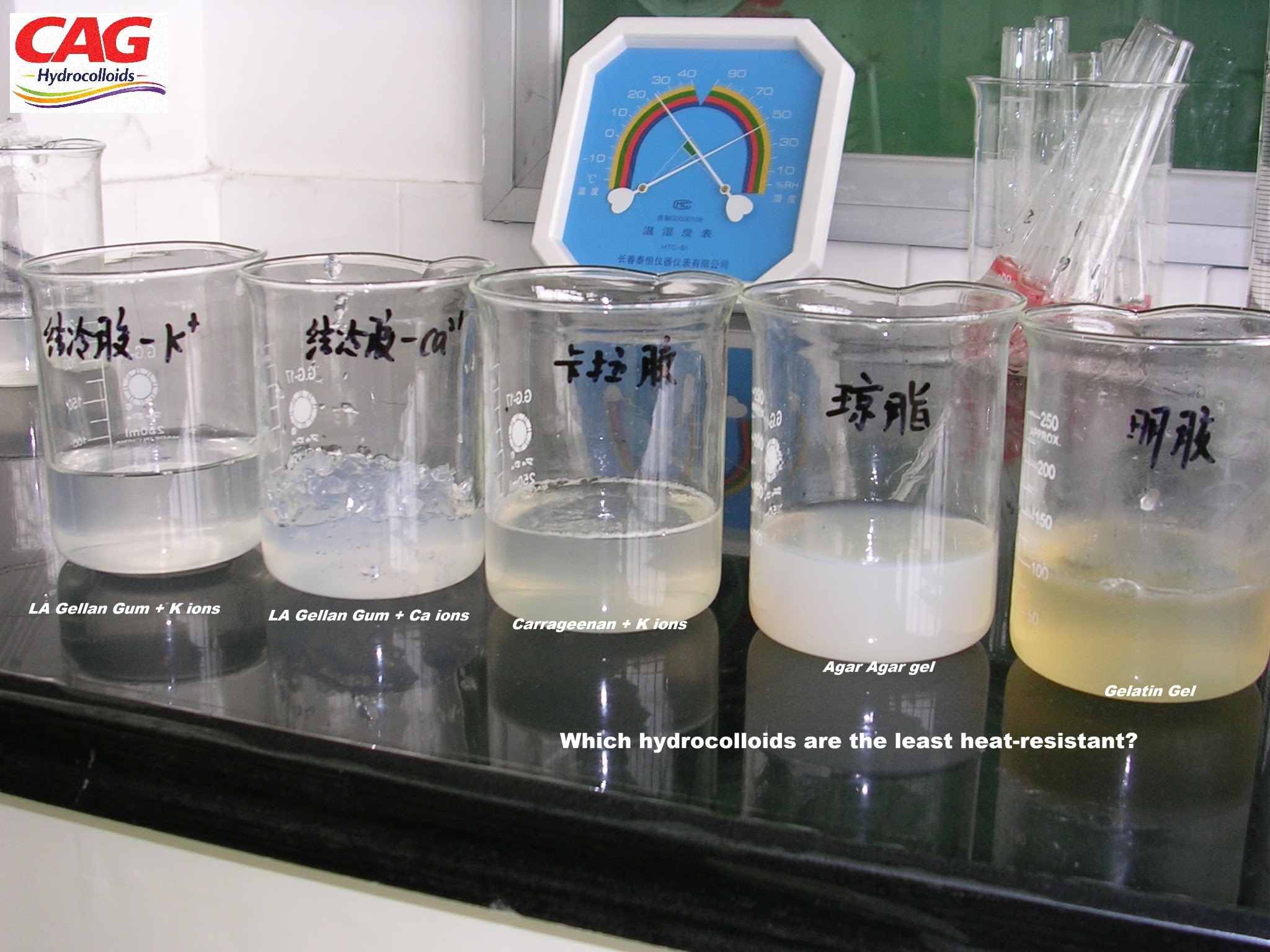
Not all gels feel the same. Even when two products look similar, their texture and appearance can be completely different. Here is a simple comparison of some of the most common food gelling systems.
This combination produces a crystal-clear gel with a smooth appearance. The texture is firm but slightly elastic, giving a clean bite without being overly brittle.
Appearance: Very transparent
Texture: Firm, slightly elastic
Calcium creates a stronger gel network than potassium. The gel remains transparent, although slightly less clear, and becomes harder and more brittle.
Appearance: Transparent, slightly less clear than K⁺ gel
Texture: Hard, brittle
Potassium is essential for κ-carrageenan gelation. The resulting gel is clear and firm, with a texture that is slightly more brittle than potassium-gelled gellan.
Appearance: Transparent
Texture: Firm, slightly brittle
Agar forms a very different type of gel. It is usually cloudy or hazy rather than transparent. The texture is hard and brittle, breaking easily when chewed.
Appearance: Hazy, less transparent
Texture: Hard, brittle
Gelatin produces the most elastic gel among these systems. The gel is usually slightly transparent and has a soft, springy texture.
Appearance: Slightly transparent
Texture: Soft, elastic
| Gelling System | Appearance | Texture |
|---|---|---|
| LA Gellan + K⁺ | Crystal clear | Firm, slightly elastic |
| LA Gellan + Ca²⁺ | Transparent | Hard, brittle |
| κ-Carrageenan + K⁺ | Transparent | Firm, slightly brittle |
| Agar | Hazy | Hard, brittle |
| Gelatin | Slightly transparent | Soft, elastic |
The choice of gelling agent is not only about gel strength. Transparency, brittleness, and elasticity all contribute to the final eating experience. Selecting the right hydrocolloid helps create exactly the texture consumers expect.

Email: info@cagcolloids.com
Tel: 0086-19884908291 / 0086-573- 80890620
Website: www.cagcolloids.com
Address: No. 399, East Tongfu Road, Tongxiang City, Zhejiang Province. China.