


FAQs
Nature Refined, Quality Defined
Green Science for better living

Why Acidified Dairy Products Require Special Care When Using Carrageenan?
In neutral to mildly alkaline conditions — the natural environment of fresh milk — the electrostatic interaction between carrageenan's sulfate groups and casein's positively charged surface residues is controlled and constructive, forming a sparse, stable network. As pH drops toward the isoelectric point of casein (approximately pH 4.6), the overall charge balance of the system shifts dramatically. Proteins carry increasing positive charge, and their affinity for the anionic carrageenan chains intensifies. At yogurt-range pH values (3.8–4.5), this intensified attraction can drive excessive protein-carrageenan co-precipitation, producing visible flocculation, grainy texture, and phase separation — the very defects carrageenan was added to prevent.
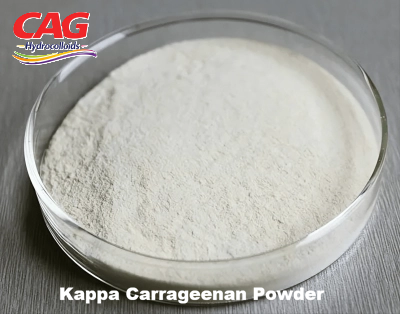
A second, independent mechanism compounds the problem: acid-catalyzed hydrolysis of the carrageenan backbone itself. Under acidic conditions, the 3,6-anhydrogalactose linkages in the polymer chain become susceptible to cleavage. The rate of this reaction accelerates with both lower pH and higher temperature. A process that holds carrageenan at pH 4.0 and 90 °C for ten minutes — well within the range of standard pasteurization for fruit yogurt — will reduce gel-forming capacity by 20–25%, and this loss is irreversible.
In continuously processed acidified dairy products, acid addition should be positioned as late as possible in the production sequence. Minimizing the time during which carrageenan is simultaneously acidic and hot is the single most effective way to preserve its functional contribution in the finished product.
The formulation solution to the over-aggregation problem is well-established: blending carrageenan with a galactomannan, most commonly locust bean gum (LBG). The mannose backbone of LBG interposes between carrageenan chains and protein surfaces, introducing steric hindrance that moderates the strength of carrageenan-protein association. The result is controlled, rather than runaway, network formation — delivering a smooth, stable gel with the desired mouthfeel rather than a grainy, separated mass.
For the carrageenan type selection, κ2 and iota carrageenan are preferable to standard kappa in acidified systems. Their higher sulfate content actually makes their backbone less prone to acid hydrolysis, because the sulfate groups compete with the glycosidic linkage for protonation. Where process constraints are severe, iota carrageenan — with its fully regular disulfate structure — offers the best acid stability among the gelling types.


Email: info@cagcolloids.com
Tel: 0086-19884908291 / 0086-573- 80890620
Website: www.cagcolloids.com
Address: No. 399, East Tongfu Road, Tongxiang City, Zhejiang Province. China.