

info@cagcolloids.com    +86-198 8490 8291
Menu
Products and Ingredients
FAQs
Nature Refined, Quality Defined
Green Science for better living

Home/

FAQs

What Special Challenges Does Carrageenan Face in UHT Dairy Processing? How Can Formulation and Processing Design Minimize Thermal Degradation Risks?


What Special Challenges Does Carrageenan Face in UHT Dairy Processing? How Can Formulation and Processing Design Minimize Thermal Degradation Risks?

UHT (Ultra-High Temperature) processing—typically 135–145°C for 2–30 seconds—represents one of the most severe thermal treatments that carrageenan encounters in food manufacturing. Even though the exposure time is extremely short, temperatures within this range are sufficient to induce two types of irreversible changes in carrageenan:

  1. Molecular weight reduction (thermal backbone cleavage)
  2. Sulfate ester hydrolysis (desulfation)

The first mechanism reduces gel strength by shortening the polymer chains, while the second alters the interaction between carrageenan and proteins. Together, these changes can increase the risk of unexpected sedimentation, phase separation, or instability during product storage.


pH: The Most Critical Variable

Among all processing parameters, pH is the most important factor influencing thermal degradation.

Carrageenan exhibits significantly greater thermal stability under neutral to mildly alkaline conditions (pH 7–9) than under acidic conditions.

For example, UHT chocolate milk typically has a pH between 6.5 and 6.8, which is generally considered a relatively safe range for carrageenan stability.

However, formulations containing acidic ingredients—such as certain natural flavors, fruit preparations, or juice concentrates—require special attention. In such cases, the product pH should ideally be adjusted to above 6.8 before entering the UHT process.

Even a pH difference of only 0.3 units can result in several-fold differences in carrageenan degradation rates under UHT conditions.


Recommended Processing Strategies

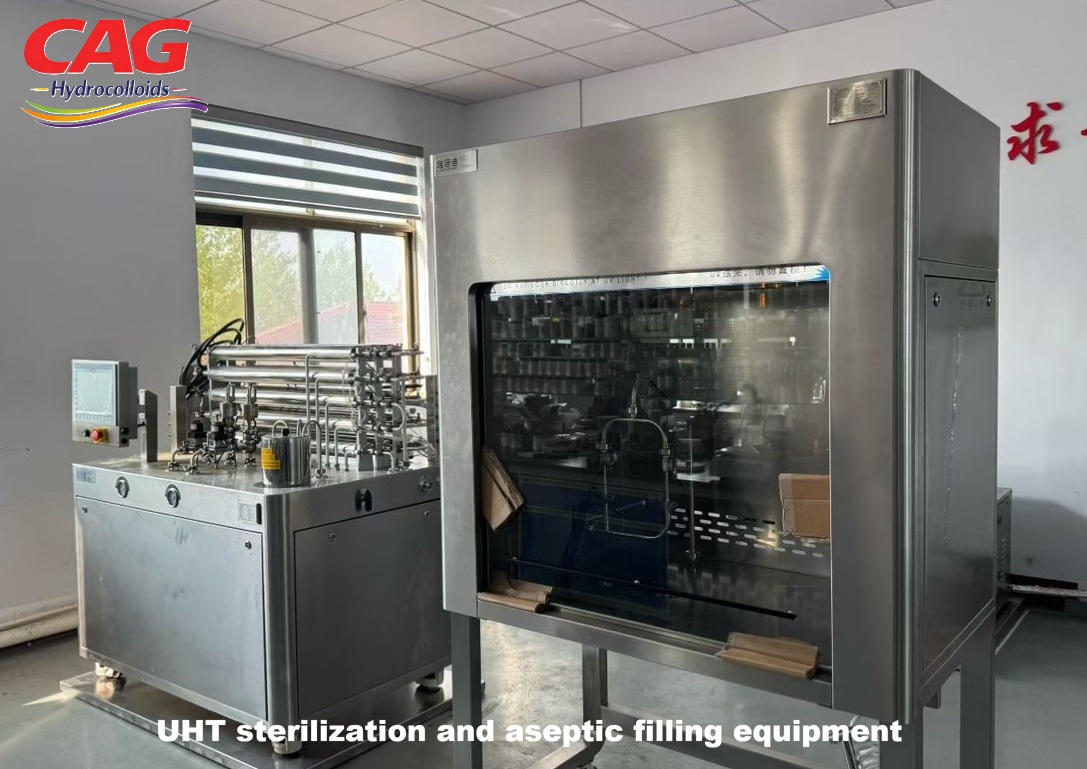
Prefer Indirect UHT Systems

Indirect UHT systems, such as:

  • Plate heat exchangers
  • Tubular heat exchangers

are generally preferred over direct steam-injection systems.

The reason is that direct steam injection creates localized hot spots at the point of steam contact. These transient temperature spikes can accelerate carrageenan degradation and increase the risk of molecular chain scission.

If Direct UHT Must Be Used

When direct steam injection is unavoidable:

  • Minimize the holding time at sterilization temperature.
  • Operate at the lowest residence time permitted by process validation.
  • Monitor carrageenan functionality after flash cooling.
  • Evaluate product stability in the balance tank immediately after UHT treatment.

These measures help reduce excessive thermal stress on the hydrocolloid system.


Raw Material Selection Matters

Choosing a more robust carrageenan grade can provide additional protection against thermal damage.

Manufacturers should request molecular-weight distribution data from suppliers and prioritize carrageenan with:

  • Higher average molecular weight
  • Low levels of degraded fractions
  • Less than 3% of fragments below 100 kDa

Higher-molecular-weight carrageenan offers greater tolerance to unavoidable molecular degradation during UHT processing and helps maintain functionality throughout shelf life.


Formulation Compensation Strategy

A common industrial practice is to increase carrageenan dosage in UHT formulations by approximately 10–15% compared with equivalent pasteurized products.

This additional dosage serves as a compensation factor for:

  • Thermal molecular-weight loss
  • Partial reduction in gelling efficiency
  • Changes in protein interaction behavior

However, compensation should not be applied blindly.

Finished products must be evaluated for:

  • Viscosity
  • Mouthfeel
  • Pourability
  • Suspension stability
  • Consumer sensory acceptance

Overcompensation can result in an excessively thick or heavy texture, negatively affecting product quality.


Practical UHT Design Checklist

Formulation

✓ Maintain pH above 6.8 whenever possible

✓ Carefully evaluate acidic ingredients

✓ Select high-molecular-weight carrageenan grades

✓ Consider a 10–15% carrageenan adjustment relative to pasteurized formulations

Processing

✓ Prefer indirect UHT systems

✓ Minimize thermal residence time

✓ Avoid unnecessary heat exposure before and after sterilization

✓ Verify carrageenan functionality after UHT treatment

Quality Control

✓ Monitor viscosity drift during shelf life

✓ Evaluate sedimentation and phase separation

✓ Track molecular-weight consistency of incoming carrageenan batches

✓ Conduct accelerated storage testing


Key Takeaway

The primary risks facing carrageenan during UHT processing are thermal chain degradation and desulfation, both of which can compromise long-term product stability.

Successful UHT formulation therefore requires a combination of:

  • Careful pH management
  • Appropriate processing technology
  • Selection of high-quality carrageenan grades
  • Strategic dosage adjustment

When these factors are properly controlled, carrageenan can continue to provide excellent suspension stability, texture control, and protein stabilization even under the demanding conditions of UHT dairy processing.

Need support on product development?