


FAQs
Nature Refined, Quality Defined
Green Science for better living

What is the typical shelf life of gellan gum? Can it still be used after the expiration date?
Regarding the shelf life of gellan gum and the feasibility of its use after expiration, a comprehensive judgment should be made from three perspectives: regulatory labeling, scientific stability, and risk assessment.
1. Labeled Shelf Life: Industry Practice & Regulatory Commitment
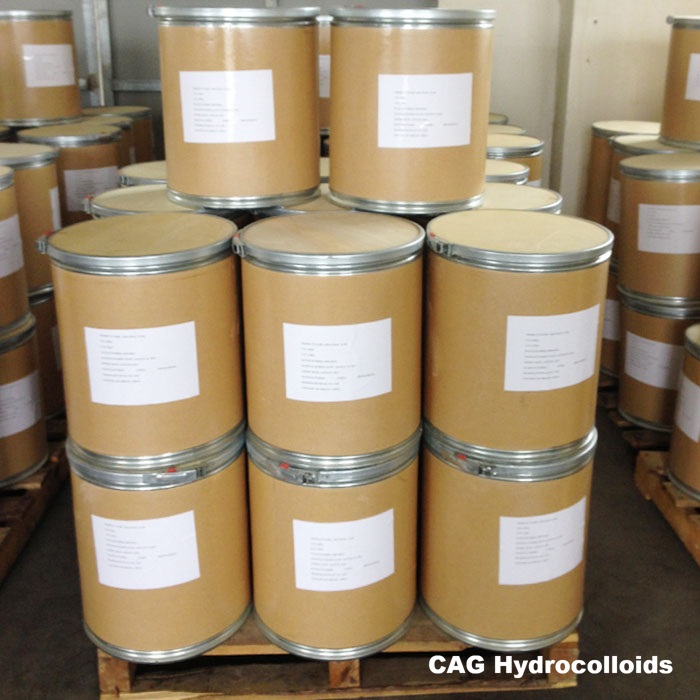
The standard shelf life marked on our products is 24 months (two years). This period is established based on stable industrial production conditions, long-term stability test data, and common industry standards. It represents our formal guarantee of product quality from both regulatory and commercial standpoints. During this period, when stored under specified conditions, the product's performance fully complies with its original factory specifications.
2. Scientific Stability: Actual Performance Beyond the Label
As a high-molecular-weight polysaccharide, gellan gum is chemically very stable. Practical experience and accelerated aging tests indicate that under ideal storage conditions—i.e., sealed, protected from light, dry, and at room temperature (recommended 15–25°C)—its core functional indicators (such as gel strength and purity) typically do not undergo practically significant degradation within 36 months of production.
3. Use Beyond Shelf Life: Risks, Evaluation, and Recommendations
36–48 Months: The product may begin to undergo slow physical changes, primarily slight hydrolysis of the molecular chains. This can lead to a gradual decline in gel strength of approximately 5–10% per year. For many applications, products in this stage can often still be used safely after pre-test confirmation, but attention should be paid to batch consistency.
Beyond 48 Months: Degradation may accelerate, and performance changes become more pronounced. It is strongly recommended not to use the product directly in formal production. If use is absolutely necessary, comprehensive laboratory evaluation is mandatory.
4. Key Difference: High-Acyl vs. Low-Acyl Gellan Gum
High-acyl gellan gum generally has slightly lower storage stability than its low-acyl counterpart. This is mainly because the acyl groups in its molecular structure may be more susceptible to slow hydrolysis. A clear observable indicator is that for some brands of high-acyl gellan gum, the pH of a 1% aqueous solution tends to show a slow increasing trend after long-term storage. Therefore, stricter First-In-First-Out (FIFO) and shelf-life management should be implemented for high-acyl products.
5. Decision Process for Using Expired Product (Expert Recommendation)
If considering the use of gellan gum that has exceeded its labeled shelf life, the following risk assessment process must be followed:
|
Step |
Action |
Pass Criteria |
|---|---|---|
|
① Visual Inspection |
Check for powder caking, discoloration, or unusual odor. |
Powder is free-flowing, color is uniform, no off-odor. |
|
② Key Parameter Re-test |
Refer to the original Certificate of Analysis (COA) and test Gel Strength (most critical) and pH of 1% Solution. |
Gel strength decline ≤ 15%; pH change within ±0.5. |
|
③ Application Validation |
A small-scale trial is mandatory. Simulate actual production processes and application formulas to evaluate gelling performance, clarity, mouthfeel, etc. |
Final product performance meets internal control standards. |
|
④ Risk Assessment |
Assess the value of the product the batch will be used in, the associated quality risk, and the cost of testing. |
Risk is controllable, and testing cost is lower than the scrap value of the raw material. |
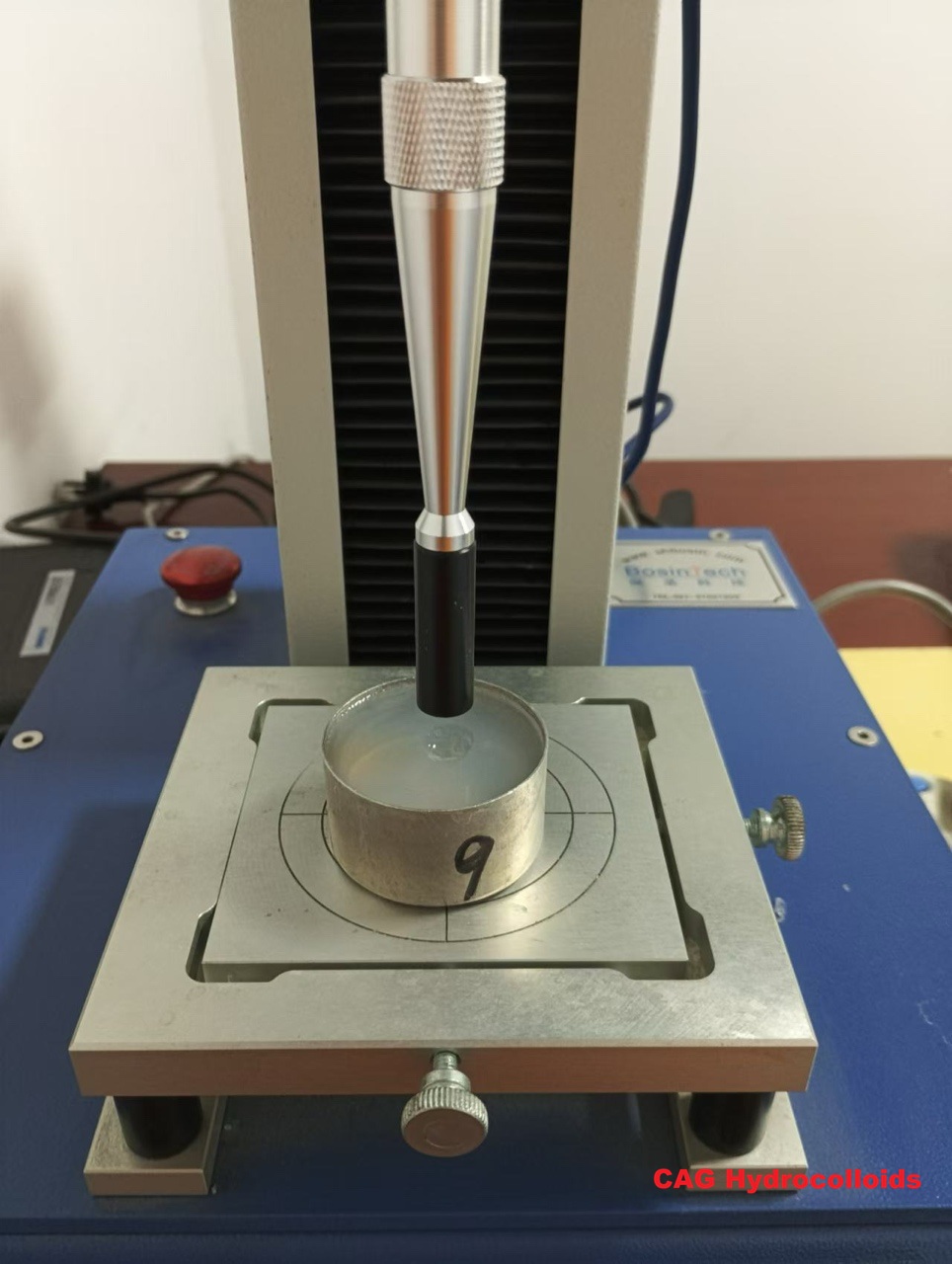
GELLAN GUM GEL STRENGTH TESTING
Summary:
The "Labeled Shelf Life" (24 months) of gellan gum is the baseline guarantee of quality, while its "Scientific Shelf Life" (up to 36-48 months) offers flexibility for use. For products past their expiration date, "prohibition of use" is not the only answer, but "using it without prior testing and validation" is an absolutely high-risk practice. The most prudent strategy is always to adhere to the FIFO principle and, when in doubt, to rely on a simple small-scale trial to avert potential large-scale production risks.


Email: info@cagcolloids.com
Tel: 0086-19884908291 / 0086-573- 80890620
Website: www.cagcolloids.com
Address: No. 399, East Tongfu Road, Tongxiang City, Zhejiang Province. China.