


FAQs
Nature Refined, Quality Defined
Green Science for better living

What is the difference between a rheometer and a texture analyzer? How are they used differently in food testing?
A rheometer and a texture analyzer are two core physical property analysis instruments in food R&D and quality control. While both can measure the "texture" of food, they differ fundamentally in measurement principles, focus areas, and application scenarios.
Simply put: A rheometer studies "flow and deformation," while a texture analyzer simulates "sensory chewing and touch."
|
Feature |
Rheometer |
Texture Analyzer |
|---|---|---|
|
Core Principle |
Based on continuum mechanics, precisely controls stress/strain to measure the viscoelastic response of materials. |
Based on a force sensor, simulates the single or repeated physical action on food by the human body (mouth, hands). |
|
Primary Focus |
Microstructure and intermolecular interactions: e.g., gel network strength, fluid viscosity, viscoelasticity, yield stress. |
Macroscopic sensory experience: e.g., hardness, brittleness, elasticity, chewiness, adhesiveness. |
|
Sample State |
Mainly used for homogeneous or semi-homogeneous systems (e.g., juice, sauces, gels, molten chocolate). |
Mainly used for solid or semi-solid foods (e.g., biscuits, cheese, meat products, fruit). |
|
Testing Modes |
Steady-state rheology (viscosity vs. shear rate), dynamic oscillation (G'/G" vs. frequency/temperature). |
Compression, penetration, shear, tension, bending. |
|
Data Output |
Elastic modulus (G'), viscous modulus (G"), viscosity (η), phase angle (δ), yield stress. |
Hardness (peak force), fracture point, elasticity (recovery), chewiness (work), adhesive force. |
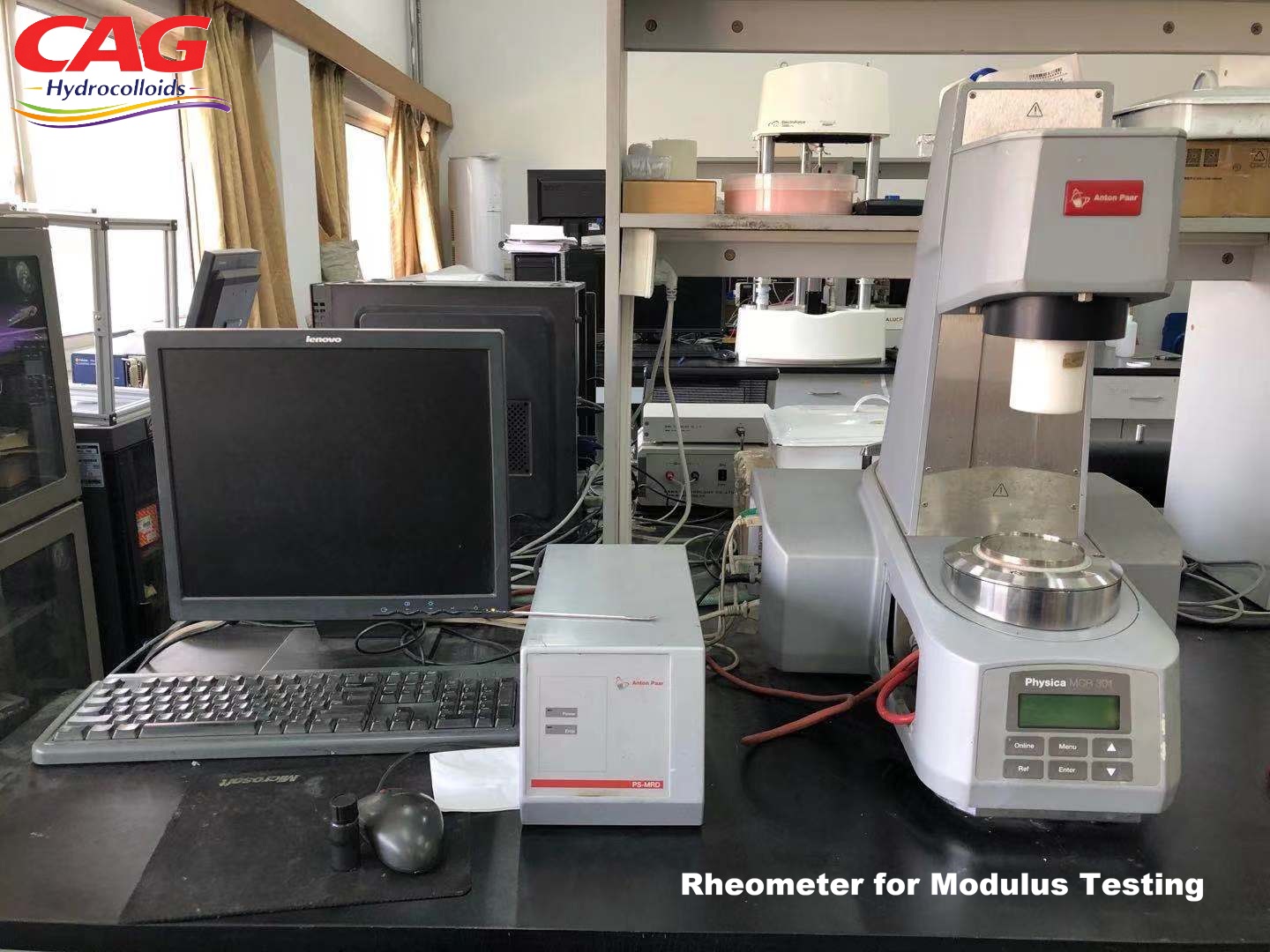
The rheometer focuses more on understanding the physicochemical nature and processing performance of food.
Gel and Suspension Studies (e.g., your previous high-acyl gellan gum):
Application: Measure the elastic modulus (G') to assess the gel network strength formed by gellan gum, gelatin, pectin, etc., and predict its suspension stability during shelf life.
Method: Small-amplitude oscillatory testing, observing changes in G' with temperature or time.
Fluid Processing Performance Evaluation:
Application: Measure the rheological curve of salad dressing, concentrated juice, chocolate paste. Determine the optimal viscosity for pumping, spraying, filling, and whether the product exhibits pseudoplasticity (shear-thinning, beneficial for pouring) or thixotropy (structural recovery, preventing settling).
Melting and Crystallization Properties:
Application: Study the viscosity change of chocolate, margarine during melting in the mouth, or the viscosity peak during starch gelatinization.
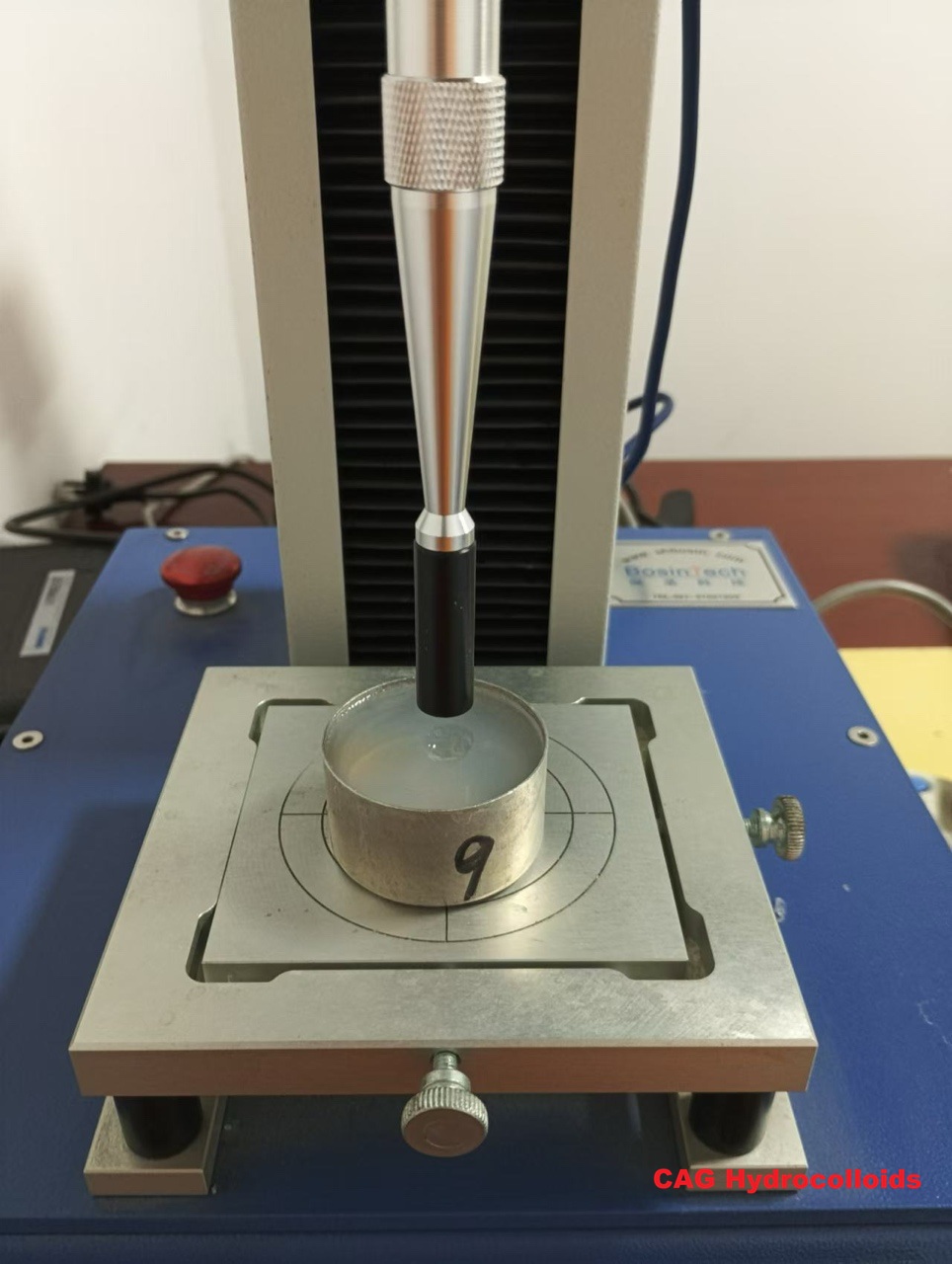
The texture analyzer focuses more on simulating consumer sensory experience and the final quality of the product.
Quantification of Sensory Quality:
Application: Objectively evaluate the crispness of potato chips (fracture force), the softness of bread (compression force), the chewiness of jerky (work).
Method: Use specific probes (e.g., puncture probe, compression plate, simulated tooth probe) for single or multiple compressions.
Shelf-Life and Texture Changes:
Application: Monitor the softening of biscuits due to moisture absorption during storage, or the hardening of fresh noodles due to staling.
Process Quality Control:
Application: Test whether jelly is well-formed (puncture test), or test the casing strength of sausage and the firmness of the meat.
In practical food testing, you can choose based on the following dimensions:
Observe the State of Matter:
If it's a liquid, paste, or molten state, focusing on flowability and structural recovery → Rheometer.
If it's a solid, gel, or semi-solid that requires chewing → Texture Analyzer.
Consider the R&D Objective:
Want to understand "why" this formulation has good suspension or smooth texture? (Mechanism study) → Rheometer.
Want to confirm if the product is crisp or elastic enough when "eaten"? (Sensory simulation) → Texture Analyzer.
Consider Data Correlation:
Rheological data is often correlated with processing parameters (e.g., pipeline pressure, mixing power).
Texture data is often correlated with consumer preference (e.g., excessive hardness is not preferred).
In your case of high-acyl gellan gum testing, the rheometer is the core tool because it can accurately capture the elastic modulus (G') of the microscopic gel network, which is the gold standard for judging suspension capability. If you want to translate this suspension state into consumer-perceivable "smoothness" or "particle-free feel," it may be necessary to combine subsequent texture analyzer for sensory correlation analysis

Email: info@cagcolloids.com
Tel: 0086-19884908291 / 0086-573- 80890620
Website: www.cagcolloids.com
Address: No. 399, East Tongfu Road, Tongxiang City, Zhejiang Province. China.