


FAQs
Nature Refined, Quality Defined
Green Science for better living

What is the Chinese national standard for Agar products?
National Food Safety Standard of the People's Republic of China
GB 1886.239-2016
Food Additive — Agar
Issued on: August 31, 2016
Implemented on: January 1, 2017
Issued by: National Health and Family Planning Commission of the People's Republic of China
1. Scope
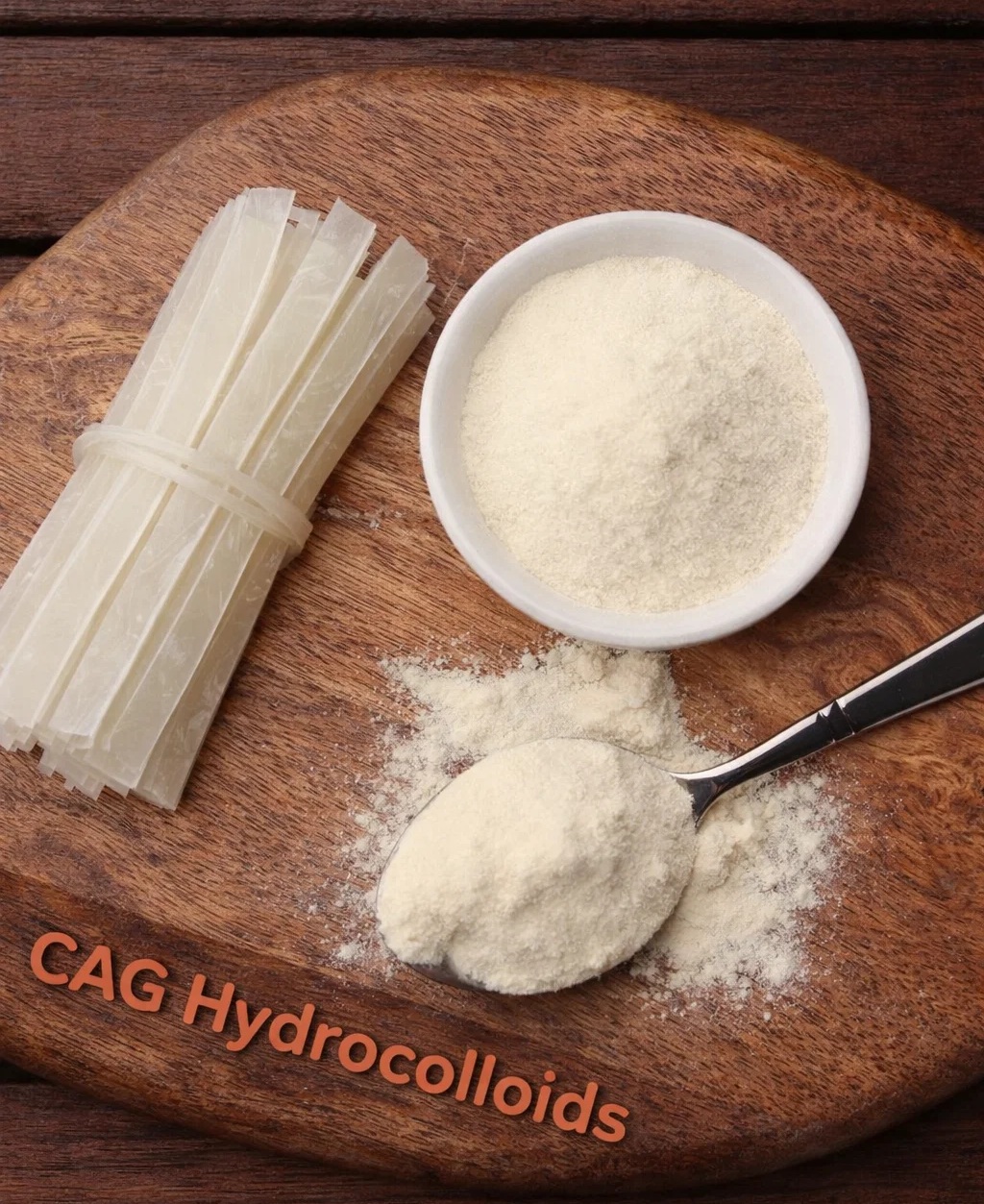
This standard applies to the food additive agar, which is produced by extraction, dehydration, and drying processes from raw materials such as Gelidium, Gracilaria, Pyropia, and other red algae.
2. Technical Requirements
2.1 Sensory Requirements
Sensory requirements shall comply with the stipulations in Table 1.
Table 1 Sensory Requirements
|
Item |
Requirement |
Test Method |
|---|---|---|
|
Color |
Off-white or light yellow |
Place the sample on a clean, dry white porcelain plate. Observe its color and appearance under natural light, and smell its odor. If an off-odor is suspected, place a small amount of sample in a stoppered conical flask and immerse it in a 60°C–70°C water bath for 5 min. Then, immediately open the stopper and smell the area above the mouth of the flask. |
|
Appearance |
Uniform powder or strips |
|
|
Odor |
Characteristic odor of the product, free from any off-odor or pungent smell |
2.2 Physicochemical Indicators
Physicochemical indicators shall comply with the stipulations in Table 2.
Table 2 Physicochemical Indicators
|
Item |
Indicator |
Test Method |
|---|---|---|
|
Moisture, w/% ≤ |
22.0 |
GB 5009.3 a |
|
Ash, w/% ≤ |
5.0 |
GB 5009.4 b |
|
Water-insoluble substances, w/% ≤ |
1.0 |
Appendix A.3 |
|
Starch test |
Conforms |
Appendix A.4 |
|
Gelatin test |
Conforms |
Appendix A.5 |
|
Lead (Pb) / (mg/kg) ≤ |
3.0 |
GB 5009.75 |
|
Arsenic (As) / (mg/kg) ≤ |
3.0 |
GB 5009.76 |
|
Note a: Weigh 1g–2g of sample. |
||
|
Note b: Weigh 1g of sample. |
(Summary of Appendix A: Test Methods)
A.2 Identification Tests
A.2.2 Solubility Test: Insoluble in cold water; soluble in boiling water.
A.2.3 Color Reaction Test: Fragments of strip-shaped agar soaked in 0.01 mol/L iodine solution turn brownish-black; washing with water changes the color to violet.
A.2.4 Precipitation with Ammonium Sulfate Test: Adding ammonium sulfate solution to a sample solution produces a precipitate, distinguishing agar from alginates, gum arabic, ghatti gum, karaya gum, pectin, and tragacanth gum.
A.2.5 Precipitation with Lead Acetate Test: Reacting a sample solution with basic lead acetate solution produces a precipitate, distinguishing agar from methylcellulose.
A.2.6 Fehling's Test: Hydrolyzing a sample solution with hydrochloric acid, then adding sodium hydroxide and alkaline cupric tartrate solution and heating produces a brick-red precipitate of cuprous oxide.
A.3 Determination of Water-insoluble Substances
The sample solution is filtered under reduced pressure through a sintered-glass crucible. The residue is washed, dried to constant weight, and expressed as a mass fraction.
A.4 Starch Test
Adding 2 drops of 0.05 mol/L iodine solution to 100 mL of sample solution should not produce a blue color.
A.5 Gelatin Test
Adding an equal volume of picric acid solution (10 g/L) to 20 mL of sample solution should cause no turbidity within 10 minutes. The sample solution temperature must be maintained at 40°C–45°C during the test to prevent gelling.
Email: info@cagcolloids.com
Tel: 0086-19884908291 / 0086-573- 80890620
Website: www.cagcolloids.com
Address: No. 399, East Tongfu Road, Tongxiang City, Zhejiang Province. China.