


FAQs
Nature Refined, Quality Defined
Green Science for better living

What is the application Scenarios and Precautions for Gelatin?
1. In-depth Raw Material Analysis
Source: Hydrolyzed collagen derived from animal (bovine/pork/fish) hides and bones.
Forms:
Gelatin Sheets (Leaf Gelatin): Semi-transparent thin sheets that require softening before use. They contain fewer impurities, offer high transparency, and a purer taste, making them suitable for high-end desserts.
Gelatin Powder: Granular form that requires water absorption and swelling before use. It offers high cost-performance and operational convenience.
Core Characteristics: Extremely strong thermoreversibility. It has a low melting point (approx. 28-35°C / 82-95°F) and melts in the mouth, which is its greatest advantage over other gelling agents.
2. Detailed Application Scenarios & Ratios
Mousse Cake:
Function: Traps air, supports the emulsion structure of dairy fats, and prevents collapse.
Ratio: 0.8% - 1.2% of the total liquid weight (including juice, milk, etc.).
Note: If the recipe has a high cream ratio (e.g., >60%), slightly reduce the gelatin amount to prevent an overly firm texture.
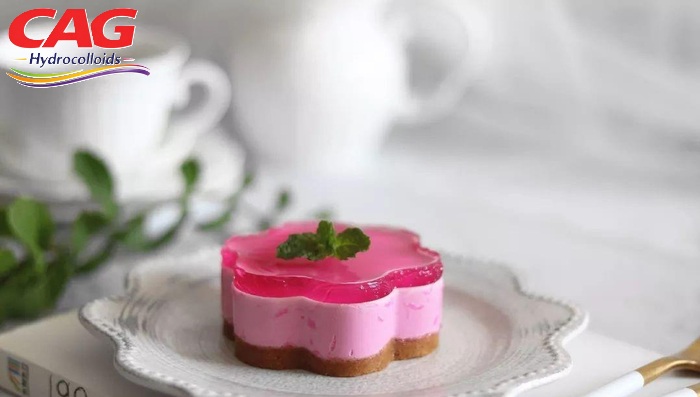
Mousse Cake -- Gelatin
Panna Cotta:
Function: Provides a tender, creamy set.
Ratio: 1.2% - 1.8% of the total whole milk/cream volume.
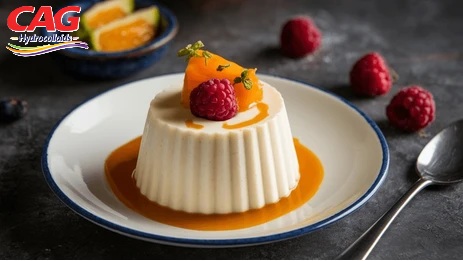
Panna Cotta -- Gelatin
Mirror Glaze:
Function: Increases the viscosity and glossiness of the glaze (usually compounded with pectin).
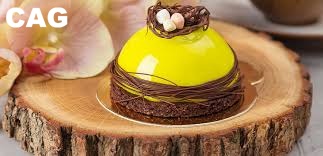
Mirror Glaze -- Gelatin
3. Standard Operating Procedure (SOP)
Step 1: Blooming (Hydration)
Powder: Mix with cold water at a 1:5 ratio (e.g., 10g powder to 50g water). Let stand for 5-10 minutes until it absorbs water and turns into a sponge-like mass.
Sheets: Soak in ice water for 5 minutes until soft and pliable with no hard core. Remove and squeeze out excess water vigorously.
Step 2: Melting
Add the bloomed gelatin to warm liquid not exceeding 60°C (e.g., freshly cooked syrup or heated fruit juice).
Stir gently until completely transparent with no granules. Strictly avoid boiling, as this will destroy its gelling ability.
Step 3: Mixing
For mousse, gently fold the gelatin mixture into the whipped cream or egg whites. Work quickly to prevent premature setting due to the cold temperature.
4. Troubleshooting Guide (Common Issues)
|
Problem Phenomenon |
Cause Analysis |
Solution |
|---|---|---|
|
Failed to set / Too soft |
1. Structure damaged by excessive heat. |
1. Control liquid temperature to <60°C. |
|
Fishy smell in final product |
Low raw material quality or fish-based gelatin source. |
Use high-quality silver-packaged gelatin sheets; or add a little rum/vodka or lemon juice during blooming to remove odor. |
|
Surface weeping / Syneresis |
Freeze-thaw cycles or over-mixing. |
Avoid repeated freezing and thawing; avoid over-stirring when making mirror glazes to prevent incorporating air bubbles. |


Email: info@cagcolloids.com
Tel: 0086-19884908291 / 0086-573- 80890620
Website: www.cagcolloids.com
Address: No. 399, East Tongfu Road, Tongxiang City, Zhejiang Province. China.