


FAQs
Nature Refined, Quality Defined
Green Science for better living

What causes the extraordinary thermal hysteresis of agar hydrocolloids?
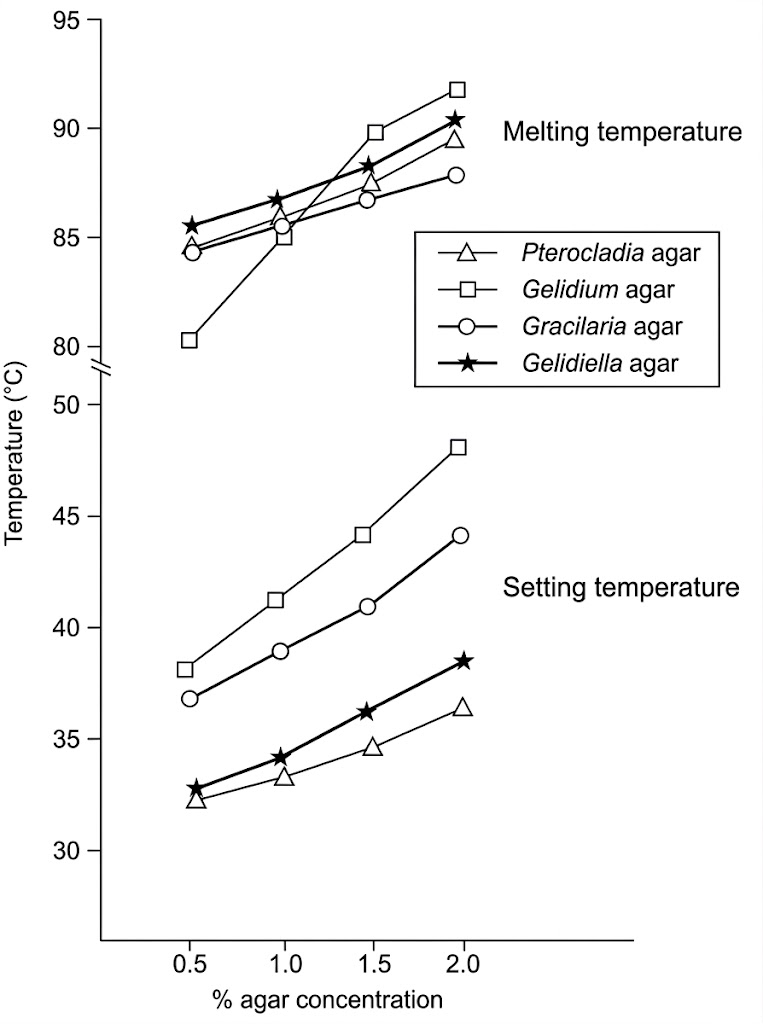
Agar's remarkable thermal hysteresis—the wide temperature gap between its setting point (32–45°C) and its melting point (85°C+ override)—is driven by its unique multi-stage physical gelation mechanism. Upon cooling below the setting temperature, individual linear agarose chains undergo a coil-to-helix transition via intermolecular hydrogen bonding to form left-handed double helices. As cooling continues, thousands of these double helices undergo side-by-side lateral aggregation to form thick, rigid structural bundles known as junction zones. Melting the resulting three-dimensional macrogel requires significant thermal energy to break apart these dense crystalline-like aggregates, rather than just separating isolated single polymer chains.


Email: info@cagcolloids.com
Tel: 0086-19884908291 / 0086-573- 80890620
Website: www.cagcolloids.com
Address: No. 399, East Tongfu Road, Tongxiang City, Zhejiang Province. China.