


FAQs
Nature Refined, Quality Defined
Green Science for better living

What are the recommended sterilization conditions for High-Acyl Gellan Gum in dairy beverages?
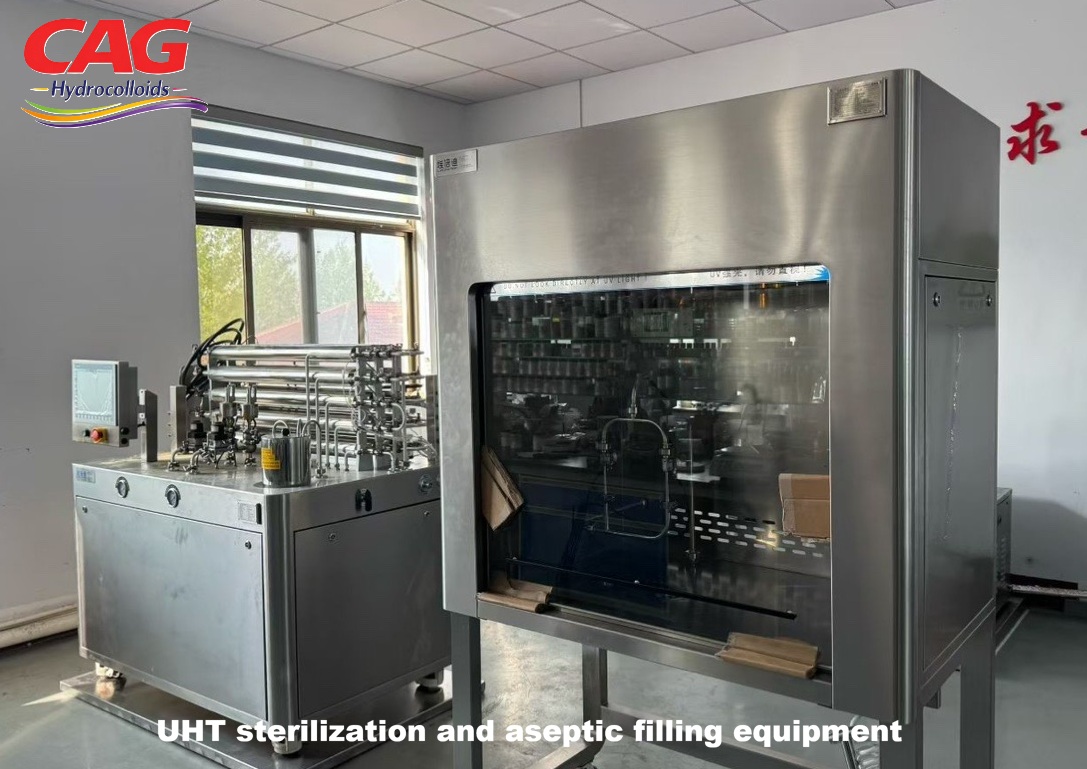
For liquid dairy beverage applications, UHT (Ultra-High Temperature) sterilization is the preferred method to maximize the textural benefits of High-Acyl (HA) Gellan Gum.
Recommended Parameters:
Temperature: 135–140 °C
Time: 4–15 seconds (extremely short holding time)
Rationale:
Dairy beverages are typically neutral or weakly acidic (pH ≈ 6.5–7.0). Under these conditions, the acyl groups (acetyl & glyceryl) on the HA gellan molecule are heat-sensitive. The "high-temperature + short-time" profile of UHT minimizes deacylation reactions while achieving microbial lethality. This preserves the characteristic soft, smooth, and elastic gel texture of HA, preventing the brittle or hard mouthfeel associated with Low-Acyl (LA) gellan.
A: The choice between UHT and Retort sterilization significantly impacts the heat history and final texture of the product.
|
Dimension |
UHT (Ultra-High Temperature) |
Retort Sterilization |
|---|---|---|
|
Heat History |
Heating, holding, and cooling are completed within seconds to tens of seconds. |
Slow heating, long holding time (e.g., 121 °C / 15 min), and slow cooling. |
|
Impact on Acyl Groups |
Short exposure time results in a low risk of deacylation. |
Prolonged high temperature leads to significant deacylation, causing HA to drift toward LA characteristics. |
|
Texture Outcome |
Maintains a "soft, elastic, and delicate" mouthfeel. |
Tendency toward texture hardening, increased brittleness, and syneresis. |
|
Process Fit |
Requires aseptic filling. |
Allows hot filling or ambient storage. |
A: When terminal sterilization via retort is unavoidable due to equipment constraints, formulation adjustments are necessary to compensate for the thermal degradation of HA gellan:
Increase High-Acyl Gellan Dosage:
Increasing the HA addition helps compensate for the loss of gel strength caused by deacylation, maintaining the required suspension and viscosity in the system.
Synergy with Microcrystalline Cellulose (MCC):
Incorporating MCC acts as a synergistic stabilizer. It leverages its excellent suspension, anti-sedimentation, and water-binding properties to help the dairy beverage retain a uniform structure and refined mouthfeel even after severe thermal processing.
Process Optimization:
Where possible, use a lower sterilization temperature (e.g., 115 °C instead of 121 °C) while ensuring commercial sterility.
Ensure adequate dispersion and dissolution of HA in the dairy matrix prior to sterilization to avoid localized overheating and uneven texture.
In summary, UHT is the first choice for dairy beverages containing HA gellan. If a retort must be used, a systematic compensation strategy involving increased HA dosage + MCC co-stabilization is essential to maintain product quality.


Email: info@cagcolloids.com
Tel: 0086-19884908291 / 0086-573- 80890620
Website: www.cagcolloids.com
Address: No. 399, East Tongfu Road, Tongxiang City, Zhejiang Province. China.