


FAQs
Nature Refined, Quality Defined
Green Science for better living

What are the key process considerations when using hydrocolloids?
Key Process Considerations
1. Dispersion – The Most Critical First Step
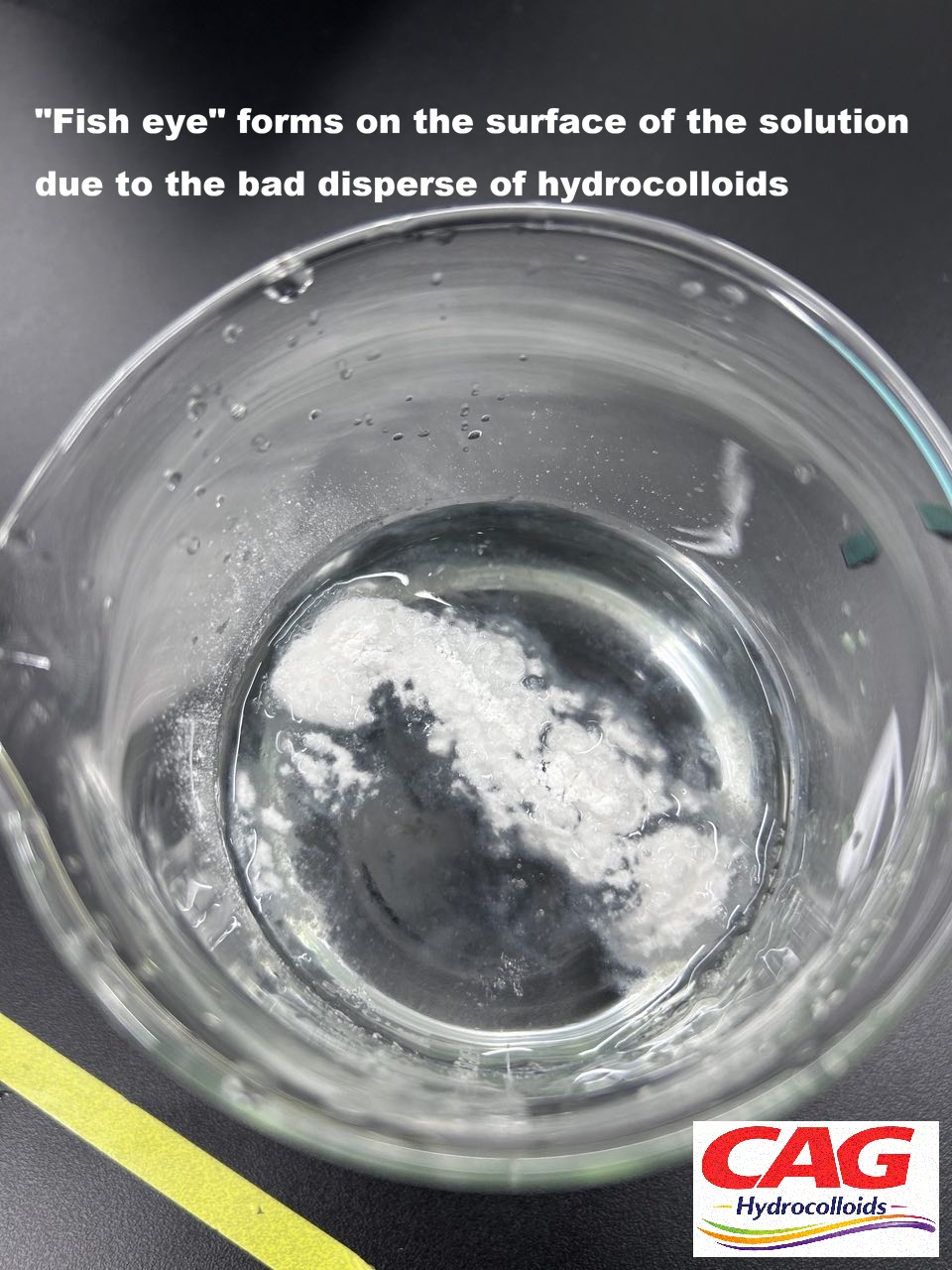
Objective: To prevent the rapid absorption of water by the colloid powder upon contact, which can form a viscous "protective film" around the dry powder, leading to difficult-to-dissolve "fish eyes" or lumps.
Standard Practices:
Pre-mix with Dry Ingredients: Thoroughly mix the hydrocolloid powder with dry ingredients in the formulation, such as sugar, salt, or starch, in a dry state. These particles help separate the hydrocolloid powder, allowing slower and more even wetting when added to the liquid, thereby aiding dispersion.
Add Slowly Under High Shear: Under rapid stirring (preferably using a high-shear mixer), gradually and evenly sprinkle the dry mixture into the liquid. This ensures the powder is immediately broken apart upon entering the liquid.
Avoid: Never add dry powder directly into still or slowly stirred water, and avoid adding large amounts at once.
2. Hydration & Dissolution
Objective: To allow the hydrocolloid molecules to fully expand and dissolve in water, forming a uniform solution or sol.
Standard Practices:
Follow Temperature Requirements:
Cold-Water Soluble Types: Such as xanthan gum, guar gum, CMC. After proper dispersion, continued stirring is sufficient for hydration, though mild heating can speed up the process.
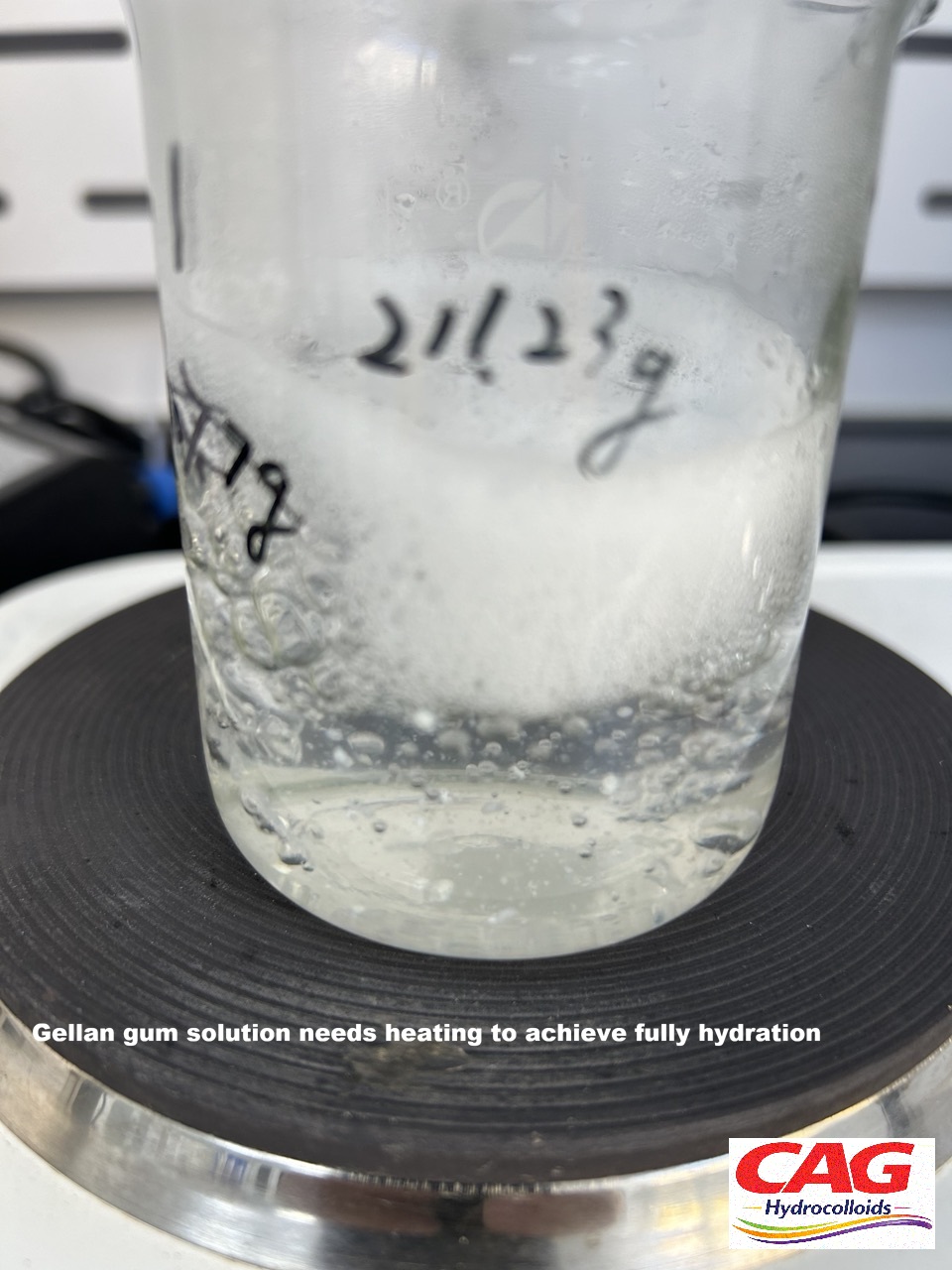
Hot-Water Soluble/Gelling Types: Such as carrageenan, agar, gellan gum, konjac gum, gelatin. Heating to their specific hydration/dissolution temperature (usually near or at boiling) and maintaining it for a period is essential for complete dissolution. For example, carrageenan typically requires heating above 80°C for several minutes.
Ensure Sufficient Hydration Time: Even after reaching the required temperature, adequate stirring and time are necessary to ensure complete hydration. Incomplete hydration can result in insufficient viscosity or gel strength, as well as uneven texture.
3. Control of Ionic and pH Environment
Objective: To create a stable environment for the hydrocolloid to function optimally.
Standard Practices:
Mind the Addition Sequence: For hydrocolloids that require specific ions to gel (e.g., κ-carrageenan requires K⁺, ι-carrageenan requires Ca²⁺, low-ester pectin requires Ca²⁺), fully dissolve the hydrocolloid in deionized water or low-ionic-strength water first, then add ingredients containing these ions (e.g., potassium chloride, calcium salts, milk). Adding ions too early may cause localized rapid gelling, resulting in particles.
Control pH: Understand the pH stability of the hydrocolloid used. For acidic products (e.g., fruit juices, yogurt), choose acid-resistant hydrocolloids (e.g., pectin, xanthan gum, gellan gum), and avoid prolonged heating of certain hydrocolloids (e.g., carrageenan degrades easily) under highly acidic conditions.
4. Shear Force Management
Objective: To use shear for aiding dispersion while preventing it from damaging the formed structure.
Standard Practices:
Dispersion/Dissolution Stage: High shear is required to ensure uniformity and efficiency.
Gelation/Setting Stage: Avoid high shear. For products that have formed a gel structure (e.g., jelly, pudding), intense mechanical action can破坏 the gel network, causing thinning, syneresis, or failure to set. Filling and subsequent handling should be gentle.
5. Cooling and Resting
Objective: To allow gelling products to form their final structure properly.
Standard Practices:
Control Cooling Rate: For gelling products, the cooling rate affects gel strength, texture, and clarity. Generally, rapid cooling yields a more brittle gel with slightly lower clarity, while slow cooling produces a firmer, more uniform gel.
Allow Adequate Resting Time: Gel formation requires time. After reaching the setting point, provide sufficient resting time (e.g., refrigeration for several hours) to achieve the final strength and texture.
Summary and Quick Checklist
Pre-mixing: Has the hydrocolloid been mixed with dry ingredients like sugar or salt?
High-Shear Dispersion: Is the stirring sufficiently rapid when adding the powder?
Temperature Compliance: For heat-soluble hydrocolloids, has the required temperature been reached and maintained?
Ion Addition Sequence: For ion-sensitive hydrocolloids, are key ions added only after complete dissolution?
pH Compatibility: Is the hydrocolloid suitable for the product's acidity/alkalinity?
Gentle Post-Processing: Has vigorous stirring or pumping been avoided during the gelation stage?
Sufficient Time: Has adequate cooling and resting time been provided for the final structure to form?
For the best hydrocolloid solution tailored to your specific product, please feel free to contact our technical support team at info@cagcolloids.com.


Email: info@cagcolloids.com
Tel: 0086-19884908291 / 0086-573- 80890620
Website: www.cagcolloids.com
Address: No. 399, East Tongfu Road, Tongxiang City, Zhejiang Province. China.