


FAQs
Nature Refined, Quality Defined
Green Science for better living

What are the fundamental differences in gelation mechanisms between food-grade agar, carrageenan and gelatin
Agar is composed of alternating β-D-galactose and 3,6-anhydro-α-L-galactose units that form a double-helix network. Gelation is entirely physical — no ionic co-factors are needed. Agar sets at approximately 35–40°C and melts above 85°C, producing a firm, brittle, transparent, heat-reversible gel with excellent water-holding capacity at ambient temperature. This wide hysteresis window (roughly 45°C between setting and melting points) gives agar outstanding shape stability throughout ambient distribution chains.
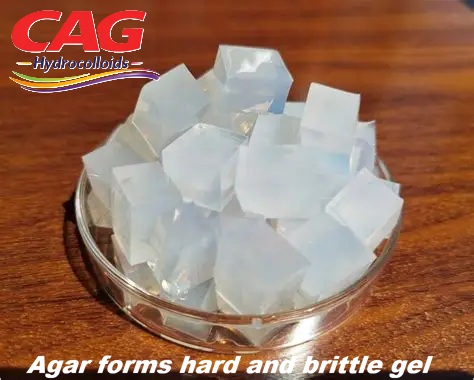
Fig 1. Agar forms cloudy and hard, brittle gel
Carrageenan (κ-type) requires potassium ions to cross-link double helices into aggregated networks, yielding an elastic gel — but with relatively lower heat stability than agar. ι-type carrageenan needs calcium ions and offers good reversible deformation, making it ideal as an emulsifier/stabiliser in dairy products, though independent gel strength is limited. In milk systems, κ-carrageenan gel strength can be 3–5× higher than in water at the same concentration, which is why milk puddings and panna cotta often favour carrageenan.
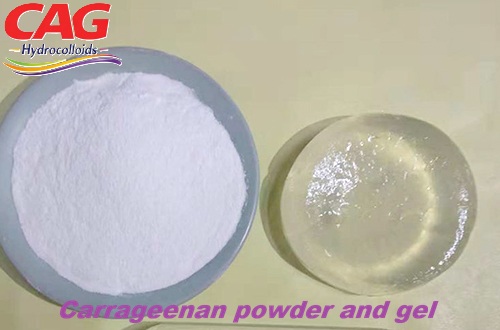
Fig 2. Carrageenan forms more clear, relatively soft gel comparing to Agar
Gelatin relies on re-association of collagen triple helices. Its melting point (≈28–34°C) is close to body temperature, giving soft confectionery its characteristic "melt-in-mouth" quality. However, it is entirely heat-labile, incompatible with halal/vegan markets, and hydrolyses rapidly below pH 4.
| Choose agar when… | Ambient-shelf jellies, plant-based desserts, transparent konjac-style products, hot-fill applications that set on cooling |
| Choose carrageenan when… | Dairy emulsification/stabilisation (e.g., chocolate milk suspension), elasticity-first milk puddings |
| Choose gelatin when… | Premium gummies (melt-in-mouth sensation), refrigerated mousses where halal/vegan certification is not required |
Additional formulation considerations: agar is typically used at 0.5–1.5% (w/w), and gel strength increases approximately linearly with concentration. Carrageenan is used at much lower levels (0.02–0.5%) but is highly sensitive to pH and ionic environment. Gelatin requires 1–3% and places the most stringent demands on cold-chain management.
CAG Hydrocolloids food-grade powder agar achieves gel strength of 500–1,500 g/cm² at 1.5% concentration (Nikan Gel Tester standard). We recommend formulation engineers request a specification sheet and run small-scale trials before scale-up.


Email: info@cagcolloids.com
Tel: 0086-19884908291 / 0086-573- 80890620
Website: www.cagcolloids.com
Address: No. 399, East Tongfu Road, Tongxiang City, Zhejiang Province. China.