


FAQs
Nature Refined, Quality Defined
Green Science for better living

What are the degradation mechanisms of agar powder during storage
Agar storage degradation is a slow but irreversible process, primarily manifesting as declining gel strength and rising microbiological contamination risk. However, these two failure modes differ substantially in their relative importance across application grades.
Degradation mechanisms:
① Moisture absorption → hydrolysis: Agar powder is hygroscopic. At relative humidity above 60%, it absorbs moisture rapidly. Once water-loaded, acid-catalysed hydrolysis — driven even at room temperature by trace carbonic acid (atmospheric CO₂ dissolved in adsorbed moisture) — slowly cleaves glycosidic bonds, reducing molecular weight. Gel strength losses of 5–15% per year have been reported in poorly stored material, depending on humidity severity.
② Oxidative degradation: Prolonged exposure to light and oxygen causes polysaccharide oxidation, progressively deepening colour from pale yellow to amber-brown. Colour change is a useful early visual indicator of improper storage, independent of moisture.
③ Microbial contamination: Once water activity rises due to moisture uptake, bacteria and moulds can establish in agar powder under poor warehouse hygiene — creating serious cross-contamination risk for bacteriological and plant tissue culture–grade products.
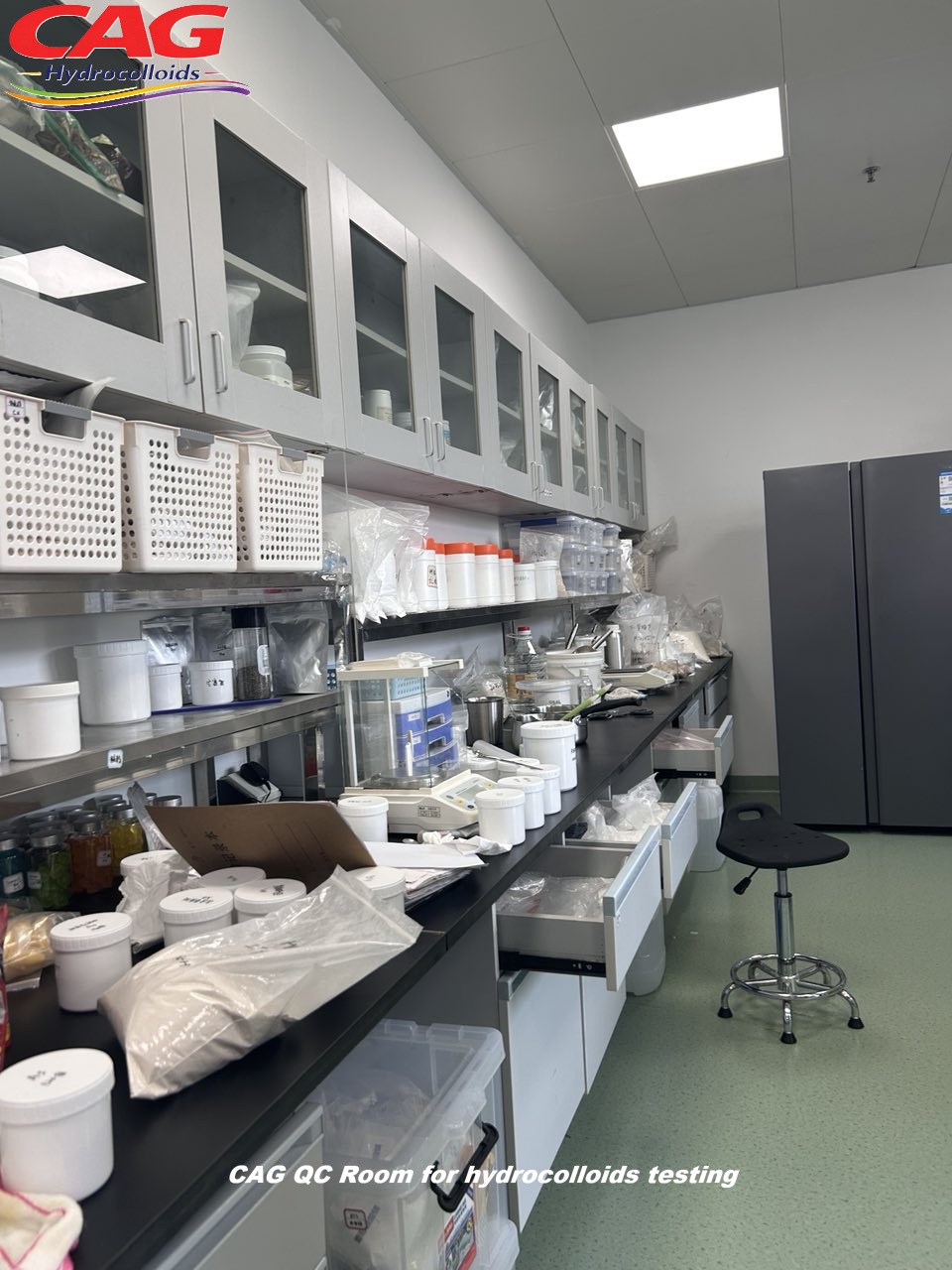
Fig. CAG QC room for hydrocolloids testing
Differentiated storage requirements by product grade:
Practical in-house verification method: For suspect stock, dissolve 1.5 g in 100 mL boiling water, cool to 20°C, then measure gel strength using a texture analyser or standardised dead-weight probe method. Compare against the COA value. A decline of more than 15% indicates the lot should be downgraded or discarded rather than used in gel-strength–sensitive applications.
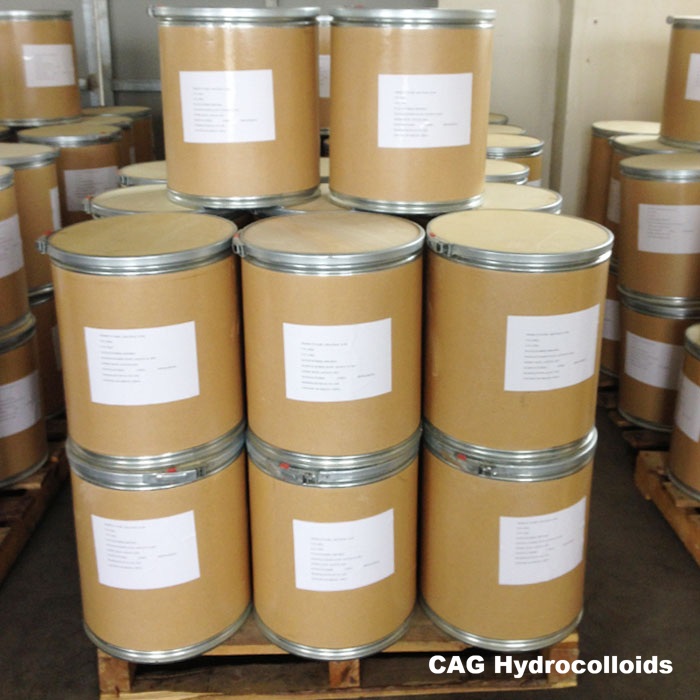
Fig. Agar Agar out packing-- drums
CAG Hydrocolloids recommends that all customers record the batch number and receipt date at the time of delivery, manage inventory on a strict first-in, first-out (FIFO) basis, and after opening, tightly reseal the original inner liner bag before placing it in a moisture-proof sealed container.


Email: info@cagcolloids.com
Tel: 0086-19884908291 / 0086-573- 80890620
Website: www.cagcolloids.com
Address: No. 399, East Tongfu Road, Tongxiang City, Zhejiang Province. China.