


FAQs
Nature Refined, Quality Defined
Green Science for better living

What are the applications of agar-based banana tissue culture?
Agar-based banana tissue culture technology is widely applied in commercial agriculture for several key purposes:
Rapid Mass Propagation: It enables the rapid, large-scale production of uniform, high-quality banana seedlings, meeting the high annual global market demand efficiently.
Yield and Quality Enhancement: Cultured seedlings demonstrate significantly improved performance. For example, yields can be increased by approximately 30% compared to traditional methods, with first-generation plants yielding 75–90 metric tons per hectare and subsequent generations reaching 97.5–135 metric tons per hectare.
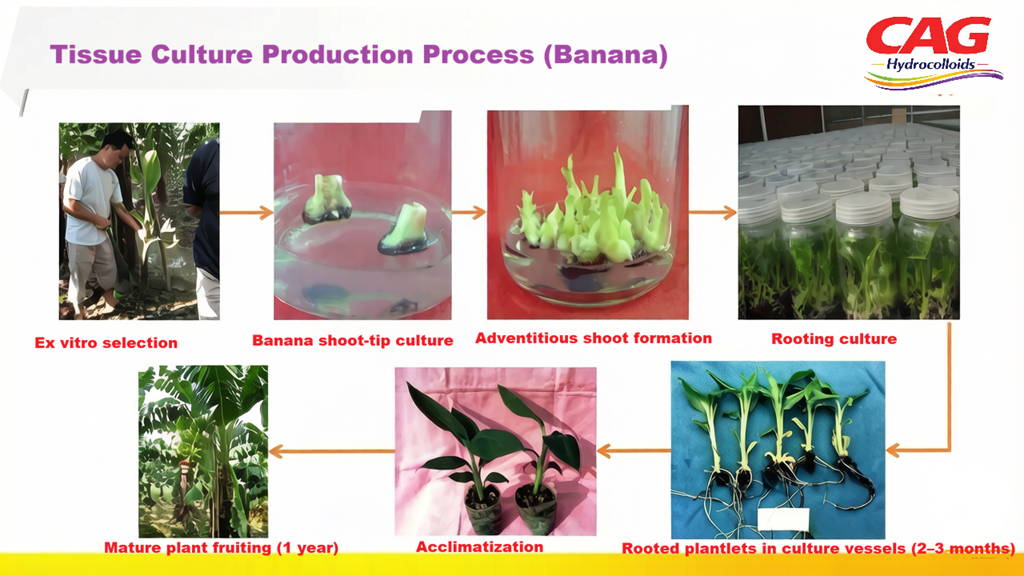
Genetic Preservation and Disease Control: The technique allows for the stable preservation of desirable genetic traits from select mother plants. It produces 100% virus-free (pathogen-free) plantlets with enhanced resistance to critical diseases like Fusarium wilt (Panama disease), ensuring healthier crops.
Improved Survivability and Growth: Tissue-cultured seedlings show a higher and more reliable survival rate (around 90%, versus ~70% for conventional propagation) and often have a shortened growth-to-fruiting cycle, leading to faster crop turnover.
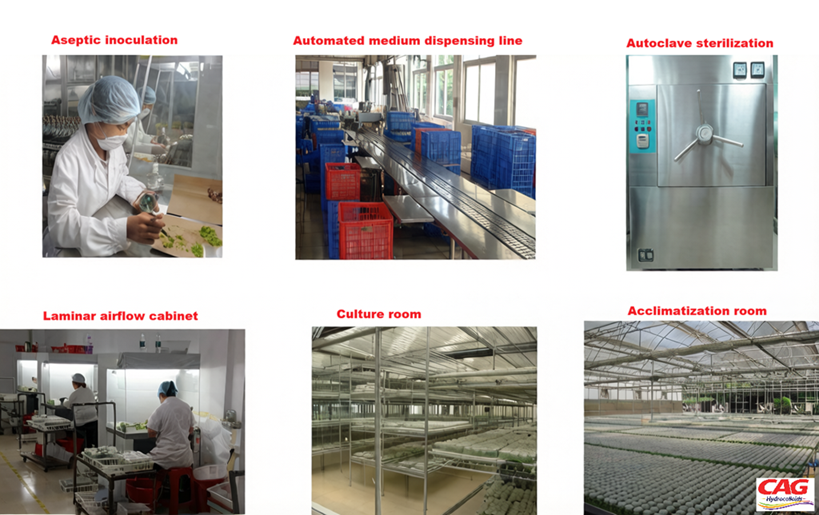
In summary, this technology is fundamental to modern banana cultivation, supporting the production of superior, disease-resistant planting material on a commercial scale to boost productivity, sustainability, and food security.


Email: info@cagcolloids.com
Tel: 0086-19884908291 / 0086-573- 80890620
Website: www.cagcolloids.com
Address: No. 399, East Tongfu Road, Tongxiang City, Zhejiang Province. China.