


FAQs
Nature Refined, Quality Defined
Green Science for better living

What are the application methods, addition amounts, and other hydrocolloids that need to be combined with pectin in juice beverages?
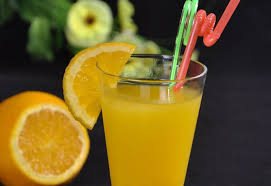
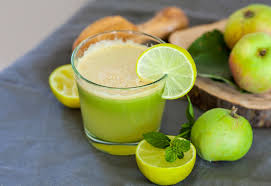
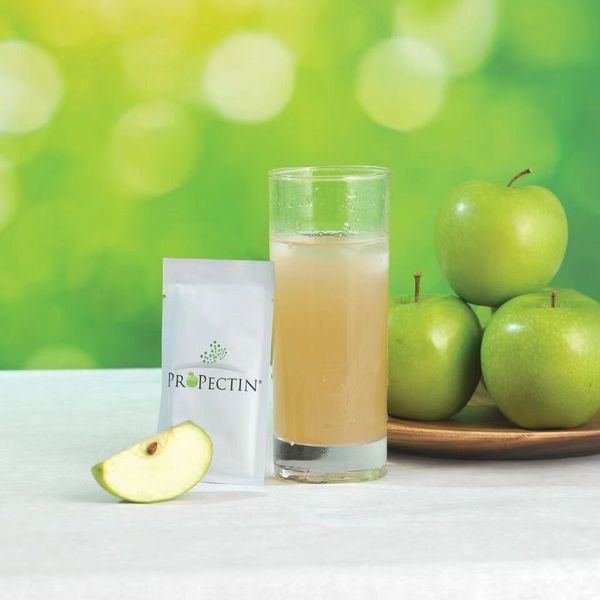
In juice beverages, pectin is primarily used for two main objectives, which correspond to the use of different types of pectin, and their methods and strategies are distinctly different:
This is the most classic and important application of pectin in juice beverages.
Objective: Prevent sedimentation of insoluble particles such as fruit pulp, fibers, and citrus sacs, maintaining a uniform, stable cloudy appearance and mouthfeel of the beverage.
Recommended Pectin Type: High-ester pectin. Its working principle involves forming a weak gel network or three-dimensional structure in an acidic (pH 2.8-3.8) environment with a certain sugar content (typically soluble solids > 10°Brix), physically "locking" the particles within the system.
Typical Addition Amount:
For concentrated juice (for reconstitution and dilution): 0.5% - 2.0% (based on the concentrated juice), to ensure sufficient pectin concentration for particle suspension after dilution.
For ready-to-drink juice beverages: 0.1% - 0.5% (based on the final product), depending specifically on solids content, particle density, and quantity.
Usage Method and Process:
Pre-treatment: Pectin must be dry-mixed with 5-10 times its weight of sugar to prevent clumping.
Dissolution: Under vigorous agitation, slowly add the pre-mix into water, sugar syrup, or low-solids juice heated to 50-60°C to ensure complete dissolution.
Mixing: Blend the fully dissolved pectin solution with the main juice, sugar, acid, etc.
Homogenization: A key step. Typically, high-pressure homogenization is used to finely disperse pulp particles uniformly into the stable network formed by pectin.
Sterilization and Filling: Perform pasteurization or UHT sterilization, followed by hot filling.
Objective: Increase the "body," "fullness," and smoothness of the juice, improving an overly "watery" mouthfeel and enhancing flavor perception.
Recommended Pectin Type: Low-ester pectin, especially amidated low-ester pectin. It provides stable thickening effects over a wide pH and calcium ion range, offering a fresh, non-slimy mouthfeel.
Typical Addition Amount: 0.05% - 0.2% (based on the final product). The amount is relatively low, primarily aimed at adjusting rheological properties rather than forming a strong gel.
Usage Method: The dissolution method is similar to that for high-ester pectin (requires pre-mixing with sugar) and can be added to the system. Special high-pressure homogenization is usually not required for texture modification alone.
To achieve optimal results, reduce costs, or achieve specific functionalities, pectin is often combined with other hydrocolloids:
|
Combined Hydrocolloid |
Main Purpose and Synergistic Effect |
Typical Application Scenarios |
|---|---|---|
|
Sodium Carboxymethyl Cellulose |
1. Enhance suspension stability: CMC provides stronger steric hindrance, complementing the pectin network to prevent fine particle sedimentation. |
High-pulp cloudy juices, juice beverages with fruit pieces. |
|
Xanthan Gum |
1. Provide strong pseudoplasticity: Makes the beverage feel smooth when poured while effectively suspending particles at rest. |
Beverages requiring extremely high suspension stability, or juices needing a specific "smooth" mouthfeel. |
|
High-Acyl Gellan Gum |
1. Provides a soft, elastic gel texture, which can enhance the suspension support and "body" of the system. |
Used for manufacturing cloudy juices or beverages with suspended fruit pieces that have a smooth, elastic mouthfeel, or for enhancing the full-bodied texture of premium juices. Note its thermal reversibility; the gel forms during the cooling process after hot filling. |
Summary and Recommendations:
When applying pectin in juice beverages, first clearly define the application objective (suspension or thickening) to select the correct pectin type (high-ester or low-ester). The addition amount must be determined through experimentation, starting from the midpoint of the suggested range and adjusting based on the product's solids, acidity, and particle conditions. Combination is an effective means to improve performance and cost-effectiveness; CMC and xanthan gum are the most common and reliable partners. If an elastic gel texture is desired, high-acyl gellan gum is an excellent choice that is insensitive to ions.
In practical development, it is highly recommended to collaborate with the application technologists of your pectin supplier (such as CAG Hydrocolloids). CAG can recommend the most suitable pectin type, combination strategy, and complete process parameters based on your specific product concept (juice type, sugar-acid ratio, target texture)


Email: info@cagcolloids.com
Tel: 0086-19884908291 / 0086-573- 80890620
Website: www.cagcolloids.com
Address: No. 399, East Tongfu Road, Tongxiang City, Zhejiang Province. China.