


FAQs
Nature Refined, Quality Defined
Green Science for better living

Under the same high-sugar, high-acid system, why is HM pectin soft in jams with 60–65% solids, but exhibits a brittle and hard texture in gummies with 75–78% solids?
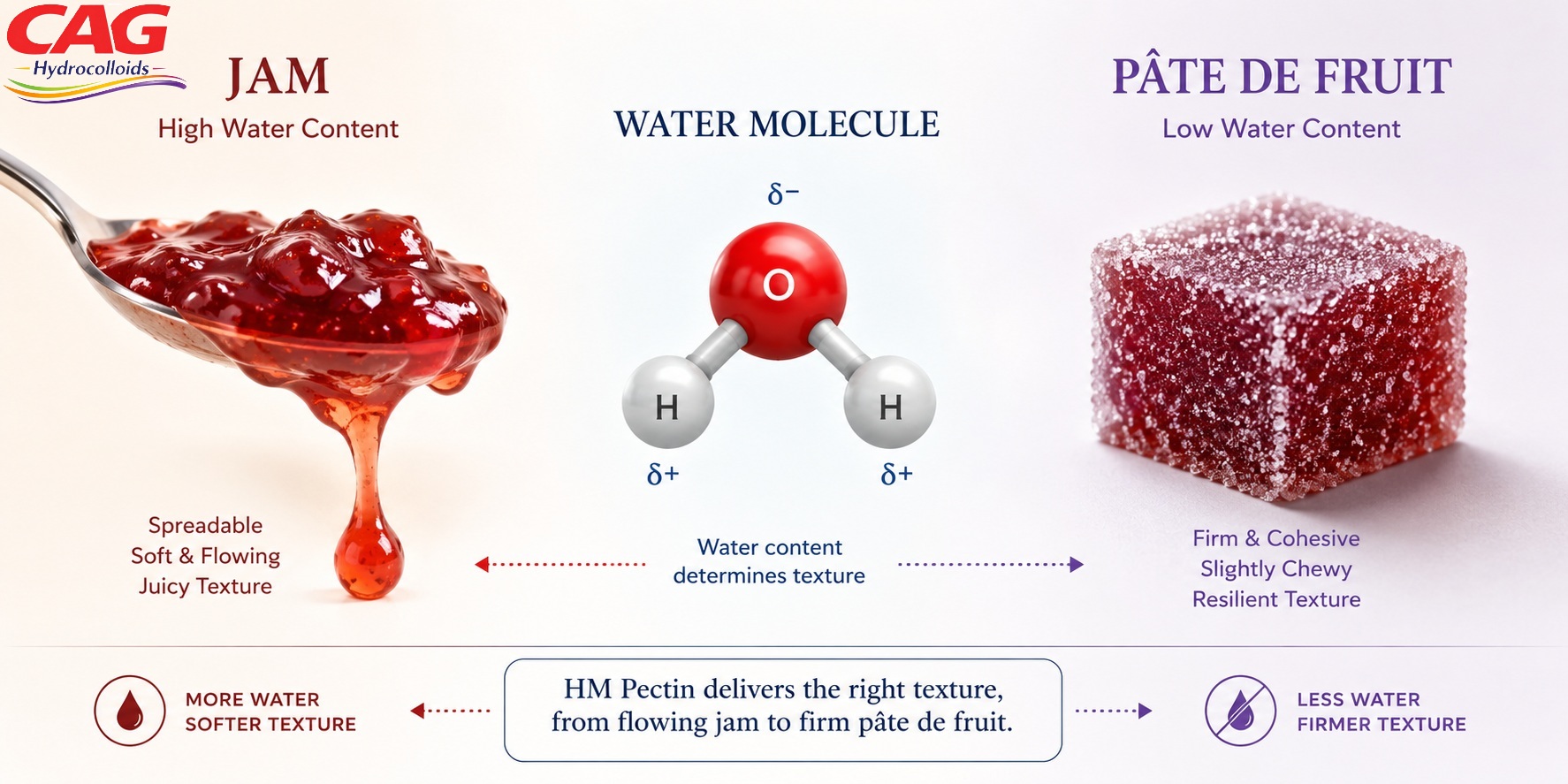
The core reason lies in the degree of compression of the pectin gel network's hydration layer by free water, rather than a change in the colloid itself.
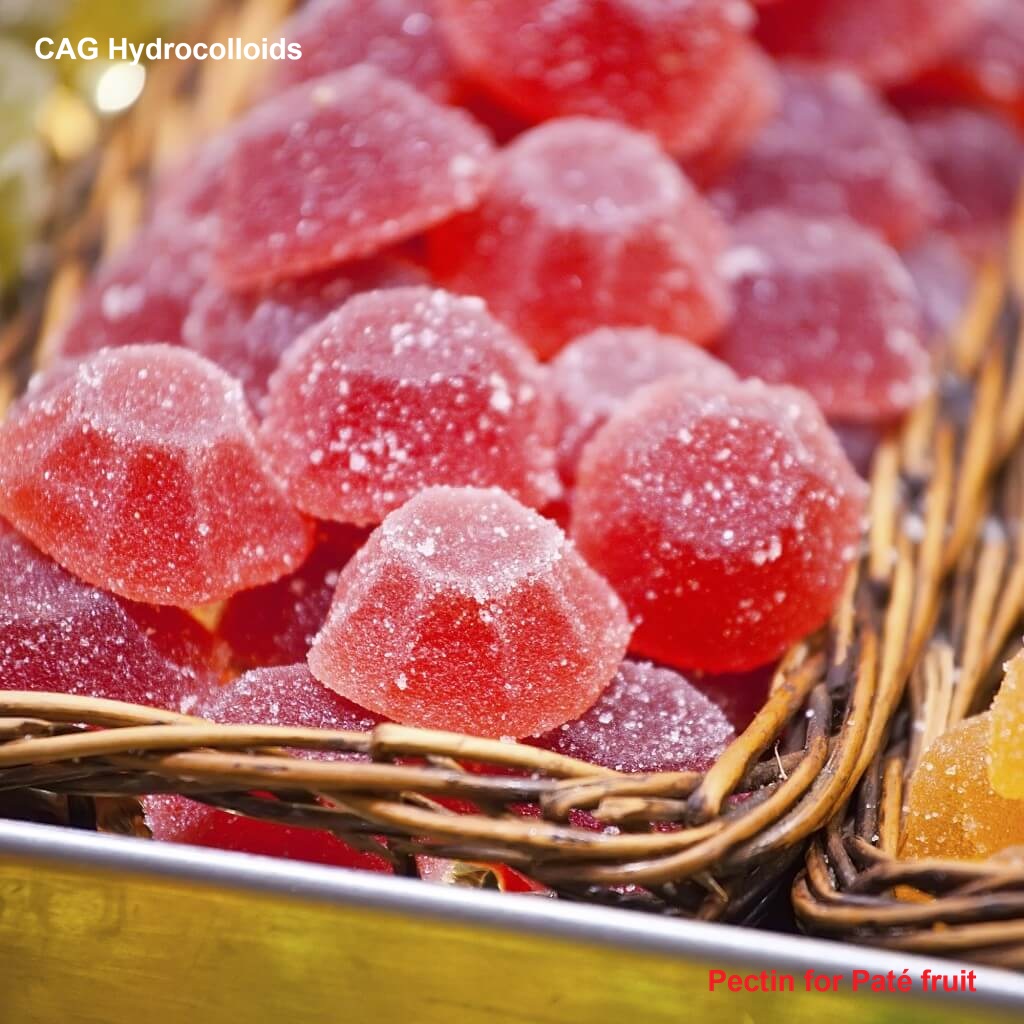
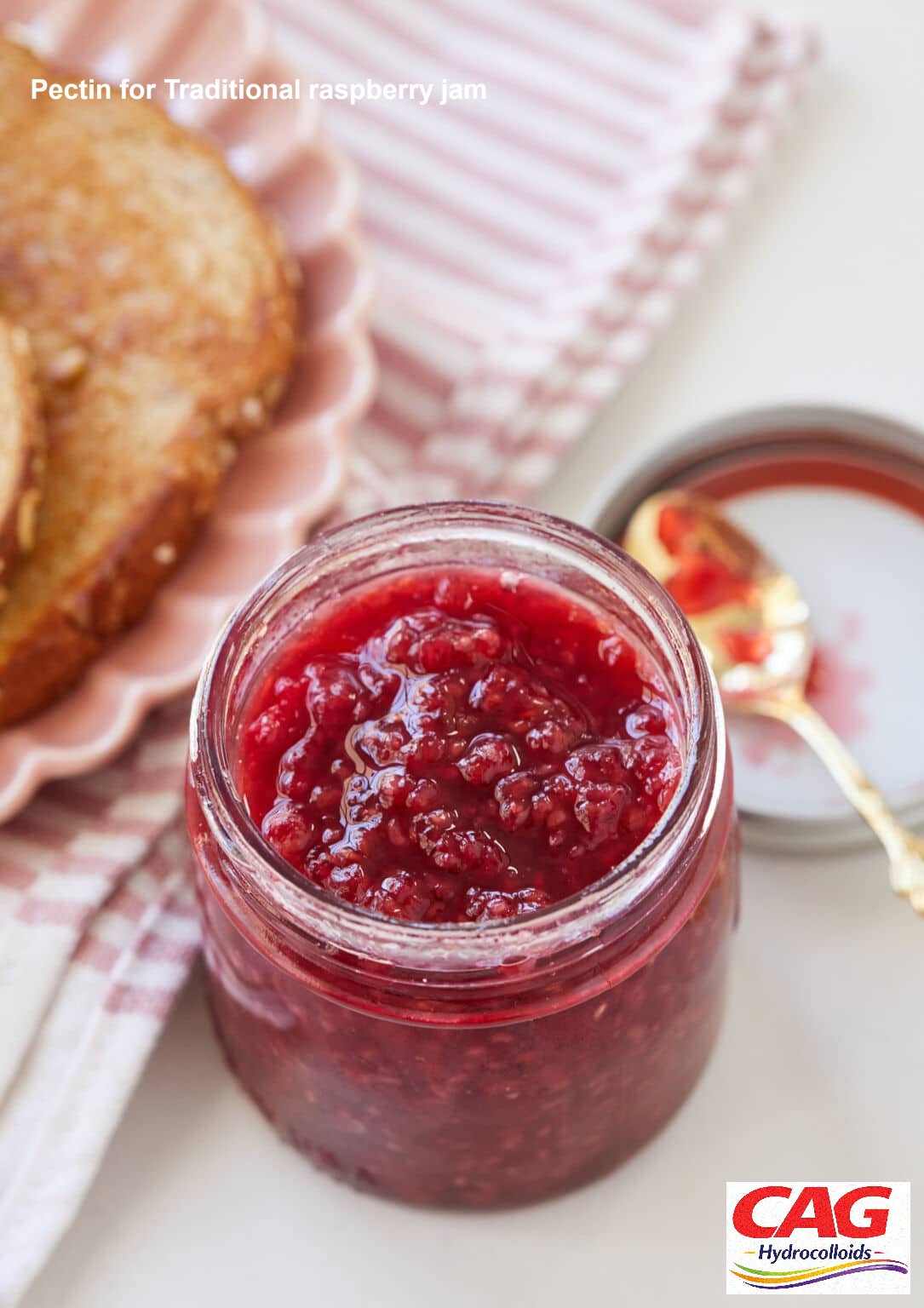
Fig. Pectin for Pate Fruit Fig. Pectin for Jam
Jam State (Soft): At 60–65% solids, there is still 35–40% free water. Sufficient moisture forms a thick hydration layer around the pectin chains, acting as a "lubricant" and "cushion." Under external force, the network has enough space for chain slippage and deformation, resulting in a soft, spreadable texture.
Gummy State (Brittle/Hard): When solids reach 75–78%, free water is severely depleted. The pectin network is forced into a dense state with a thinned hydration layer, and the movement space between chain segments is locked. The external force cannot be buffered by deformation and is instead released through network fracture, leading to high hardness, low resilience, and brittleness.
Summary: The texture of HM pectin is dictated by its "crowding level"—abundant water yields softness (jam), while scarce water yields hardness (gummies).


Email: info@cagcolloids.com
Tel: 0086-19884908291 / 0086-573- 80890620
Website: www.cagcolloids.com
Address: No. 399, East Tongfu Road, Tongxiang City, Zhejiang Province. China.