


FAQs
Nature Refined, Quality Defined
Green Science for better living

The Gellan Gum Paradox: Why Fewer Steps Mean Higher Production Difficulty
In hydrocolloid manufacturing, it sounds like a no-brainer: Low Acyl (LA) Gellan Gum requires an extra chemical deacetylation step, so High Acyl (HA) Gellan Gum must be easier to make since it skips this process, right?
Wrong. In industrial fermentation, a simpler workflow often demands far higher engineering precision. Here is why HA Gellan Gum is actually the tougher mountain to climb:
The Rheological Nightmare: HA gellan gum retains its native, high-molecular-weight structure. During fermentation, the broth becomes extremely viscous. This ultra-high viscosity severely limits oxygen transfer, strains agitation systems, and makes downstream filtration an operational nightmare.
Zero Room for Error: Since HA gellan doesn't undergo downstream chemical modification to "even out" its properties, its final quality relies 100% on the live fermentation phase. Any micro-variance in pH, aeration, or temperature instantly causes severe batch-to-batch volatility.
The Parts-Per-Ten-Thousand Crux: In modern plant-based milks or dairy formulations, HA gellan operates at a minute dosage—often just 0.02% to 0.05%. At this ultra-low threshold, even a tiny structural flaw in the gum will cause catastrophic product failures like serum separation.
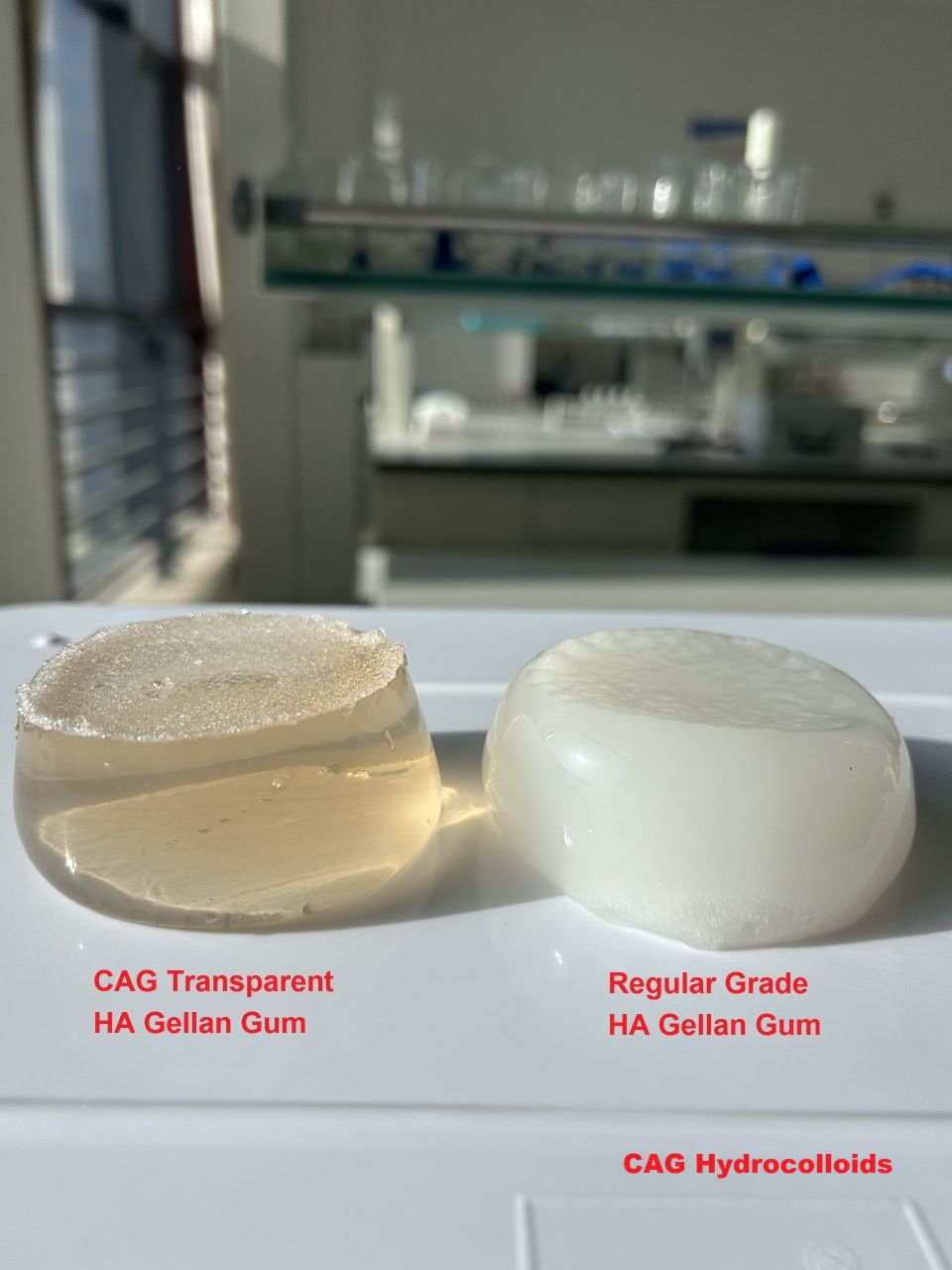
Fig. Regular and transparent High acyl gellan gum
The Takeaway: LA gellan gum requires a longer chemical process but yields a homogenized, predictable end product. HA gellan gum production is a pure masterclass in bioprocessing precision—proving that in biotechnology, removing a downstream step shifts the entire burden to upstream engineering excellence.
How do you manage viscosity challenges in high-molecular-weight polysaccharide fermentation? Let’s discuss below!
#GellanGum #Hydrocolloids #Biotechnology #FoodScience #Fermentation #FoodIngredients


Email: info@cagcolloids.com
Tel: 0086-19884908291 / 0086-573- 80890620
Website: www.cagcolloids.com
Address: No. 399, East Tongfu Road, Tongxiang City, Zhejiang Province. China.