

FAQs
Nature Refined, Quality Defined
Green Science for better living

Professional Analysis of Syneresis in Pectin Jams: Causes and Systemic Solutions
Syneresis in pectin jams refers to the spontaneous contraction of the gel network during storage, which expels serum (free water) due to thermodynamic instability. This phenomenon compromises product appearance, shelf life, and indicates fundamental defects in the gel's microstructure. A root-cause analysis from an expert perspective must systematically examine three core aspects: gelation kinetics, network architecture, and imposed stresses.
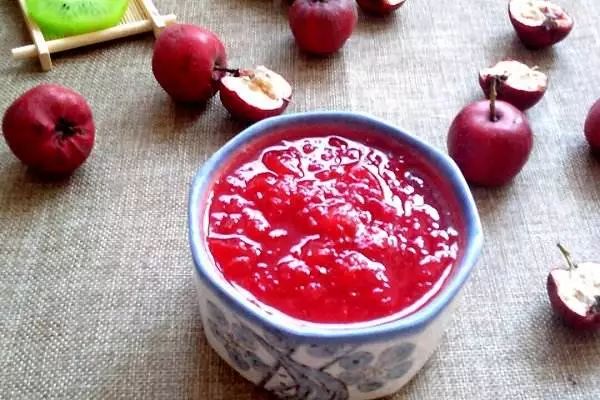
Jam is a complex, heterogeneous colloid composed of pectin chains, sugars, acids, water, and fruit solids. Syneresis occurs when the three-dimensional gel network fails to uniformly and permanently immobilize the aqueous phase. The primary drivers are as follows:
1. Intrinsic Network Defects (Structural Syneresis)
Low Molecular Weight or Degraded Pectin: Gel strength correlates directly with pectin chain length. Short chains form networks with fewer junction zones, resulting in a fragile matrix with poor water-binding capacity. Degradation can be caused by acid hydrolysis, excessive heat, or endogenous enzymes (e.g., pectin methylesterase, PME) from the fruit.
Insufficient Pectin Concentration: As the primary gelling agent, pectin acts as the network's "scaffolding." Below the critical concentration needed for a continuous network, the gel structure is weak and porous, unable to resist inherent收缩 forces.
Suboptimal Gelation Conditions:
Incorrect pH: Optimal gelation for high-ester pectin occurs at pH 2.8–3.5. A pH >3.8 yields a slow, weak gel; a pH <2.8 causes rapid, localized, and brittle gelation, leading to a coarse, heterogeneous structure prone to syneresis.
Insufficient Soluble Solids (ºBrix): Sugars act as dehydrating agents and co-solutes. A ºBrix below 65% provides insufficient osmotic pressure to stabilize the network, allowing it to swell and later contract, expelling water. ºBrix is the critical "tightening agent" for the jam system.
Uncontrolled Calcium Ions: For low-ester pectin or fruits naturally high in calcium (e.g., apples, citrus), improper calcium levels can induce overly rigid, "egg-box" type cross-links. These brittle gel domains are prone to syneresis under storage stresses.
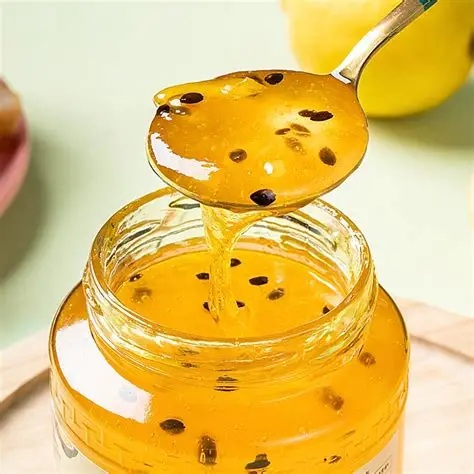
2. Process-Induced and Thermal Stress (Physical Syneresis)
Improper Cooking/Cooling Profiles:
Overcooking: Prolonged boiling degrades pectin and can generate water via Maillard reactions, destabilizing the system.
Excessively Slow Cooling: This allows pectin chains time to form large, localized aggregates rather than a fine, uniform network, similar to polymer "retrogradation." The resulting coarse structure has inferior water retention.
Temperature Fluctuations During Storage: Pectin gels are thermoreversible. Repeated temperature cycling (e.g., in non-climate-controlled storage) subjects the gel to partial melting and re-setting cycles. Each cycle can promote network rearrangement and contraction, progressively squeezing out water.
3. Component Incompatibility
High Variability in Fruit Raw Materials: Differences between fruit batches in pectin content, degree of esterification, natural acidity, and mineral content directly impact gel strength if the formulation and process are not adjusted accordingly.
Excessive or Coarse Insoluble Solids: High pulp or fiber content can physically disrupt the continuity of the pectin network, creating weak points and channels for serum migration.
A robust strategy to prevent syneresis focuses on building a resilient, homogeneous gel network.
1. Formulation Optimization: Engineering a Resilient Network
|
Objective |
Action |
Mechanism |
|---|---|---|
|
Ensure Core Gel Strength |
Use high-gel-strength, slow-set pectin at the correct dosage (typically 0.8–1.5%, w/w). |
Provides a dense, stable polymeric骨架. |
|
Optimize Gelation Environment |
Strictly control final pH (3.2–3.5) and soluble solids (68–72 ºBrix). Implement in-line monitoring. |
Creates the ideal thermodynamic conditions for stable network formation. |
|
Reinforce the Network |
Blend with xanthan gum (0.05–0.1%) or locust bean gum (0.1–0.2%). |
Xanthan increases yield stress and water immobilization; synergy with LBG enhances elasticity and reduces shrinkage. |
|
Manage Divalent Cations |
For sensitive systems, add sodium citrate (0.1–0.3%) as a chelating agent. |
Buffers free calcium ions, preventing the formation of rigid, brittle gel zones. |
|
Stabilize the Dispersed Phase |
For high-pulp jams, incorporate microcrystalline cellulose, MCC (0.5–1.5%) or modified starch (1–2%). |
MCC acts as a water-binding filler; starch increases continuous phase viscosity, improving pulp suspension. |
2. Process Precision: Guiding Optimal Network Formation
Pectin Dispersion & Hydration: Always pre-blend pectin with 5–10 parts sugar by weight. Disperse this mixture into the batch under high shear at ≥85°C and hold for 3–5 minutes to ensure complete, lump-free dissolution. This is non-negotiable.
Controlled Cooking: Employ rapid heating to target ºBrix with minimal hold time. Vacuum cooking is advantageous for reducing thermal degradation. Stop heating immediately upon reaching the target.
Critical: Controlled Cooling with Shear: After cooking, cool the mass rapidly to 85–90°C (the ideal window for acid addition) under gentle, continuous agitation. This prevents premature gelling and promotes a finer, more homogeneous network structure.
Filling & Terminal Processing: Use hot-filling (>85°C). Invert containers briefly for headspace sterilization. Avoid excessive post-fill heat treatments that could damage the gel.
3. Storage Stability Design
Packaging: Use packaging with excellent moisture barrier properties to prevent both moisture loss and gain, which alter local water activity and stress the gel.
Storage Conditions: Maintain constant, cool temperatures (10–25°C) and avoid light exposure. Crucially, prevent temperature cycling, which is a major accelerant of syneresis.
When syneresis occurs, follow this logical troubleshooting sequence:
Measure Key Parameters: Analyze the finished product's pH and ºBrix.
If out of spec (pH 3.2-3.5, ºBrix ≥68%): Correct the formulation/process.
If in spec: Proceed.
Audit Pectin Supply & Dosage: Verify the pectin's gel strength, lot number, and storage conditions. Re-calculate the dosage. Was there a supplier or grade change?
Issue found: Replace with a certified, high-activity pectin batch.
No issue: Proceed.
Review Process Data: Scrutinize records for cooking time/temperature, cooling rate, acid addition temperature/mixing efficiency.
Deviation found: Optimize the identified process step.
No deviation: Proceed.
Evaluate Raw Material & Formulation Robustness: Assess the consistency of the fruit raw material (pectin, acid, mineral content). For high-variability ingredients or a fixed formula, the formulation itself may lack robustness.
Raw material variability high: Implement incoming fruit testing and adjust the recipe batch-by-batch via small-scale trials.
Formula may be weak: Reformulate for resilience by introducing hydrocolloid blends (xanthan/LBG) or functional fillers (MCC) to fortify the gel structure against inherent variations.
In conclusion, syneresis is a symptom of a system operating outside its stability window. The expert approach moves beyond troubleshooting to proactively designing a robust system through standardized inputs, controlled processes, and a formulation engineered for resilience. Solving syneresis not only fixes a defect but fundamentally advances the product's quality and reliability.


Email: info@cagcolloids.com
Tel: 0086-19884908291 / 0086-573- 80890620
Website: www.cagcolloids.com
Address: No. 399, East Tongfu Road, Tongxiang City, Zhejiang Province. China.