


FAQs
Nature Refined, Quality Defined
Green Science for better living

Just curious: in PTC labs, do people mostly use agar or gellan gum now?
In modern Plant Tissue Culture (PTC) labs, Gellan Gum (specifically Low-Acyl) has become the dominant choice for most applications, effectively replacing traditional agar in many professional settings.
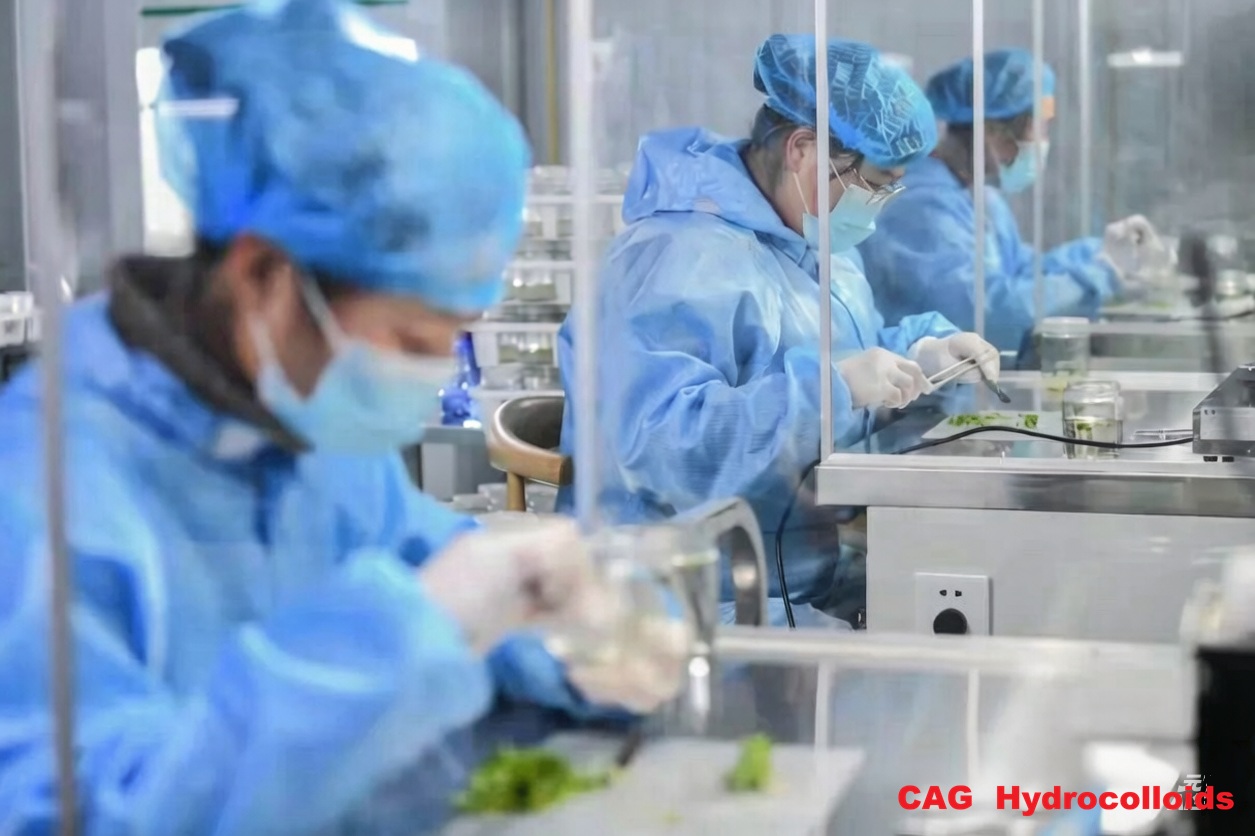
While agar is still used for basic rooting stages or in low-budget educational labs, Gellan Gum is preferred for micropropagation, somatic embryogenesis, and research due to its superior performance.
Here is the breakdown of why the trend has shifted:
Gellan Gum: Creates a water-clear, transparent gel. This allows researchers to easily monitor root development and spot contamination (like fungi or bacteria) immediately without disturbing the explant.
Agar: Usually produces an opaque or semi-clear gel. It is much harder to see what is happening beneath the surface.
Gellan Gum: It is fermentation-derived and highly purified. Every batch is consistent, which is critical for reproducible scientific experiments.
Agar: Extracted from seaweed, it contains natural impurities (like phenols) and varies from batch to batch depending on the harvest. These impurities can sometimes inhibit the growth of sensitive plant species.
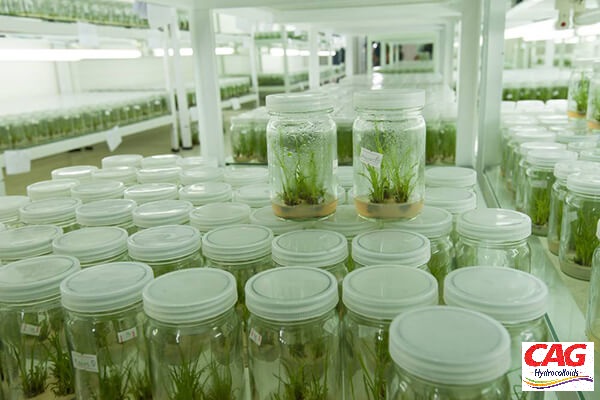
Gellan Gum: It is much more potent. You only need 2.0 – 3.5 g/L to create a very firm gel. It provides a stable structure that prevents delicate explants from sinking.
Agar: Requires a much higher dosage of 6 – 10 g/L to achieve a similar firmness.
|
Feature |
Agar |
Gellan Gum (Low-Acyl) |
|---|---|---|
|
Source |
Seaweed |
Bacterial Fermentation |
|
Clarity |
Opaque / Cloudy |
Crystal Clear |
|
Dosage |
High (6-10 g/L) |
Low (2-4 g/L) |
|
Texture |
Soft, elastic |
Firm, brittle, stable |
|
Best For |
Rooting, Teaching labs |
Micropropagation, Research |


Email: info@cagcolloids.com
Tel: 0086-19884908291 / 0086-573- 80890620
Website: www.cagcolloids.com
Address: No. 399, East Tongfu Road, Tongxiang City, Zhejiang Province. China.