


FAQs
Nature Refined, Quality Defined
Green Science for better living

How to Correctly Disperse and Hydrate Carrageenan in Food Production?
Lumping, incomplete hydration, and premature gelation are among the most common — and most avoidable — processing problems with carrageenan. The right dispersion protocol depends on the product grade, the processing equipment, and the system composition.
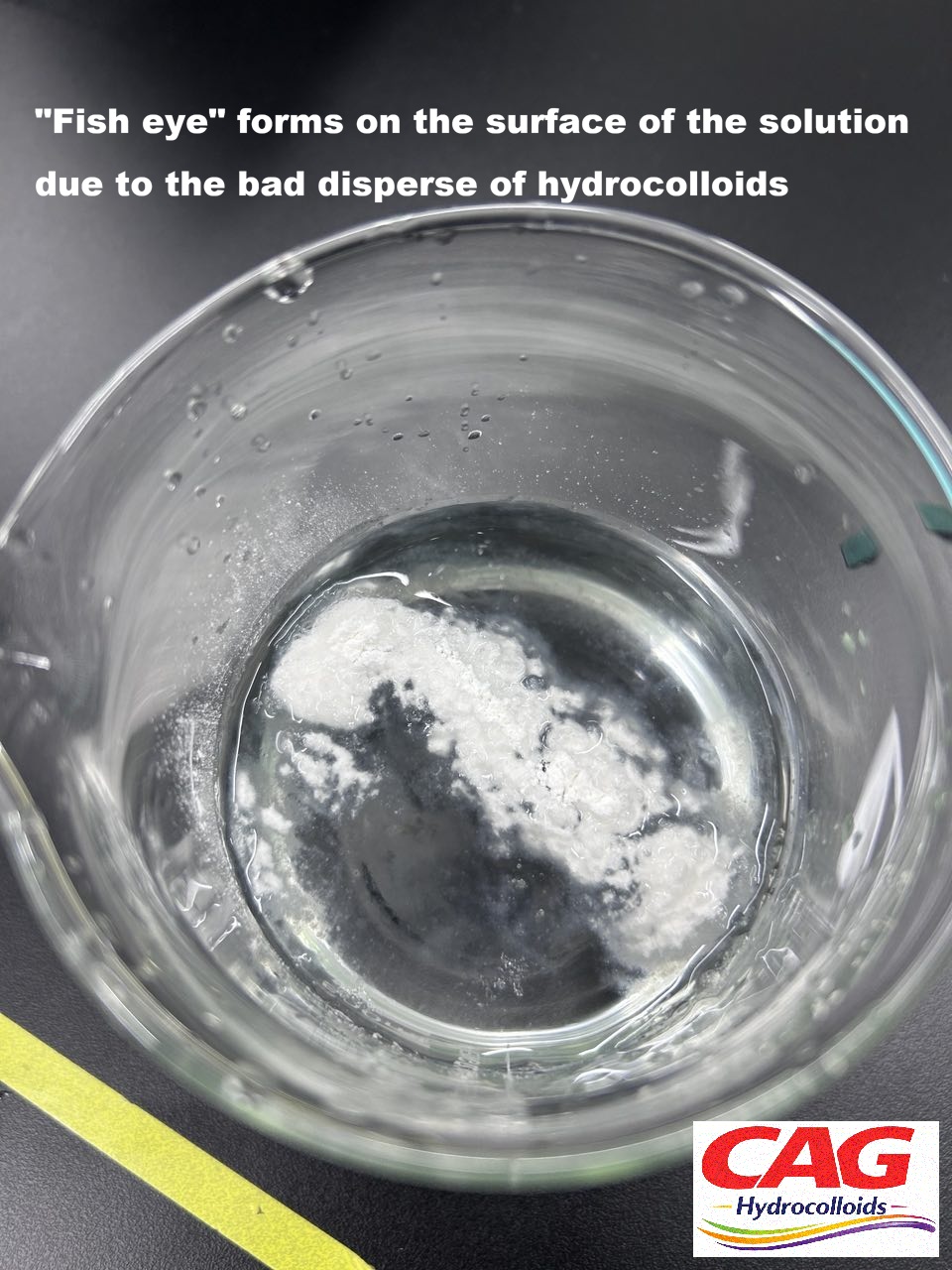
Carrageenan is hydrophilic and begins to absorb water and swell almost immediately upon contact with aqueous media. When powder is added directly to warm water without prior dispersion, individual particles on the outside of the agglomerate hydrate and swell before water can penetrate to the interior, creating a gel-coated lump that is extremely resistant to further hydration. Preventing this requires either separating the particles physically before they contact water or suppressing their hydration until mechanical dispersion is complete.
The three most reliable industrial approaches are as follows. The first — and most widely used — is dry blending with a co-ingredient such as sugar, maltodextrin, or salt at a mass ratio of at least 5:1 (diluent to carrageenan). The granular diluent physically separates carrageenan particles, preventing bridging when the blend is introduced to water. The second approach is oil slurrying: dispersing the carrageenan powder in vegetable oil creates a hydrophobic barrier around each particle, allowing the slurry to be introduced to the aqueous phase and mechanically dispersed before hydration begins. The third approach exploits salt chemistry directly: high-potassium gel-press carrageenan grades, which carry residual KCl from their production process, do not hydrate at ambient temperature and can be dispersed directly into cold water or cold milk without lumping — high-shear mixing then completes hydration rapidly.
Kappa and iota carrageenan require heating above 60–80 °C for complete hydration. Lambda carrageenan is an exception — it dissolves in cold water. Assuming all carrageenan types behave like lambda is a common source of undissolved-particle complaints in finished products.
For acid-containing products such as fruit-flavored desserts or acidified dairy systems, the sequencing of acid addition is critical. Carrageenan should be fully hydrated and the system brought to near-final temperature before any acidulant is introduced. Maintaining the system above pH 4.5 during the high-temperature phase, and shortening the total time at low pH and elevated temperature, significantly reduces backbone hydrolysis and preserves gel strength in the finished product.
A useful diagnostic: if a production batch shows gel strength that is consistently 15–25% below the target, and the raw material specification is confirmed, the most probable cause is inadequate hydration or premature acid exposure — not a carrageenan quality issue.


Email: info@cagcolloids.com
Tel: 0086-19884908291 / 0086-573- 80890620
Website: www.cagcolloids.com
Address: No. 399, East Tongfu Road, Tongxiang City, Zhejiang Province. China.