


FAQs
Nature Refined, Quality Defined
Green Science for better living

How do specific ion conditions affect the gelation temperature of Low-Acyl (LA) Gellan Gum compared to Agar?
While both are premium hydrocolloids used for texturizing and gelling, their molecular cross-linking mechanisms respond completely differently to the presence of salts:
Agar: Gelation is entirely driven by physical hydrogen bonding between linear polysaccharide chains. It is ion-independent; the presence of monovalent or divalent salts does not shift its native setting (32–45°C) or melting (85°C+) points, maintaining a massive thermal hysteresis loop.
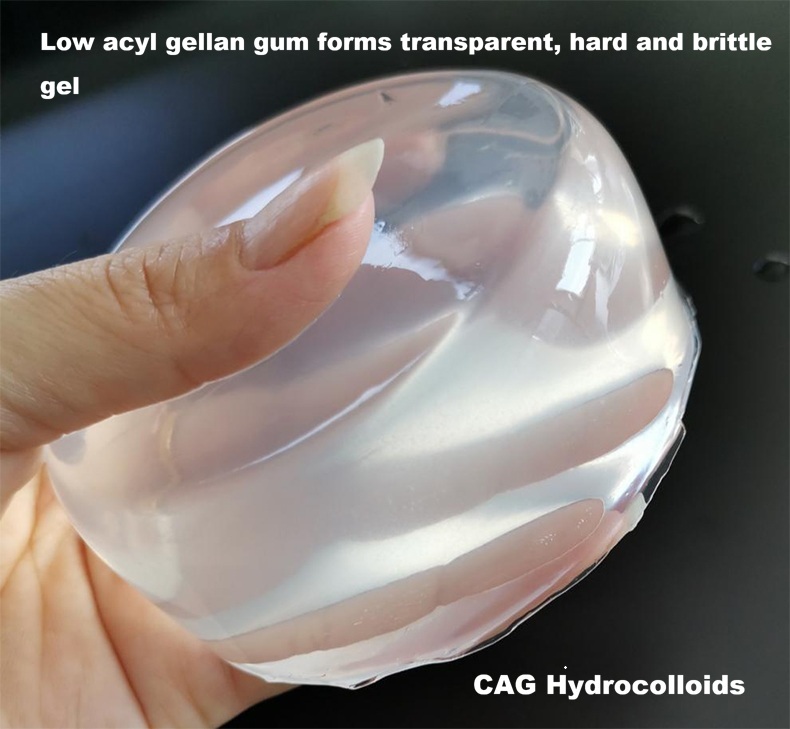
Low-Acyl Gellan Gum: Gelation relies strictly on ion-mediated coordination to form a three-dimensional network. When cooling, the polymer chains shift from random coils to double helices, which then require cations to bridge the negatively charged carboxyl groups on the backbone. Crucially, under sodium ion (Na+) conditions, the gelation temperature of low-acyl gellan gum shifts significantly higher compared to un-ionized or purely distilled water baselines. This ion sensitivity allows manufacturers to precisely trigger or alter gellan gum's transition temperature and texture by managing the monovalent or divalent salt profile of the formulation, whereas agar remains locked into its native physical parameters regardless of the salt environment.


Email: info@cagcolloids.com
Tel: 0086-19884908291 / 0086-573- 80890620
Website: www.cagcolloids.com
Address: No. 399, East Tongfu Road, Tongxiang City, Zhejiang Province. China.