


FAQs
Nature Refined, Quality Defined
Green Science for better living

How can a food manufacturer use sulphate content, gel strength and viscosity to detect Kappa, KappaII, Iota or Lambda carrageenan ?
Carrageenan type mislabelling is a recognised global issue. Some suppliers market κ/ι blends as "KappaII", or sell high-sulphate κ downgrade batches labelled as "Iota". The following three-parameter identification system can be executed in a factory quality laboratory without expensive NMR or mass spectrometry instrumentation.
① Sulphate content (ashing method, ISO 3975 or equivalent):
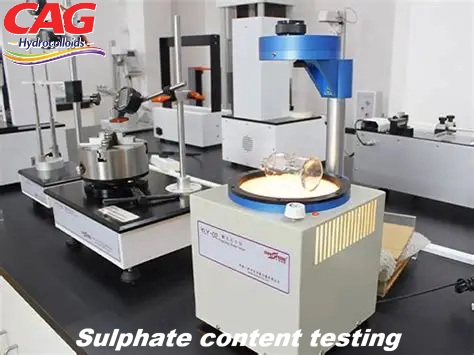
Fig. Sulphate content testing for carrageenan
② Gel strength test (1.5% solution, 0.2% KCl, 20°C, Nikan method):
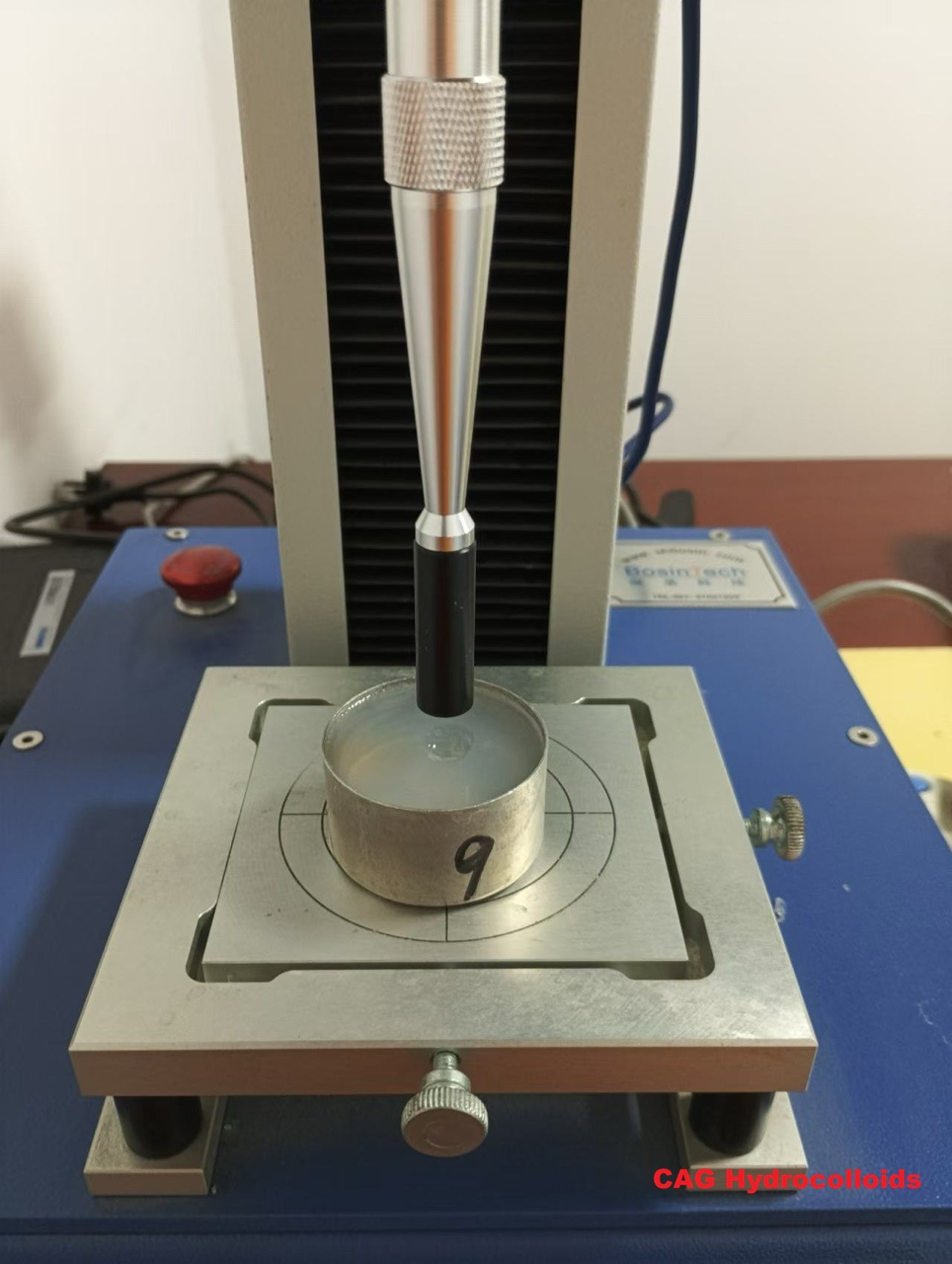
Fig. TPA for gel strength testing
③ Viscosity test (1% solution, 75°C, Brookfield 60 rpm): λ-carrageenan typically shows the highest viscosity (50–200 mPa·s) because its high sulphate content suppresses chain aggregation, keeping chains fully extended in solution. κ and ι show similar hot-solution viscosities (5–30 mPa·s), though they become clearly distinguishable after gelation. If a lot labelled "Kappa" shows anomalously high hot-solution viscosity (>80 mPa·s), λ adulteration should be suspected.
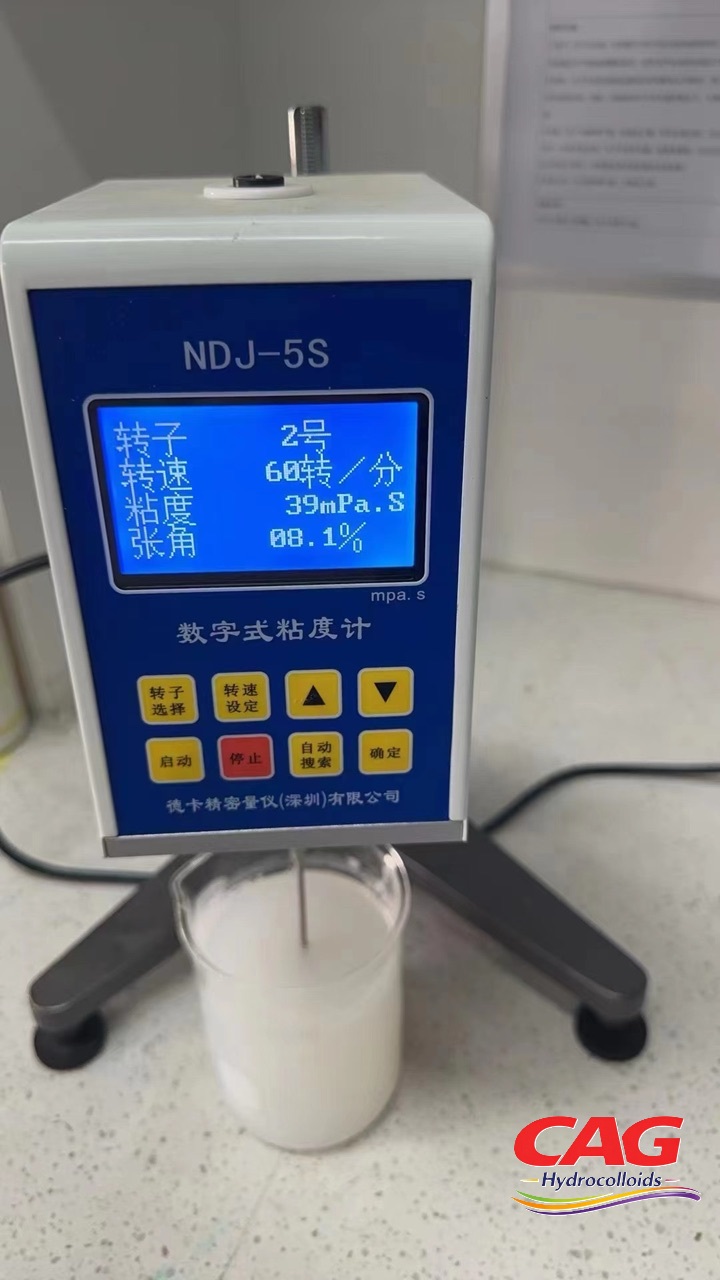
Fig. Viscosity testing for carrageenan products
Rapid identification workflow: Measure sulphate (30 min) → tentatively classify type → gel strength test in KCl system (2 h) → confirm type → optional viscosity cross-check. All three parameters cross-validated within 8 hours — a complete incoming goods inspection within a single working day.
CAG Hydrocolloids standard COAs report measured sulphate content, gel strength (with stated test method and ion conditions), and hot-solution viscosity for every production batch. Purchasers are advised to specify in procurement contracts that the supplier must report all three parameters with actual measured values — not merely a statement of "conforms to specification".

Email: info@cagcolloids.com
Tel: 0086-19884908291 / 0086-573- 80890620
Website: www.cagcolloids.com
Address: No. 399, East Tongfu Road, Tongxiang City, Zhejiang Province. China.