


FAQs
Nature Refined, Quality Defined
Green Science for better living

Describe the Texture Profile Analysis (TPA) method and the key gel texture parameters it quantifies. How do these parameters define the sensory profile of a gel?
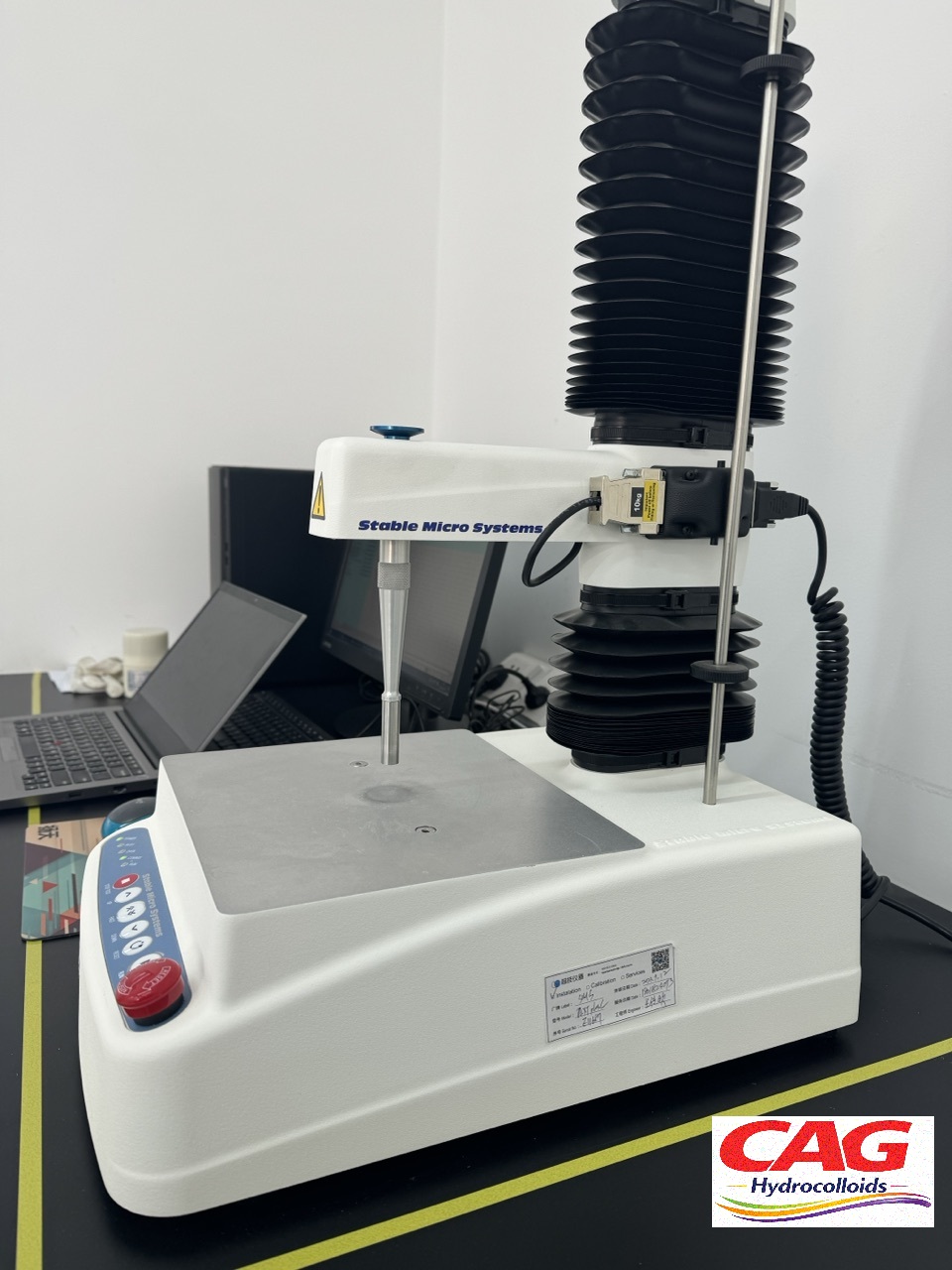
To move beyond simplistic "gel strength" measurements, the documented methodology employs Texture Profile Analysis (TPA), a two-bite compression test that simulates mastication. Analysis of the resulting force-deformation curve yields several objective parameters that correlate directly with sensory perception:
Modulus (Firmness): The initial slope of the curve, representing the force required for initial deformation. It correlates with the perceived firmness or stiffness when first biting into a gel. Gellan gum gels exhibit a characteristically high modulus.
Hardness: The peak positive force during the first compression cycle, indicating the force needed to achieve a significant deformation, often associated with rupture. This is analogous to traditional gel strength.
Brittleness: The percent compression (strain) at which the first major structural failure (fracture) occurs. A low value (e.g., 30-40%) signifies a clean, early break, as seen in brittle materials like hard candy. A value at the test limit (70%) indicates no fracture occurred, as with very elastic gels.
Elasticity: A measure of recoverable deformation, calculated from the sample's height recovery between compressions. It quantifies how "rubbery" or springy a gel feels. Low-acyl gellan gum has low elasticity (~10%).
Cohesiveness: The ratio of the work done during the second compression to that of the first. It measures the gel's internal binding strength or ability to withstand a second deformation, relating to perceived toughness or integrity.


Email: info@cagcolloids.com
Tel: 0086-19884908291 / 0086-573- 80890620
Website: www.cagcolloids.com
Address: No. 399, East Tongfu Road, Tongxiang City, Zhejiang Province. China.