


FAQs
Nature Refined, Quality Defined
Green Science for better living

Critical Characteristic Parameters of Gelatin
Selecting the right gelatin goes beyond just the source; it requires precise control over four core physical parameters. These specifications dictate everything from texture and mouthfeel to production efficiency.
The primary indicator of texture and elasticity.
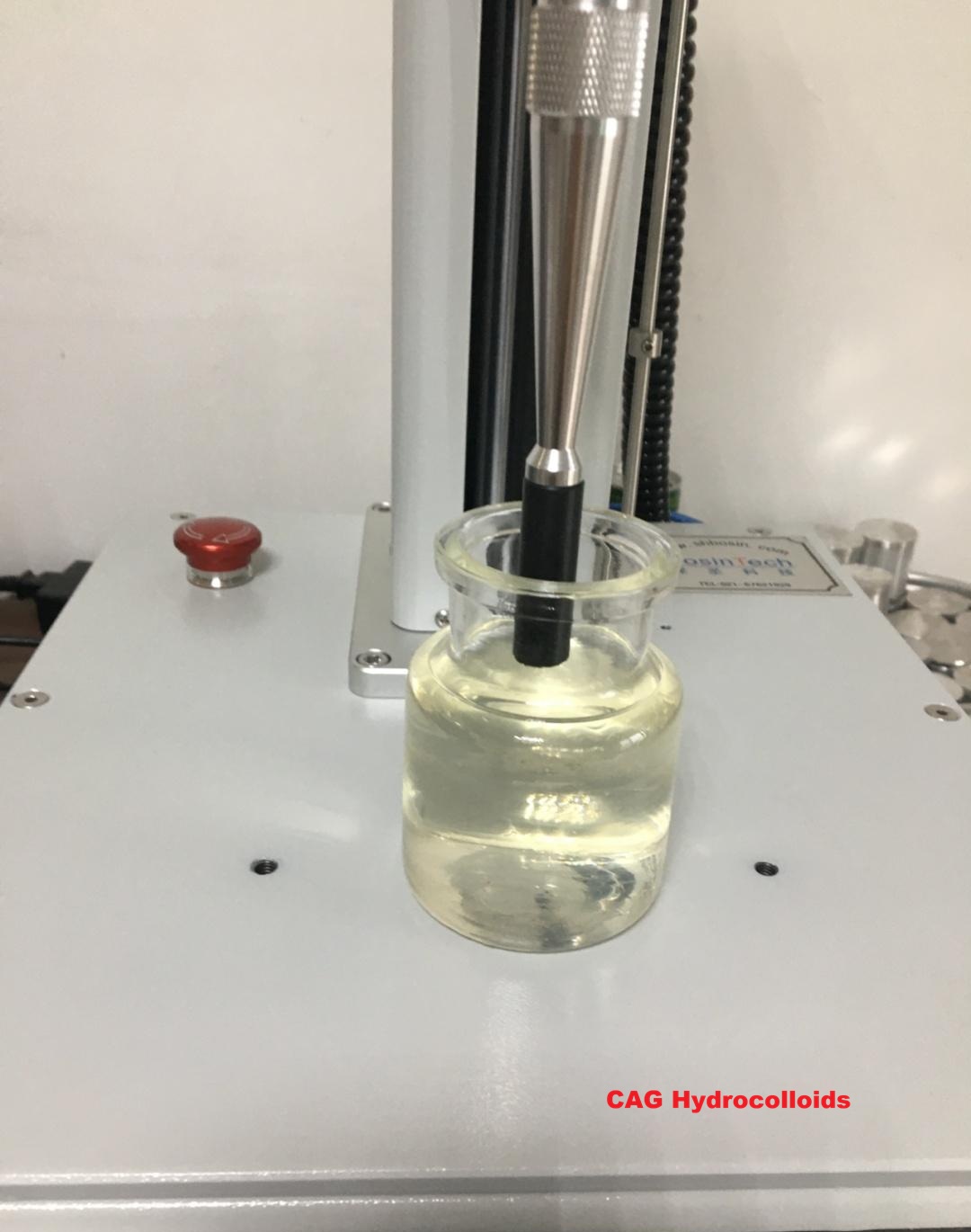
Definition: Measures the rigidity of a gel. Higher Bloom = firmer texture.
Test Standard: 6.67% solution, held at 10°C for 16–18 hours, measured via Bloom gelometer.
Gummy Recommendation: 200–240 Bloom
Below Range:Results in a soft, mushy product lacking chewiness.
Above Range:Produces an overly hard product that dissolves poorly in the mouth.
Indicator of molecular chain length and flow behavior.
Definition: Reflects the ease of mixing and pumping. Measured in mPa·s.
Test Standard: Rotational viscometer at 60°C (typically 6.67% concentration).
Gummy Recommendation: 2.5–4.5 mPa·s
Below Range:Leads to weak gel structure and thin mouthfeel.
Above Range:Causes dissolution difficulties and poor mixing uniformity.
Critical for production line speed and demolding.
Definition: The temperature threshold at which the sol transforms into a gel.
Typical Range:
Type A (Acid): 22–25°C
Type B (Alkali): 28–32°C
Process Impact:
Too Low:Slows down production cycles and increases the risk of dewetting.
Too High:Can cause premature gelling in pipes or molds, disrupting filling operations.
Key to sensory experience and heat stability.
Definition: The temperature at which the gel melts back into a sol.
Typical Range:
Type A (Acid): 30–35°C
Type B (Alkali): 35–40°C
Process Impact:
Too Low:Poor heat resistance; product may soften or deform in tropical climates.
Too High:Creates a "plastic-like" sensation in the mouth, failing to melt properly ("chewy but not dissolving").
Determines solubility and clarity under different pH conditions.
Definition: The pH at which the net electrical charge of the gelatin molecule is zero.
Typical Values:
Type A (Acid): pI 8.0–9.0
Type B (Alkali): pI 4.7–5.2
Process Significance: At the pI, gelatin exhibits minimum solubility and maximum turbidity. Formulators must avoid the pI during acid addition to prevent precipitation or cloudiness.
|
Parameter |
Test Condition |
Gummy Target |
Risk if Out of Range |
|---|---|---|---|
|
Bloom Strength |
6.67%, 10°C |
200-240 |
Too soft / Too hard |
|
Viscosity |
6.67%, 60°C |
2.5-4.5 mPa·s |
Poor mixing / Weak gel |
|
Setting Temp |
Cooling phase |
22-32°C |
Slow production / Premature gel |
|
Melting Point |
Mouthfeel |
30-40°C |
Heat instability / "Plastic" feel |
|
Isoelectric Point |
N/A |
A: 8-9 / B: 4.7-5.2 |
Cloudiness / Precipitation |


Email: info@cagcolloids.com
Tel: 0086-19884908291 / 0086-573- 80890620
Website: www.cagcolloids.com
Address: No. 399, East Tongfu Road, Tongxiang City, Zhejiang Province. China.