


FAQs
Nature Refined, Quality Defined
Green Science for better living

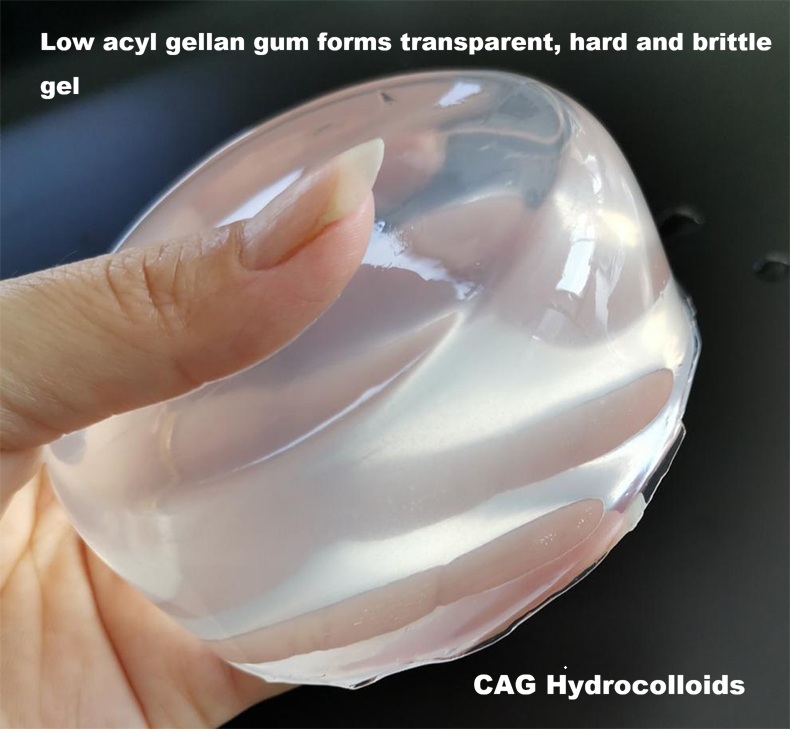
Compare the gelling efficiency and textural output of low-acyl gellan gum to agar, k-carrageenan, and gelatine, based on comparative concentration studies.
Direct comparative studies plotting gel modulus and hardness against hydrocolloid concentration reveal the exceptional efficiency of gellan gum. When each gelling agent is used at its respective optimal ionic conditions, low-acyl gellan gum produces gels of significantly greater firmness (modulus) and rupture strength (hardness) at any equivalent concentration. For example, the data indicates that a gel with approximately 0.3% gellan gum can match or exceed the firmness of a gel made with 1.5% agar or 5.2% gelatine. This demonstrates that gellan gum is not merely an alternative but a high-potency replacement, often enabling use at one-half to one-third the dosage of traditional agents to achieve target texture. Furthermore, the data shows that reducing the pH to 4.0 (a common condition in fruit gels) substantially weakens agar and k-carrageenan gels but has negligible impact on the hardness and modulus of gellan gum gels, highlighting its superior stability in acidic environments.

Email: info@cagcolloids.com
Tel: 0086-19884908291 / 0086-573- 80890620
Website: www.cagcolloids.com
Address: No. 399, East Tongfu Road, Tongxiang City, Zhejiang Province. China.