


FAQs
Nature Refined, Quality Defined
Green Science for better living

Buying Low Acyl Gellan Gum? Don't judge it by the spec sheet alone.
Most suppliers provide a Certificate of Analysis showing gel strength, transmittance, particle size, and ash content.
Most suppliers provide a Certificate of Analysis covering gel strength, transmittance, particle size, and ash content. For Low Acyl Gellan Gum (LAGG), these numbers are a starting point — not the full story. Application performance is what truly determines whether a grade will succeed in your formulation.
Key insight: Standard COA data — gel strength, transmittance, particle size, ash content — confirms basic product quality but reveals almost nothing about how LAGG will behave in your specific application. Thermal stability, elastic modulus, solubility, and dispersion are application-specific properties that must be evaluated separately. This guide shows you exactly what to ask for.
Application-by-application breakdown
For products such as fruit pieces and jelly that undergo pasteurization or sterilization, initial gel strength alone is not a reliable selection criterion. A grade with impressive gel strength figures may still soften, deform, or release water when exposed to the thermal load of commercial processing.
The parameter that truly determines suitability here is thermal stability: the ability of the gel network to maintain structural integrity under heat. Always request heat-stability data under conditions that reflect your actual processing parameters.
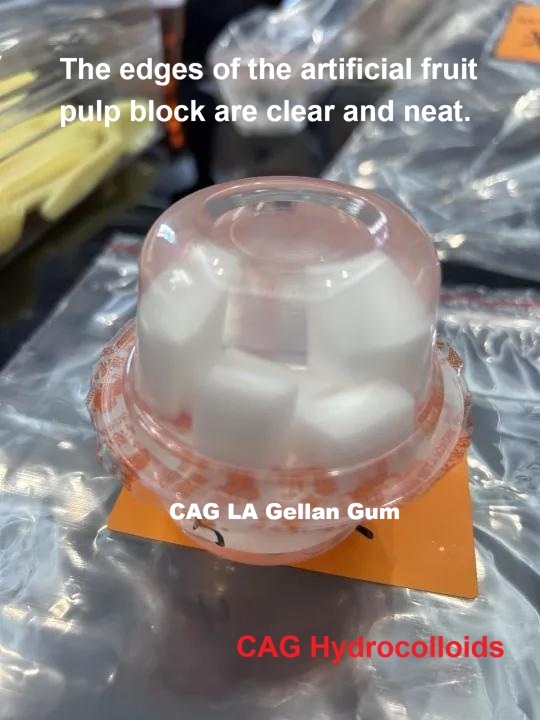
Fig Low acyl gellan gum for water jelly or artificial fruit pulp
In tissue culture applications, solubility and medium clarity are frequently more decisive than gel strength. A high-quality LAGG grade should dissolve readily at approximately 80 °C and produce a medium with optical clarity comparable to Gelrite®.
Poor solubility introduces variability into culture outcomes and can interfere with plant development. Do not select a tissue culture grade on gel strength alone.
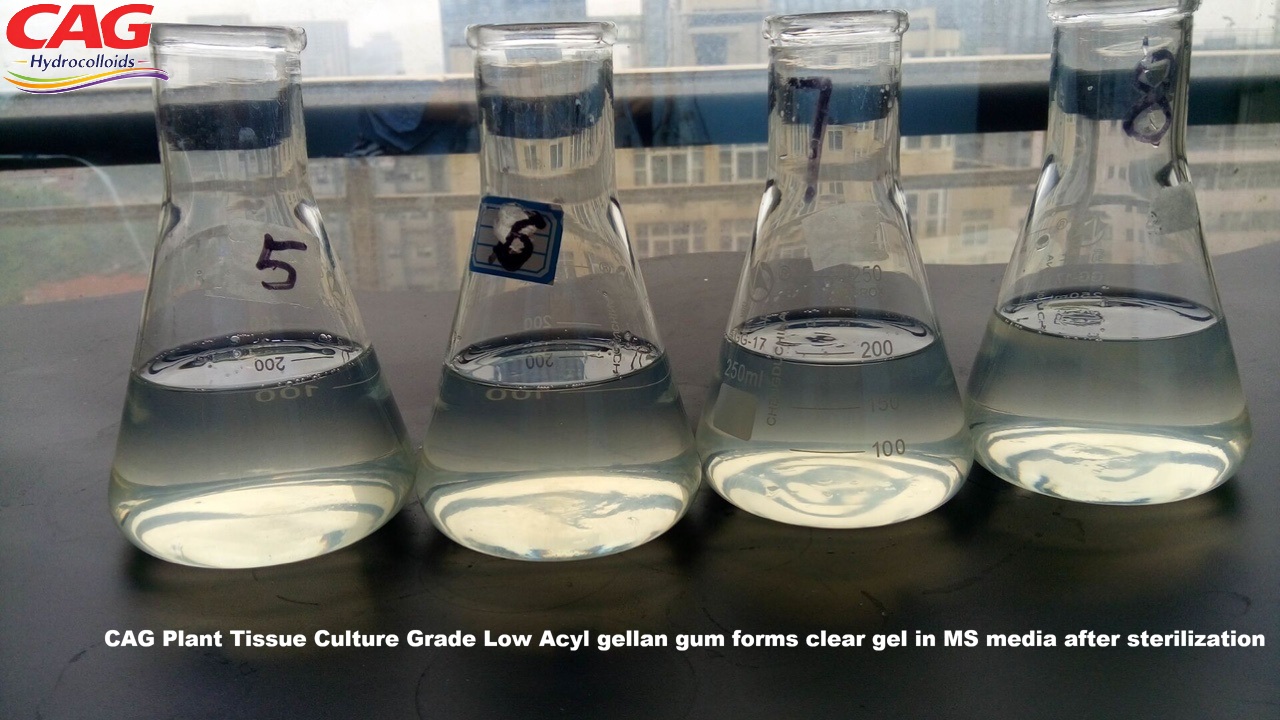
Fig. Low acyl gellan gum ( Gelrite ) in plant tissue culture ( 1/2 MS or MS media )
When LAGG is used as a suspension stabilizer in transparent beverages, the key metric is elastic modulus (G′) — and the goal is an optimal range, not the highest possible value.
A G′ that is too low will allow particles to settle. A G′ that is too high risks forming visible gel particles or lumps in the finished product, affecting both appearance and consumer perception. The optimal G′ window is application- and matrix-specific.
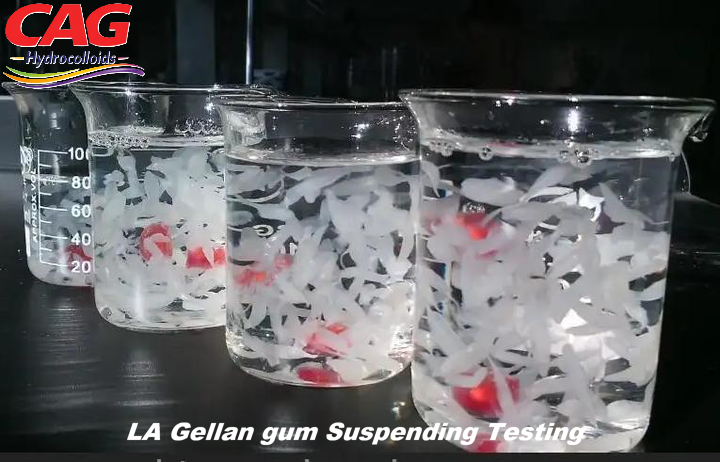
Fig. Low acyl gellan gum for transparent suspending beverages
Flavor capsule (crush bead) production places highly specific demands on LAGG. The grade must deliver a carefully balanced combination of three properties simultaneously:
No single parameter is sufficient. A grade that passes on gel strength but fails on dispersion or viscosity will create significant production problems.
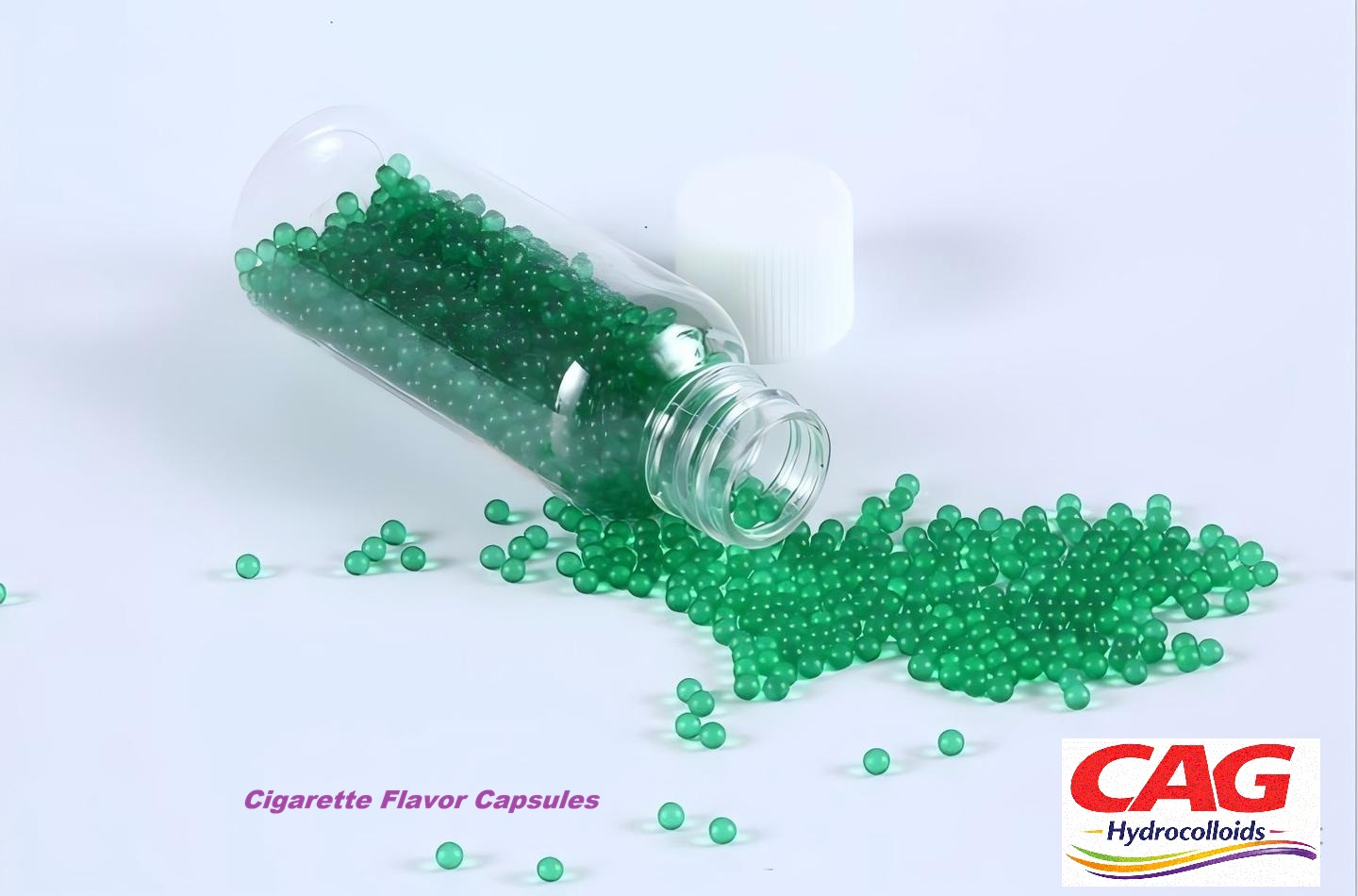
Fig. Low acyl gellan gum for Cigarette flavor capsules
Quick reference
| Application | Example products | What really matters |
|---|---|---|
| Water-based gels | Fruit pieces, jelly | Thermal stability |
| Plant tissue culture | MS media, ½ MS media | Solubility & clarity |
| Suspension beverages | Juice drinks, herbal beverages | Elastic modulus (G′) |
| Flavor capsules | Crush beads | Dispersion · Strength · Viscosity |
The best Low Acyl Gellan Gum is not always the one with the highest gel strength or the highest transmittance. It is the one that performs best in your specific application — and that determination requires application performance data, not just a COA.
Gel strength matters — but so does how that gel responds to heat. Transmittance matters — but so does whether the gum dissolves cleanly in culture media. These are fundamentally different questions, and they require fundamentally different data to answer.
Application performance — not laboratory specifications — should drive your purchasing decision. Work with a supplier that can provide both.
Common questions
Why isn't gel strength sufficient for selecting Low Acyl Gellan Gum?
Gel strength measures performance under standard laboratory conditions. It does not predict behavior under pasteurization or sterilization heat loads, how well the gum disperses during production, what the elastic modulus will be in a beverage matrix, or how clear the medium will be in tissue culture. Each application requires different functional data beyond what a COA provides.
What causes fisheyes when using Low Acyl Gellan Gum in capsule production?
Fisheyes in flavor capsule production are typically caused by poor dispersion of the LAGG powder. When the gum does not disperse evenly, undissolved particles remain in the solution, leading to defects in the finished capsule. Good dispersion is therefore a critical selection criterion for crush bead applications.
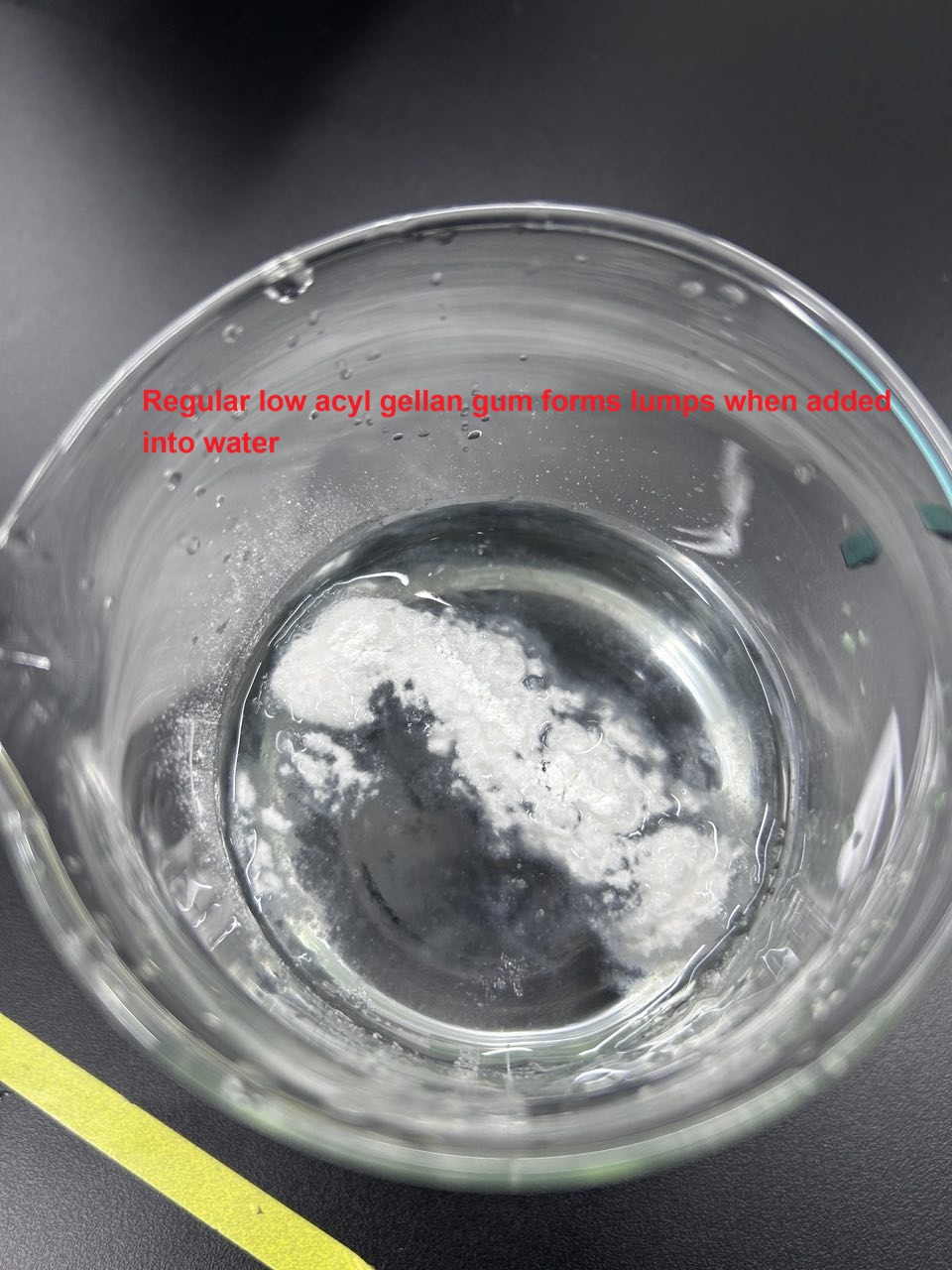
Fig Regular low acyl gellan gum Bad disperse in cold water forms fish eye
Can one grade of Low Acyl Gellan Gum be used across multiple applications?
Not reliably. Each application optimizes for different functional properties. A grade selected for high gel strength in pasteurized fruit pieces may have an elastic modulus too high for a transparent suspension beverage, or insufficient dispersion for capsule production. Grade selection should always be application-specific.
Is Low Acyl Gellan Gum a suitable alternative to Gelrite® in plant tissue culture?
A high-quality LAGG grade can serve as a Gelrite® alternative in plant tissue culture, provided it meets the specific solubility and clarity requirements of that application. It should dissolve readily at approximately 80°C and produce a medium with comparable optical transparency. Not all commercial LAGG grades meet these criteria — solubility and clarity data should be requested from the supplier.
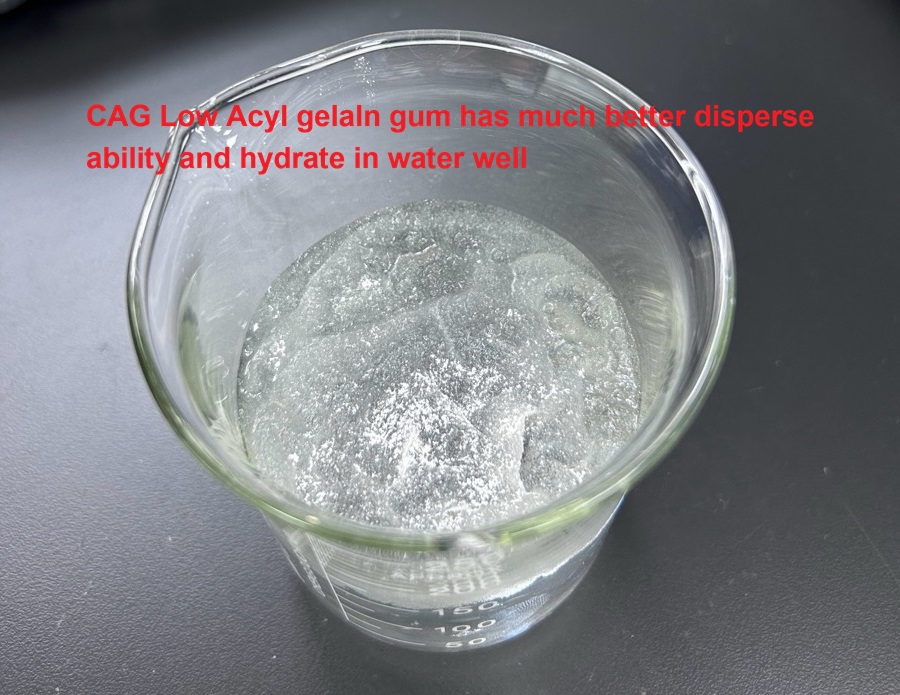
Fig. CAG low acyl gellan gum has the same disperse as Gelrite from Kelco
How do I evaluate thermal stability of Low Acyl Gellan Gum before purchasing?
Request application-specific thermal stability data from the supplier, and ask for testing to be conducted at the actual time-temperature conditions of your processing (e.g., 121°C for retort sterilization, or 85–90°C for pasteurization). Generic stability data at standard laboratory conditions may not reflect real-world processing outcomes. CAG can provide thermal stability protocols and reference data on request.
At CAG, application performance guidance is standard practice — not an afterthought. Tell us your application, and we will help you identify the LAGG grade that performs, not just the one that looks good on paper.
Talk to our technical team →


Email: info@cagcolloids.com
Tel: 0086-19884908291 / 0086-573- 80890620
Website: www.cagcolloids.com
Address: No. 399, East Tongfu Road, Tongxiang City, Zhejiang Province. China.