


FAQs
Nature Refined, Quality Defined
Green Science for better living

Buying High Acyl Gellan Gum? Don't Just Read the Spec Sheet.
Every supplier provides a Certificate of Analysis — but physicochemical data alone is insufficient. When it comes to High Acyl Gellan Gum (HAGG), application performance metrics are what truly determine whether a product will succeed in your formulation.
Application-by-application breakdown
For products like puddings and artificial fruit pieces where a firm, clean gel texture is the primary goal, gel strength is the single most important selection criterion. A higher gel strength enables a lower usage dosage, which directly reduces formulation costs without sacrificing texture performance.
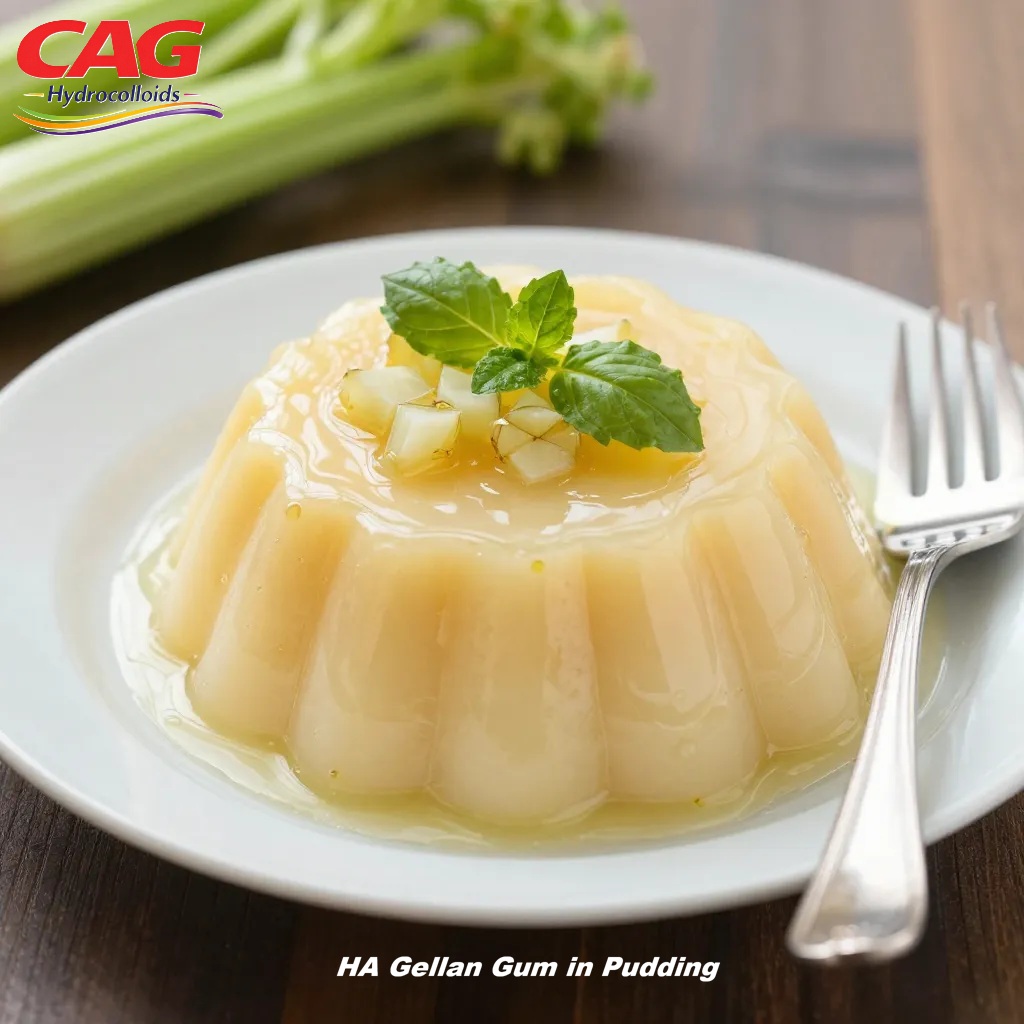
Fig High Acyl Gellan Gum in water based gels
In beverages such as mango juice and almond milk, HAGG functions as a suspension stabilizer. The relevant metric here is elastic modulus (G′): a higher G′ improves particle suspension, preventing sedimentation and separation. However, an excessively high G′ can result in a continuous weak gel network that negatively impacts mouthfeel and drinkability. There is an optimal application-specific range — contact our technical team for reference data.
Fig. High Acyl gellan gum in juice or plant based beverages
In acidic dairy applications such as yogurt drinks and lactic acid bacteria (LAB) beverages, the interaction between HAGG and casein protein is the critical factor. If the acyl content of the gellan gum is insufficient, it will react adversely with casein, causing flocculation. This is a quality defect that often only surfaces during production — not during standard laboratory evaluation.

Fig. High acyl gellan gum in acidic dairy beverages
For neutral dairy beverages like chocolate milk, residual enzymatic activity in the HAGG is the primary concern. High enzyme levels can produce chemical off-flavors and bitterness in the finished product. These sensory defects may not be apparent immediately after production, but typically become evident after the product has been stored at ambient temperature for an extended period.
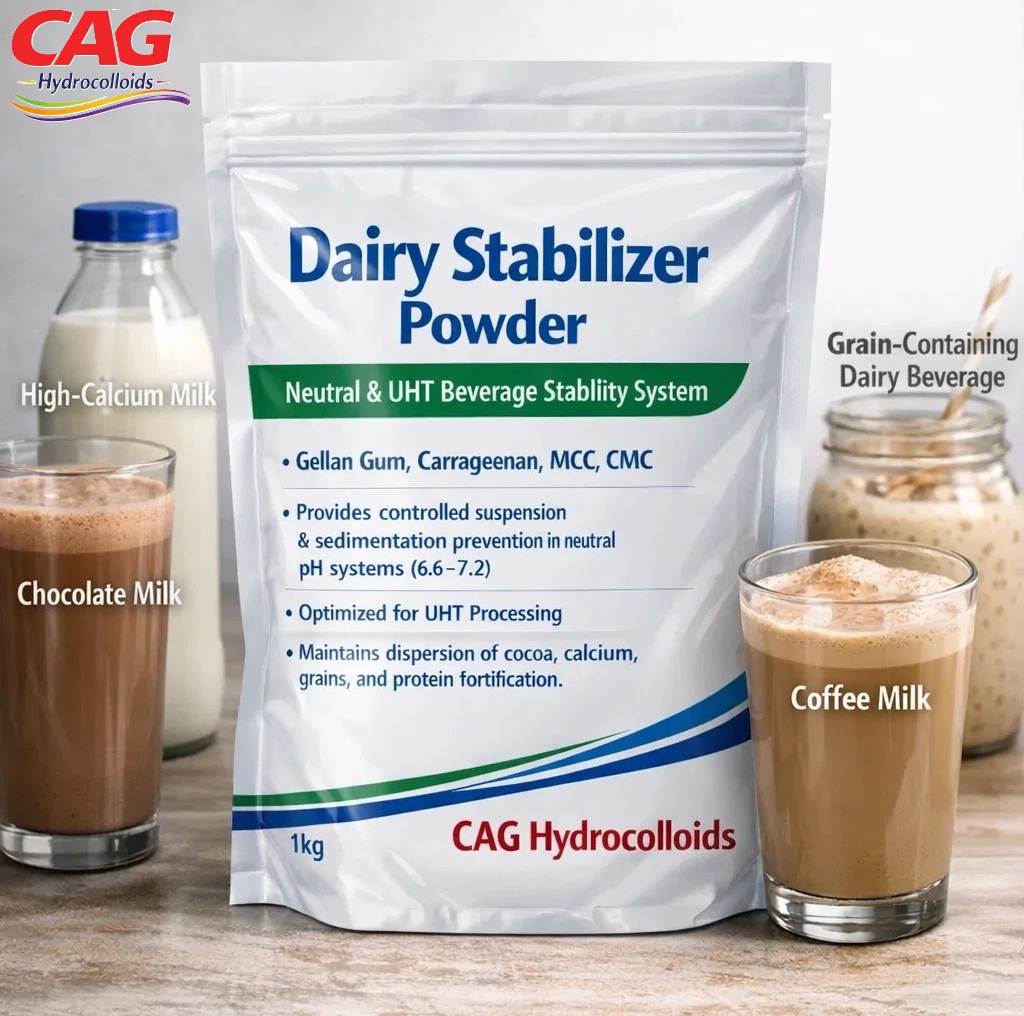
Fig. High acyl gellan gum in neutral dairy beverages such as coffee milk and chocolate milk
High-protein neutral dairy applications — such as protein meal replacement milk drinks — represent the most demanding use case for HAGG. At elevated protein concentrations, both protein reactivity and enzymatic activity must be evaluated and confirmed within acceptable ranges before a HAGG grade can be approved for use. Evaluating only one of these parameters is insufficient and presents significant formulation risk.
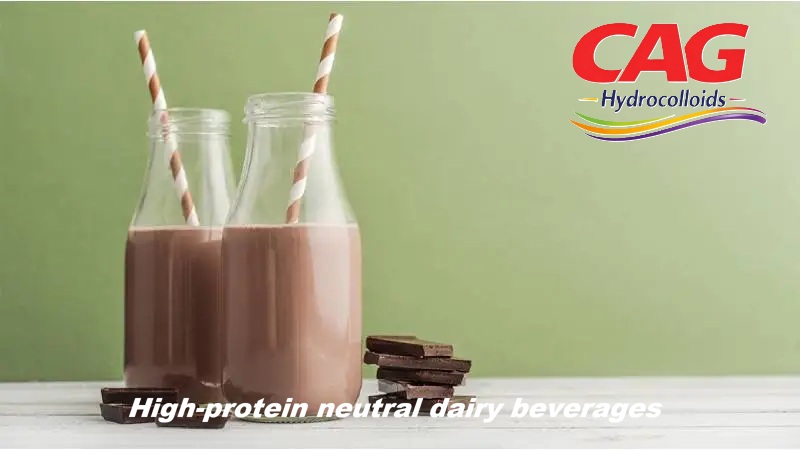
Fig. High acyl gellan gum in high protein neutral dairy beverages.
Common questions
Why isn't the Certificate of Analysis sufficient for selecting HAGG?
Standard CoA documents cover physicochemical properties such as viscosity, pH, moisture, and ash content. These confirm basic product quality but provide no information on application performance — how the ingredient will behave in your specific formulation. Metrics such as gel strength, elastic modulus, protein reactivity, and enzymatic activity are rarely included and must be requested separately from technically capable suppliers.
Can the same grade of HAGG work across multiple applications?
Not reliably. Different applications prioritize different performance parameters. A grade optimized for gel strength in puddings may have an elastic modulus that is too high for a juice beverage, or an enzymatic activity level that causes off-flavors in chocolate milk. Grade selection should always be application-specific.
What is the optimal elastic modulus range for juice beverages?
The optimal G′ range varies depending on the beverage matrix, target viscosity, and particle load. CAG's technical team has established application-specific reference ranges. Contact us directly for guidance relevant to your formulation.
How do I test for enzymatic activity in High Acyl Gellan Gum?
Enzymatic activity testing involves preparing a model neutral dairy system with the HAGG sample and monitoring for sensory changes (off-flavors, bitterness) after ambient-temperature storage over a defined period. CAG can provide test protocols and reference thresholds for this evaluation.
Most suppliers won't walk you through these nuances. At CAG, application performance guidance is part of what we offer — because selecting the correct HAGG grade requires more than a spec sheet.
Talk to our technical team →


Email: info@cagcolloids.com
Tel: 0086-19884908291 / 0086-573- 80890620
Website: www.cagcolloids.com
Address: No. 399, East Tongfu Road, Tongxiang City, Zhejiang Province. China.