Bake-Stable Jams and Heat-Resistant Vegan Gummies: Optimizing Gellan Gum vs. LM Pectin for Thermal Stability
In the commercial manufacture of bakery fillings and confectionery, controlling thermal stability under extreme conditions is a critical challenge. Traditional gelling agents like gelatin (animal-derived, non-vegan) or agar (brittle texture, poor acid stability) often fail to meet modern industrial requirements.
However, achieving true heat resistance—such as preventing bakery jams from boiling over at 200°C or stopping vegan gummies from melting during mid-summer transit—requires a precise understanding of hydrocolloid chemistry. While gellan gum and Low Methoxyl (LM) pectin are both excellent solutions, their technical mechanisms and blending requirements differ significantly.
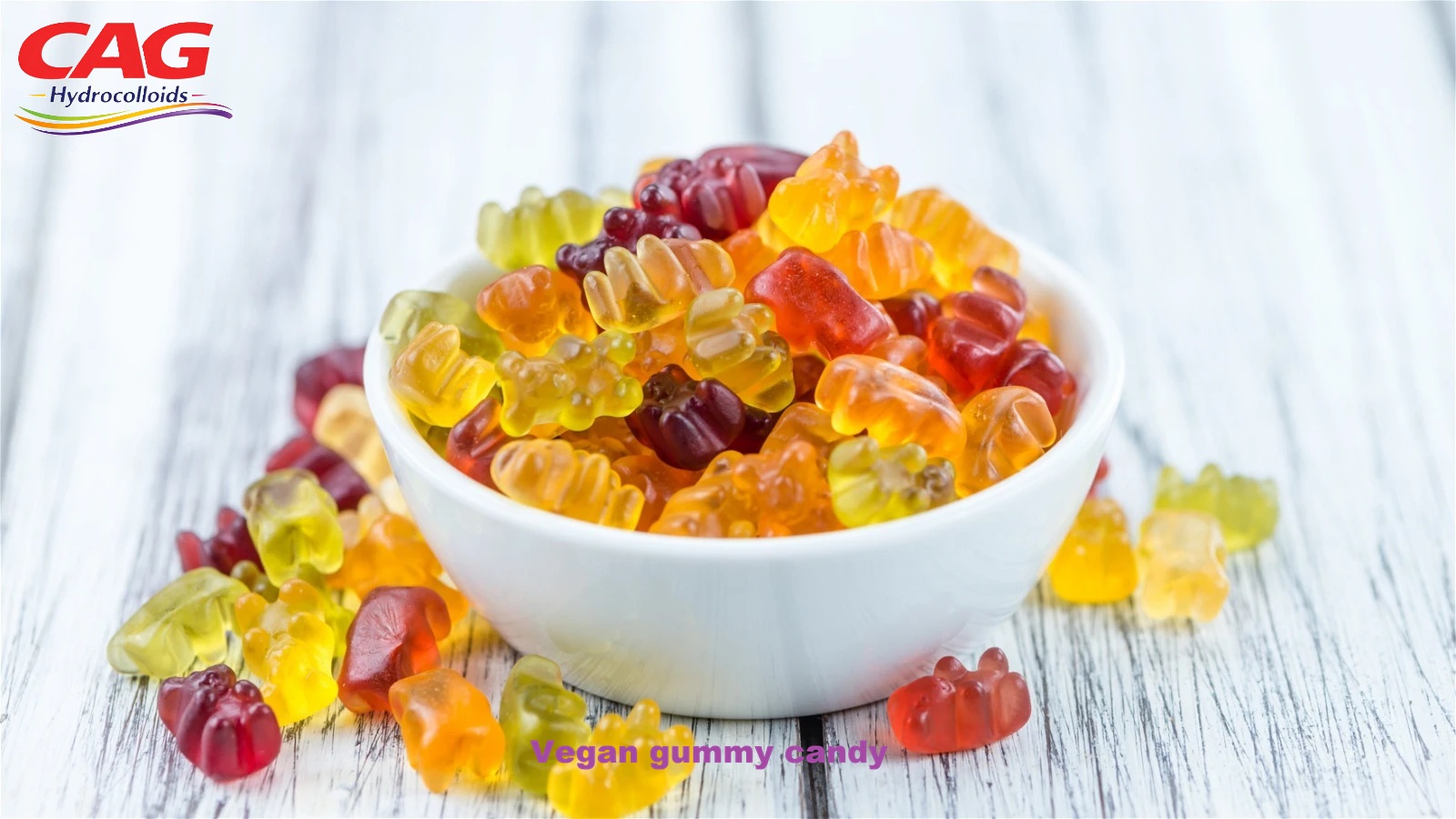
Fig 1. Vegan gummy candy
The Reality of High Acyl Gellan Gum and Gummy Heat Resistance
A common misconception in confectionery R&D is that High Acyl (HA) gellan gum alone can create a completely non-melting vegan gummy due to its superior elasticity and soft texture. In reality, pure HA gellan gum forms a thermally reversible gel that softens and melts when temperatures reach 70°C to 80°C.
To engineer a vegan gummy that genuinely resists high-temperature shipping and warehouse storage without melting or sticking, a hybrid approach is mandatory:
The LA/HA Blend Synergy: Incorporating Low Acyl (LA) gellan gum into the formulation introduces a thermally irreversible crystalline structure. By adjusting the HA-to-LA ratio, manufacturers can dial in the exact balance—retaining the desirable, elastic "gummy bear" chewiness from the HA fraction while elevating the melting point to absolute thermal stability via the LA fraction.
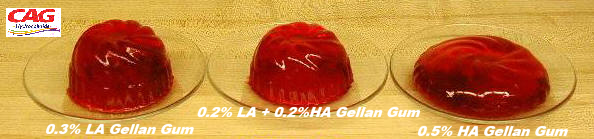
Fig 2. LA gellan gum VS HA gellan gum in water jelly to forms different texture
Gellan Gum vs. Low Methoxyl (LM) Pectin in Bake-Stable Jams
When designing bake-stable fruit fillings injected into breads or pastries before entering a 200°C oven, developers frequently debate between Low Acyl (LA) gellan gum and Low Methoxyl (LM) pectin. Both are highly effective clean-label candidates, but they operate on distinct chemical mechanics:
Low Methoxyl (LM) Pectin: LM pectin relies heavily on a calcium-dimer binding mechanism (the "egg-box" model) to cross-link and form a heat-resistant bake-stable structure. It delivers an excellent fruit-forward flavor release and a traditional jam texture. However, its stability is highly sensitive to the precise soluble solids content (Brix) and the fluctuating calcium levels present in different fruit pulps.
Low Acyl (LA) Gellan Gum: LA gellan gum requires a significantly lower usage level (often less than 0.1%) compared to LM pectin to achieve comparable bake stability. It forms a highly rigid, thermally irreversible network that holds its shape perfectly under intense oven baking, preventing boiling, bubbling, or color bleeding into the surrounding dough.
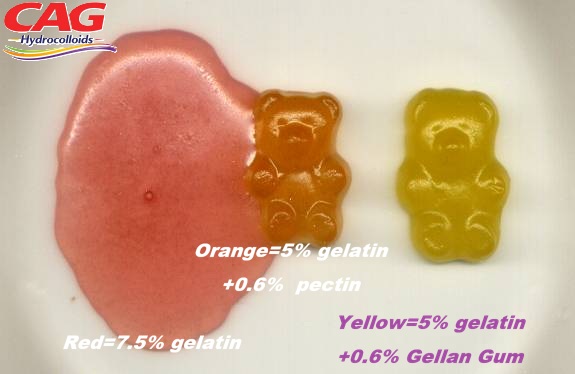
Fig 3. The Gelatin, Pectin and Gellan gum in gummy forms different heat stability gel.
Customized Texturizing Solutions from the Source Factory
As a primary manufacturer specializing in hydrocolloid fermentation and modification, we understand that no single gum solves every thermal challenge. Whether your formulation requires a finely tuned HA/LA gellan gum compound to achieve non-melting confectionery resilience, or a standardized LA gellan gum to reinforce the bake-stability of your fruit jams, we provide the raw material consistency your supply chain demands. Contact our technical application lab to co-develop your next heat-stable formulation.