


FAQs
Nature Refined, Quality Defined
Green Science for better living

After autoclaving, bacteriological agar media develop turbidity, precipitate or colour abnormalities
Post-autoclave medium abnormalities are among the most common quality complaints in laboratory microbiology. Causation is rarely singular and requires a structured investigation.
Step 1 — Classify the abnormality
White flocculent precipitate: Most commonly calcium/magnesium phosphate precipitate (reaction between divalent cations and phosphate nutrients), or incompletely dissolved agar particles. Test: add a small amount of the precipitate to dilute hydrochloric acid — if it dissolves, it is a phosphate salt (unrelated to agar quality); if insoluble, consider incomplete agar dissolution.
Overall haze (smoky appearance): Most often produced by high-ash agar in phosphate-containing media, or by excessive raw material impurities.
Colour deepening (amber/brown): Over-sterilisation (temperature >125°C or duration >20 min) causing Maillard-type polysaccharide degradation, or an inherently dark raw material lot of lower purity.
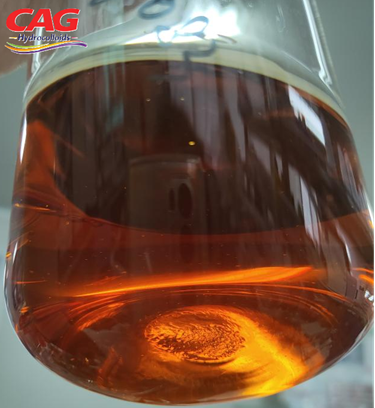
Step 2 — Systematic root-cause investigation (operator → water quality → raw material)
① Operator level: Confirm autoclave parameters were within 121°C / 15–18 min (large-volume bottles may extend to 20 min, but beyond this degradation accelerates sharply). Confirm agar was pre-soaked in cold water for 10–15 min before heating (skipping this step commonly leaves undissolved material).
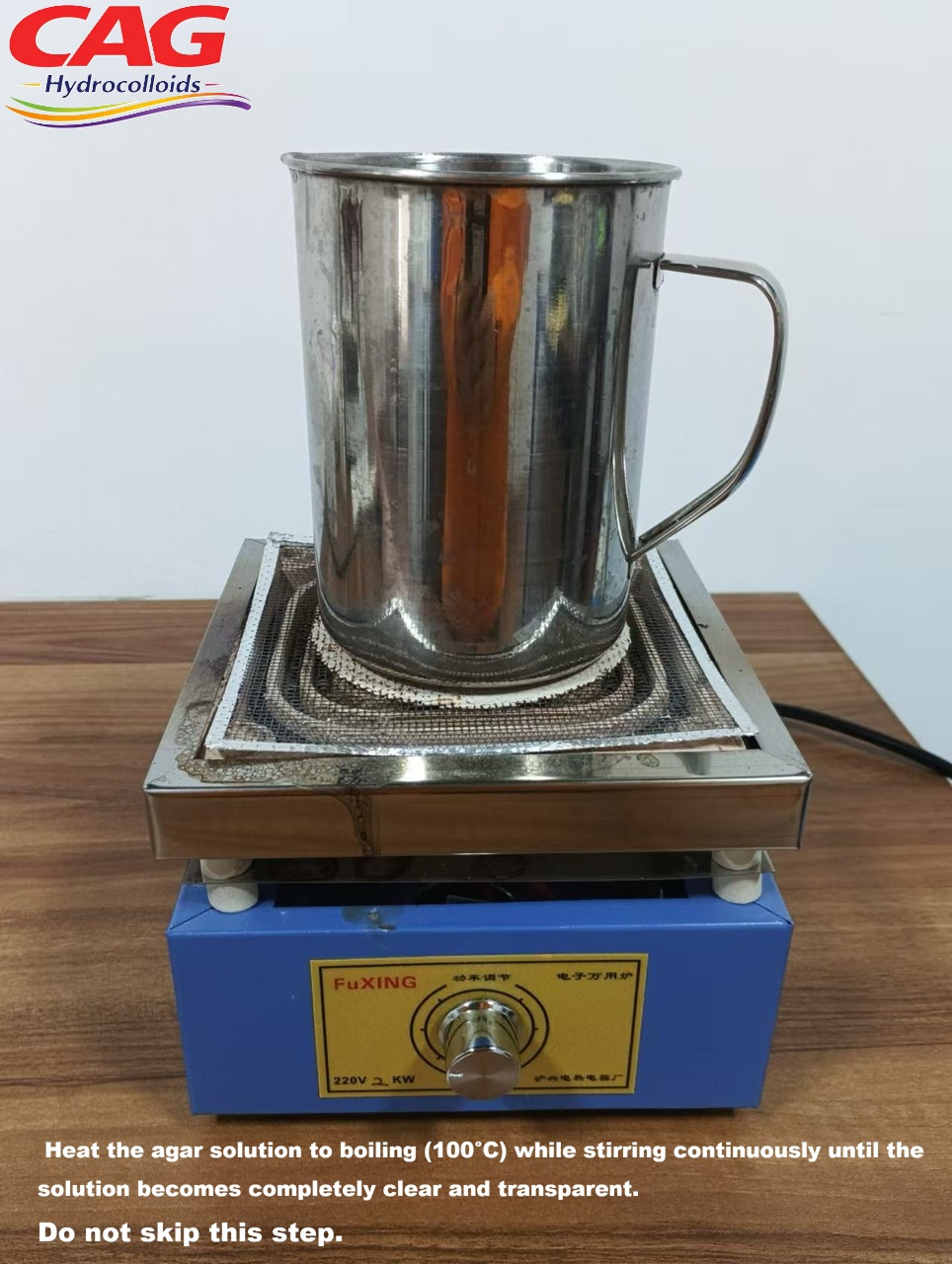
② Water quality: Laboratory water hardness (total Ca + Mg) should be <10 ppm (deionised or ultrapure water). Mains or poorly treated purified water is the leading cause of phosphate precipitation — independent of agar quality.
③ Raw material: Compare ash figures across recent batch COAs; run a parallel autoclave test with the suspect lot against a reference lot under identical conditions — if the reference is clear, the raw material is implicated.
Laboratories are advised to establish a pre/post-autoclave visual inspection log with photo records for each medium batch. This provides objective evidence when communicating with suppliers and prevents ambiguous attribution of responsibility.


Email: info@cagcolloids.com
Tel: 0086-19884908291 / 0086-573- 80890620
Website: www.cagcolloids.com
Address: No. 399, East Tongfu Road, Tongxiang City, Zhejiang Province. China.