


FAQs
Nature Refined, Quality Defined
Green Science for better living

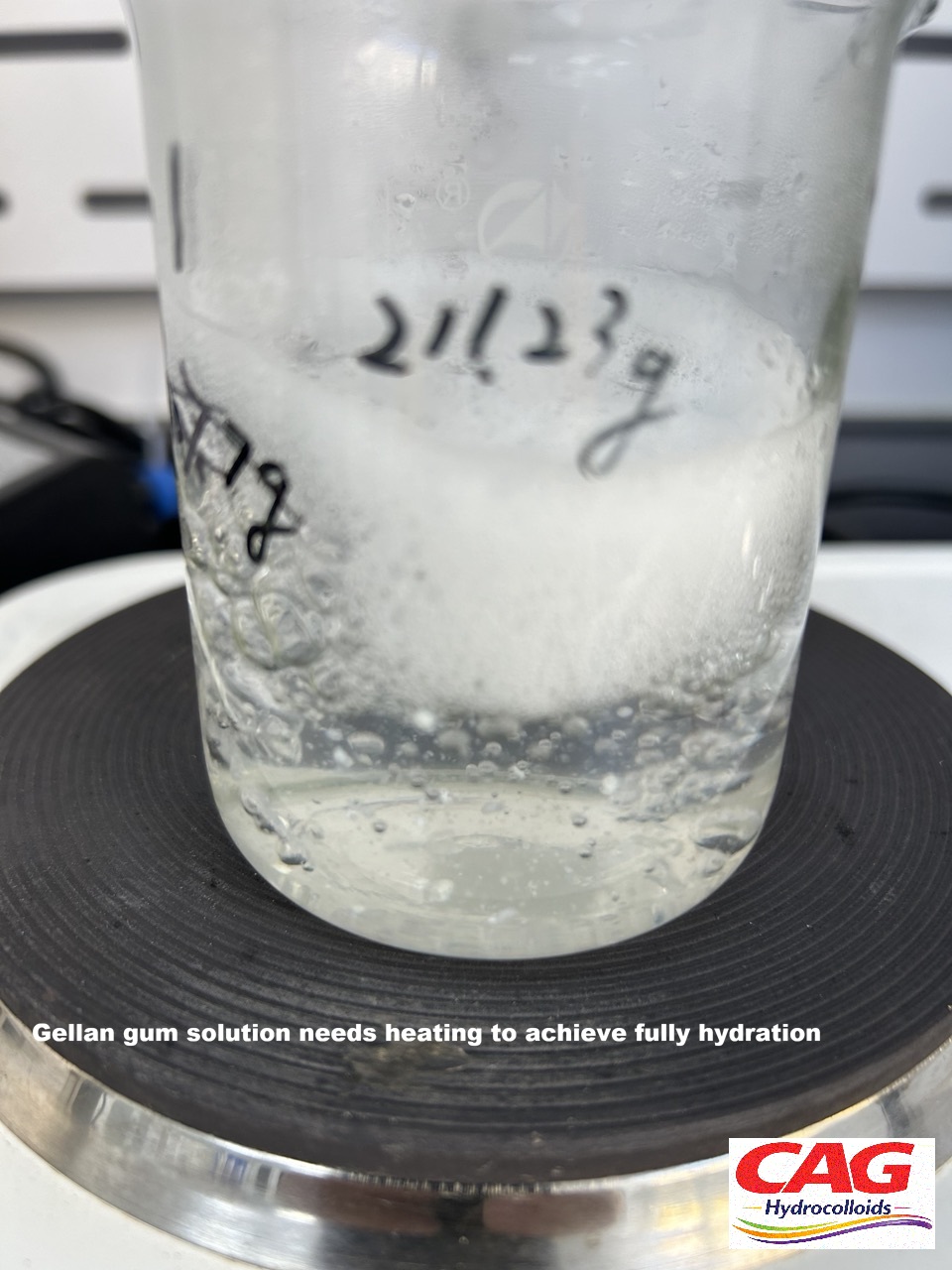
Why is gellan gum referred to as a "high hydration temperature colloid"?
In the field of food hydrocolloids, the physical properties of gellan gum—particularly high-acyl gellan gum or low-acyl gellan gum under specific ionic conditions—are highly dependent on temperature.
Below is a detailed analysis of the term "high hydration temperature":
Why is it called a "high hydration temperature colloid"?
In colloid science, the "hydration temperature" typically refers to the temperature required for complete hydration. Gellan gum is called a high hydration temperature colloid mainly for the following two reasons:
Constrained Molecular Structure: Gellan gum is insoluble in cold water. At low temperatures, its molecular chains form tightly packed double helices and aggregate. To break the hydrogen bonds and van der Waals forces between molecules, allowing the polymer chains to fully unfold and interact with water molecules, a significant amount of thermal energy must be applied.
Extreme Sensitivity to Ions: Gellan gum is a typical anionic polysaccharide. When cations (especially divalent ions like calcium and magnesium) are present in the solution, they rapidly form "ionic bridges" between the gellan gum chains, further locking the molecular structure. This interaction significantly raises the energy threshold required for the colloid to transition from an aggregated state to a dispersed state.
If the heating temperature does not reach this "hydration point," gellan gum can only swell without truly dissolving. Consequently, it will not form a uniform and strong gel network upon cooling.


Email: info@cagcolloids.com
Tel: 0086-19884908291 / 0086-573- 80890620
Website: www.cagcolloids.com
Address: No. 399, East Tongfu Road, Tongxiang City, Zhejiang Province. China.